



Table of Contents
- When Your Cat Bites While Being Pet
- Cat Suddenly Bites Aggressively – What Is Behind It?
- Immediate First Aid for a Cat Bite
- Breaking the Biting Habit: How Your Cat Learns Good Behavior
- When Professional Help Is a Good Idea
- FAQ - Frequently Asked Questions
Why does my cat bite?
If your cat bites, there is almost always a reason. Even if it seems surprising at first, the behavior usually follows a clear pattern. There are several possible causes:
1. Play and Hunting Instinct
Cats are hunters – even indoor cats retain their instincts. If you play with your hand or fingers, your cat will perceive them as prey. A sudden bite is then not an aggressive act, but part of the game. Kittens, in particular, learn by playfully biting how to use their teeth properly. However, if the biting becomes too hard, you should end the game immediately and offer suitable toys instead.
2. Fear, Stress, and Pain
A cat may also bite if it feels threatened or is in pain. Stress, loud noises, strangers, or unfamiliar environments can trigger fear. Pain – for example, caused by inflammation, infection, or illness – can also lead to aggressive behavior. In such cases, you should ensure a calm environment. You should always have your veterinarian rule out any possible physical causes.
3. Overstimulation During Affection
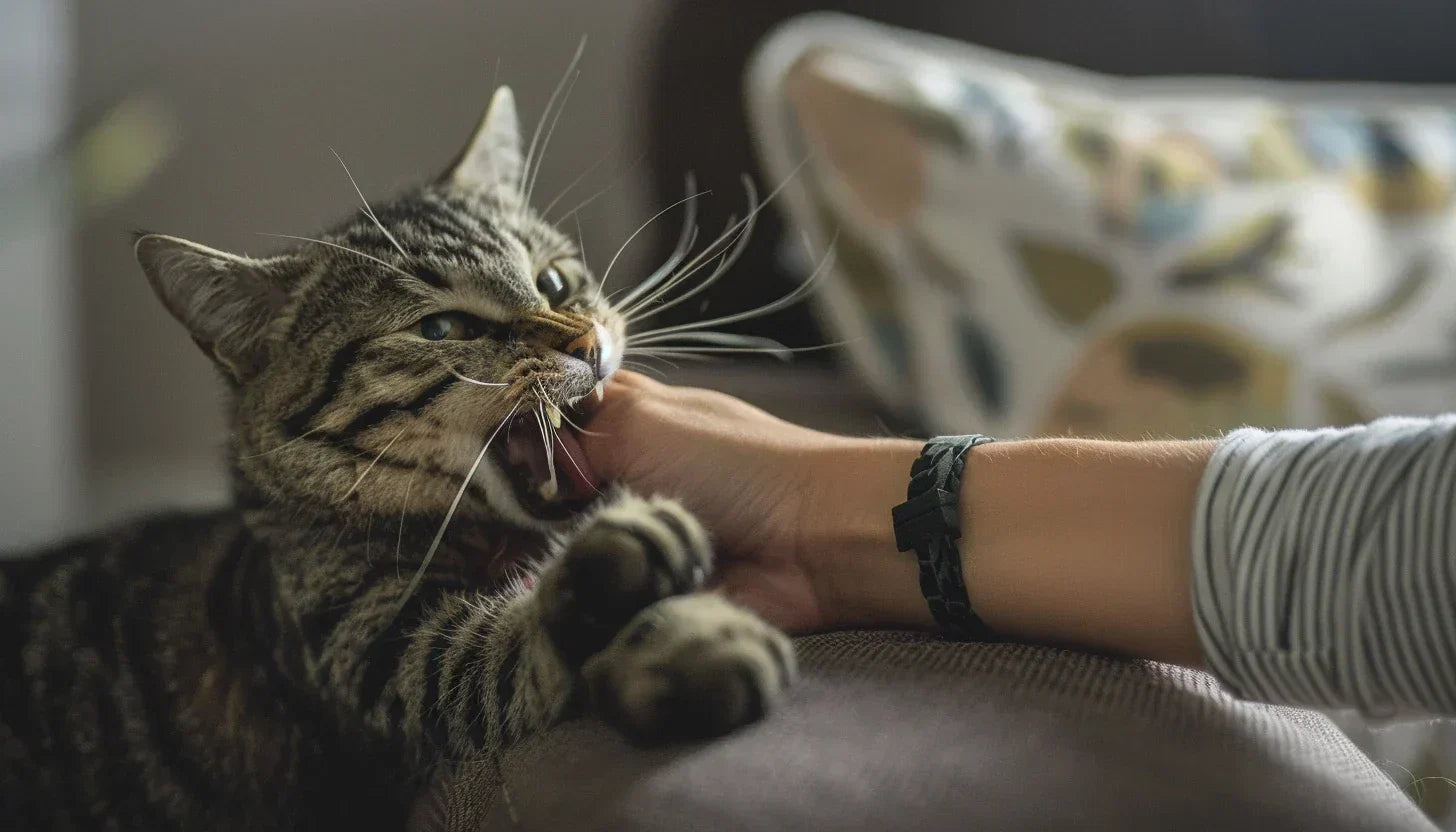
Many cats enjoy affection – but only to a point. If your cat suddenly bites while you are petting it, this is often a sign of overstimulation. It may feel like a love bite, but it is usually a clear signal to stop. A typical behavior is for the cat to purr and relax, then suddenly snap at you. Therefore, pay attention to signals such as twitching skin, a lashing tail, or tense muscles – they indicate that enough is enough.
4. Boredom and Lack of Stimulation
A bored indoor cat will look for something to do – sometimes in the form of unwanted behavior. If a cat does not play enough or lacks mental stimulation, it may release energy by biting. Exercise, hunting games, and varied toys help prevent this.
5. Wanting Attention
Some cats have learned that if they bite, people will react immediately. They get attention – even if it is scolding. This behavior can be retrained by consistently ignoring the biting and only rewarding the cat when it behaves calmly again.
When Your Cat Bites While Being Pet
You may already know this situation: your cat is lying comfortably in your lap, purring contentedly – and suddenly bites your hand. This behavior seems contradictory, but it is usually easy to explain.
So-called “overstimulation behavior” often occurs when a cat is overstimulated while being petted. Some cats enjoy being touched only in certain areas or for a limited time. If this boundary is crossed, they may bite briefly in response. This is usually not aggression, but rather a form of communication. Your beloved pet is signaling that it has had enough.
How to Recognize Warning Signs in Time:
Cats send many signals before they actually bite. Typical signs include:
- a sudden tail flick,
- ears laid back,
- tense muscles,
- twitching skin, or
- abruptly stopping purring.
If you recognize these signs, you can react in time and end the petting session before your cat bites.
The Right Way to Respond in These Moments
It is important that you do not react with punishment or loud scolding. This would only increase the cat's fear or stress. It is better to quietly remove your hand and give your cat some space. After a short while, you can gently make contact again. This teaches your cat that biting does not get it attention – and that calm behavior is rewarded.
With a little patience and observation, you can develop a good sense of how long your indoor cat enjoys being petted. This helps prevent misunderstandings and strengthens your bond.
Cat Suddenly Bites Aggressively – What Is Behind It?
If a cat suddenly bites aggressively without any prior warning signs, there is often more to it than playful behavior. In such cases, it is important to look closely to identify any medical or emotional causes.
Possible Medical Causes
Aggression can be triggered by pain. A cat that feels unwell or is suffering from an illness will be more sensitive to touch. Common triggers include:
- Inflammation,
- Dental problems,
- Joint pain in older animals,
- Internal illnesses or infections.
You should take your cat to the vet especially if its behavior changes suddenly. A thorough check-up can determine whether physical discomfort is behind the biting.
Fear or Territorial Behavior
Cats are territorial animals. If they feel threatened in their territory, biting may be a defensive reaction. Strangers, new animals, or unfamiliar smells can quickly cause stress in sensitive indoor cats. A new environment or loud noises can also trigger fear. In such situations, it helps to create quiet places for your cat to retreat to and give it time to settle in.
When a Visit to the Vet Is a Good Idea
If your cat bites aggressively often, behaves unusually, or shows signs of pain, a visit to the vet is highly recommended. There, the vet can determine whether there is a physical or psychological cause. If the behavior persists despite treatment, a behavior therapist specializing in cats can help. This allows you to address the underlying cause of the biting directly.
Immediate First Aid for a Cat Bite
A cat bite may often look harmless, but it can become dangerous. Bacteria can enter the tissue. Bites to the hands, joints, or face are particularly prone to infection. Therefore, it is important to act quickly.
Clean the bite wound thoroughly with lukewarm water and a little soap. Then disinfect the area and cover it loosely with a sterile dressing. Small bite wounds should be left open to the fresh air so that germs can escape more easily.
See a doctor if
- the wound is very painful or swells up,
- Redness, pus, or fever occur, or
- the bite is located near a joint or tendon.
The doctor can prescribe antibiotics and check your tetanus vaccination status.
Stay calm, do not punish your cat, and give it enough time to calm down. This will help prevent stress and further bites.
Breaking the Biting Habit: How Your Cat Learns Good Behavior
Once a cat has learned to bite, this behavior can usually be corrected with a little patience and consistency. It is important to stay calm if your cat bites and to show it what behavior is desired instead. Punishment, scolding, or shouting will only make the situation worse and lead to fear and mistrust.
How to Respond Correctly When Your Cat Bites
If your cat bites your hand, calmly but firmly pull it away. End the interaction without raising your voice, and turn away from your cat. Ignore your cat for a moment. This teaches it that biting does not get it attention. If your cat calms down afterward, reward the behavior with gentle praise or a treat.
Keep Your Cat Engaged and Playing
Cats often bite because they are not sufficiently engaged or stimulated during the day. Provide variety, play, and exercise, for example by:
- Hunting simulations with feather wands or laser pointers,
- Puzzle toys for indoor cats,
- regular, short play sessions throughout the day.
This satisfies the cat's natural hunting instinct, and biting out of boredom usually disappears on its own.
Set Boundaries
If your cat gets too rough, a short, clear “no” or ending the game immediately can help. If you react consistently in such situations from the time your cat is a kitten, it will find it easier to learn. It is especially important to train kittens to control their bite early on so they know when they have had enough.
Support Your Cat's Health
Sometimes frequent biting is also caused by stress or your cat's overall weakened health. A balanced diet and targeted recovery products can help restore balance to your cat's body and behavior. For support, the KATTOVIT Recovery is a good option, as it strengthens the immune system over the long term and can help your cat recover after illness.
Prevention: How to Prevent Future Biting
To prevent your cat from biting again, it is worth maintaining a good balance of engagement, rest, and trust. The best prevention starts in everyday life – by paying attention to small changes in behavior and establishing clear routines.
- Enough play and stimulation: Boredom is one of the most common reasons indoor cats suddenly become too rough while playing or being petted. Therefore, provide daily exercise, fun, and variety. Short, active play sessions with a cat wand, balls, or other toys that appeal to the hunting instinct are ideal. An engaged cat is more relaxed – and less likely to release its energy by biting.
- A calm environment and a regular routine: Cats thrive on routine. A structured daily schedule with regular feeding and play times gives them security. Personal retreat spaces such as scratching post caves or beds also help reduce stress. In a calm environment, your cat will generally be more relaxed.
- Limit physical contact: Not every cat wants to be petted all the time. Pay close attention to how long your cat enjoys being touched and where. Breaks and respecting its boundaries prevent overstimulation – and therefore sudden biting while being petted.
A loving but clear approach is the best foundation for permanently avoiding unwanted biting behavior. If you show patience and understand your cat's body language, you will strengthen your bond – and create a harmonious relationship.
When Professional Help Is a Good Idea
If your cat continues to bite despite training, consistency, and patience, or suddenly becomes aggressive, professional help can be useful.
- Veterinarian: First, physical causes such as pain, inflammation, or dental problems should be ruled out.
- Behavior therapy: If the problem persists, an expert can analyze the behavior and recommend targeted exercises.
- More patience: Consistent reactions from everyone involved and a calm approach are crucial to success.
Professional help will help you understand the cause – and help your cat regain its trust.