



Table of Contents
- How (much) do cats actually sleep?
- Cat twitches in sleep – why does this happen?
- Causes of twitching during sleep
- Do cats dream – and if so, what do they dream about?
- Can cats have nightmares?
- When should twitching be checked by a vet?
- When is behavioral advice useful?
- Tips for a safe and relaxed cat sleep
- FAQ - Frequently Asked Questions
How (much) do cats actually sleep?
Cats spend a large part of their lives sleeping: often up to 16 hours a day, some even longer. Vital sleep provides rest, regeneration, and emotional balance.
Cats sleep in two phases:
- Light sleep (dozing): Your cat is relaxed but alert. Ears and nose remain active. Even quiet noises or movements are enough to wake them up.
- Deep sleep with REM phase: In this sleep phase, the body regenerates. The brain processes the impressions of the day. The eyes move quickly under the eyelids – the cat is dreaming.
Typical for deep sleep:
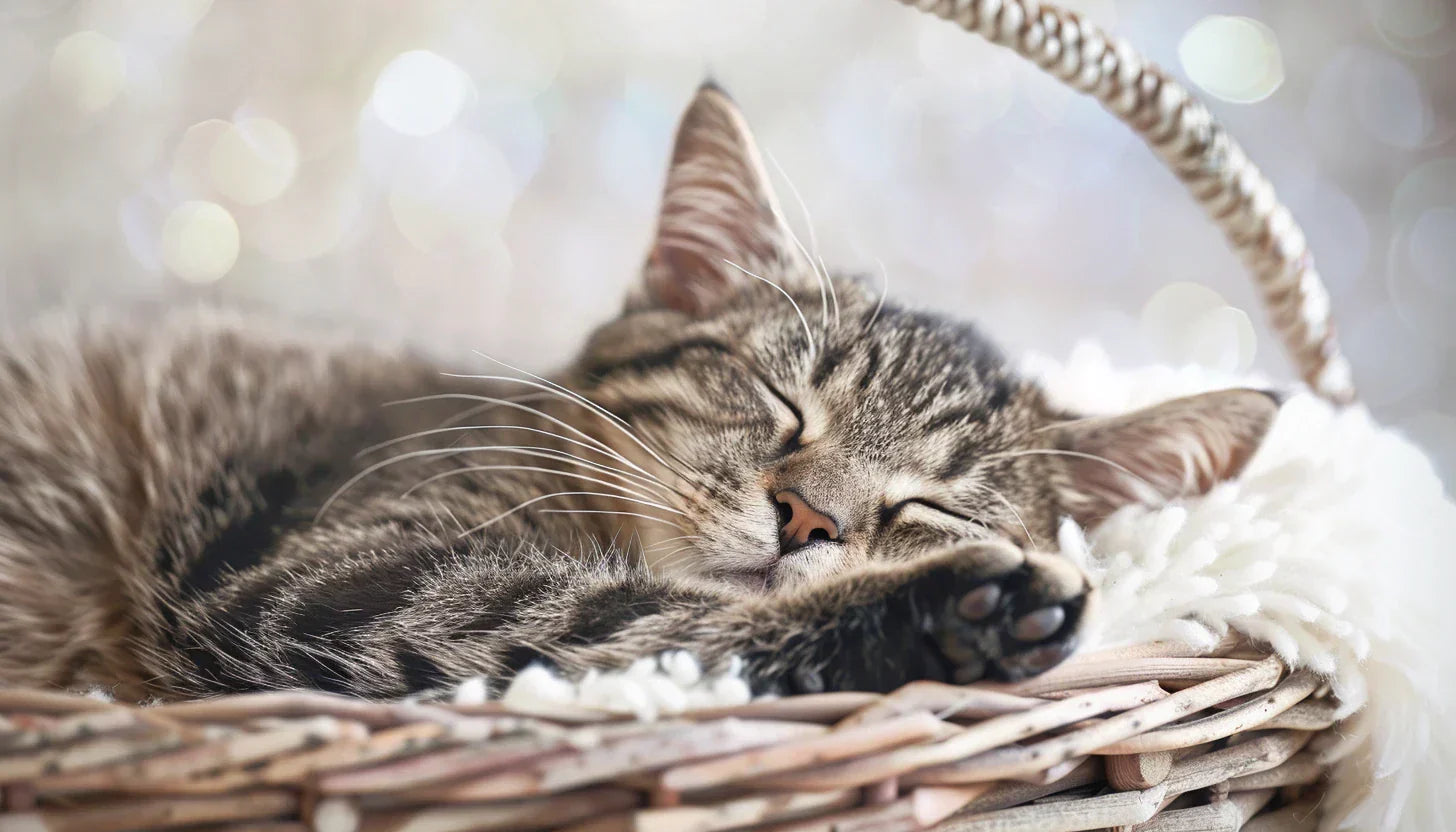
Twitching of paws, whiskers, or tail. These movements show that your furry friend is sleeping deeply and feels safe.
Cat twitches in sleep – why does this happen?
If your cat twitches in sleep, it can sometimes look worrying at first glance. But usually, these movements are completely normal. They show that your cat is sleeping deeply and feels safe in its surroundings.
Typical movements during sleep:
- twitching paws
- fluttering eyelids
- vibrating whiskers
- jerky tail movements
- slight trembling or muscle twitching
- quiet chattering or meowing
These reactions are caused by brain activity during deep sleep. The muscles relax while the brain remains active – especially in the REM phase, when cats dream.
So, if your furry friend twitches its paws or thrashes its tail, it is probably processing the day's experiences. This is a good sign: your cat is relaxed and feels safe.
Causes of twitching during sleep
If your cat twitches in sleep, there is usually something completely natural behind it. Nevertheless, it is worth taking a closer look at possible causes – especially if the movements occur frequently or are particularly strong.
1. REM sleep and dreams
The most common cause of twitching is the dream phase, also called the REM phase. In this sleep phase, the brain processes the impressions of the day. This causes involuntary muscle movements: The paws twitch, the whiskers vibrate, sometimes the tail moves, or the cat makes quiet sounds.
All of this is normal and shows that your cat is dreaming deeply relaxed – perhaps of an exciting game or a successful mouse hunt.
2. Cold or muscle tremors
A too cold sleeping place can cause slight muscle tremors – especially in older or short-haired cats. So, if your cat trembles in sleep, check if it is warm enough. A cozy blanket, a protected place, or a cat cave can help relax the muscles and reduce the trembling.
3. Spontaneous muscle reactions
Even in deep sleep, individual muscles can contract briefly. These reflex movements occur when nerves remain active during sleep.
Paws, ears, and whiskers are particularly affected. They twitch briefly without your cat waking up. Such small movements are completely harmless.
4. Stress and emotional experiences
Cats also process emotional experiences in sleep. After an exciting day – for example, after a visit to the vet, an argument with another cat, or a new environment – there can be more intense dreams. This shows in stronger twitching or movements. If such nights occur more frequently, it is worth identifying possible stress sources and reducing them.
5. Stimuli from the environment
Cats react to their environment even in half-sleep. A sudden change in light, noises, or a movement in the room can trigger small muscle twitches.
These short reactions are completely normal. They show that your cat remains alert – even in sleep.
In most cases, twitching is therefore no cause for concern. It is part of the natural sleep behavior of every furry friend and shows that body and mind are working actively.
Do cats dream – and if so, what do they dream about?
Yes, cats actually dream. Scientific studies show that they exhibit similar brain activity during sleep as humans. Especially in the REM phase, the brain is highly active while the body remains relaxed. That is exactly when the typical twitching, paw movements, or twitching whiskers occur.
How you can tell your cat is dreaming:
- It moves its paws as if it were walking.
- The eyes twitch under the eyelids.
- It meows or chatters quietly.
- Its tail twitches rhythmically.
So, your furry friend is probably dreaming of situations it experienced during the day – from chasing a fly to cuddling on the sofa. So, if your cat twitches in sleep, you can be happy: It feels comfortable enough to dream.
Can cats have nightmares?
Cats can also dream restlessly – sometimes so intensely that it almost looks like a nightmare. Although nightmares in animals are not clearly scientifically proven, their behavior suggests that they can experience negative dreams.
Typical signs of nightmares:
- Your cat hisses, yowls, or meows in sleep.
- The whole body twitches or cramps up strongly.
- The animal suddenly jolts up and appears disoriented or frightened.
- After waking up, the kitty immediately seeks refuge or hides.
Such symptoms occur more frequently in cats that have experienced stress, anxiety, or traumatic experiences – for example, after a move, a visit to the vet, or conflicts with other animals.
If your cat becomes restless in sleep, do not wake it up directly. The sudden jolt can frighten it or lead to defensive reactions. It is better to speak to it calmly or gently make a familiar noise until it wakes up on its own.
When should twitching be checked by a vet?
In most cases, your cat's twitching in sleep is harmless. But sometimes there is more to it – especially if the movements are frequent, strong, or unusual.
Pay attention to these warning signs:
- severe or persistent seizures
- twitching while awake
- coordination problems when walking or jumping
- dilated pupils or staggering
- saliva, foam, or blood in the mouth
- changed behavior (e.g., aggression, lethargy, restlessness)
- incontinence during sleep
If such symptoms occur, you should see a vet immediately. These signs can be caused by neurological diseases such as epilepsy, poisoning, metabolic disorders, or nerve damage.
Severe trembling or recurring muscle cramps can also indicate pain or illness. The earlier the cause is identified, the better your furry friend can be helped.
Trust your gut: If something about its behavior seems unusual to you, a veterinary examination is always the right decision.
When is behavioral advice useful?
Sometimes restless sleep is not caused by a physical problem, but by stress or emotional distress. If your cat twitches frequently, yowls in sleep, or wakes up in a panic, behavioral advice can be useful.
First, the vet should always check whether medical causes can be ruled out. If physical health is confirmed, animal psychological advice can help identify and resolve the emotional triggers.
Typical signs that behavioral help is useful:
- frequent nightmares or severe twitching
- restless sleep behavior with flight reactions
- avoiding certain sleeping places
- loud, fearful meowing in sleep
- increased alertness or skittishness
Animal psychologists help identify stress sources and optimize your cat's environment. This includes, for example, reducing stimuli, establishing fixed routines, and providing safe retreat spaces. This way, your furry friend can relax in the long term and sleep peacefully again.
Tips for a safe and relaxed cat sleep
Quiet sleep is just as important for cats as it is for us humans. With a few measures, you can ensure that your furry friend feels safe and sleeps soundly.
The ideal sleeping place:
- Quiet and protected: Choose a place without noise, drafts, or thoroughfares.
- Cozy and warm: Soft blankets, felt caves, or heated mats give the cat a sense of security.
- Elevated and observable: Many cats prefer to sleep with a view – for example, on the scratching post or windowsill.
- Variable: Offer several sleeping places. Cats change their favorite spots depending on the season or mood.
A stress-free environment:
- Avoid loud music, bright lights, or abrupt changes.
- In multi-cat households, separate retreat spaces help avoid conflicts.
- Provide retreat options where your cat feels safe and undisturbed.
If your cat is weakened or recovering from an illness, a targeted diet can help strengthen the body. The KATTOVIT Recovery, for example, supports the energy balance and helps gently improve the overall condition.