









Table of Contents
- What is pancreatitis in cats?
- Symptoms of pancreatitis in cats
- Causes and risk factors of pancreatitis
- Forms of pancreatitis in cats
- Diagnosis: How does the veterinarian detect pancreatitis?
- Treatment and therapy
- Course and prognosis
- Food for pancreatitis – what is important?
- Preventing relapses: what you should consider in everyday life
- FAQ - Frequently Asked Questions
What is pancreatitis in cats?
Pancreatitis in cats is also called pancreatitis. This is an inflammation of the pancreas. This organ is located between the stomach and the small intestine and fulfills important tasks in the body.
If the pancreas becomes unbalanced, it can damage itself. Digestive enzymes, which are actually supposed to become active in the small intestine, attack the body's own tissue. Inflammation develops. Depending on the extent of the disease, the inflammation remains locally limited or affects other organs.
Function of the pancreas
The pancreas has two main tasks:
- It produces digestive enzymes. These enzymes enter the small intestine and help break down fats, proteins, and carbohydrates from food. Only in this way can the body absorb the nutrients.
- It produces hormones. This includes insulin, for example. This hormone regulates blood sugar.
The pancreas therefore has an exocrine function for digestion and an endocrine function for hormone production.
Symptoms of pancreatitis in cats
Pancreatitis usually causes no specific symptoms in cats and dogs. Many signs initially appear like a harmless gastrointestinal infection. This is exactly what makes early diagnosis difficult.
Early signs
The most common early signs include:
- Loss of appetite or refusal to eat
- Lethargy and withdrawal
- Weight loss
- Less activity than usual
Some cats simply seem quieter than usual. Others react sensitively when picked up. Since these symptoms also occur with other diseases, pancreatitis is often not immediately suspected.
Obvious symptoms
As the condition progresses, more obvious symptoms may occur. These include:
- Vomiting
- Diarrhea or constipation
- Visible or hidden abdominal pain
- Tense posture
- Dehydration
Cats often only show pain indirectly. They withdraw or avoid being touched on the belly. Changes in eating behavior can also indicate discomfort in the stomach, intestines, and pancreas.
When does the disease become life-threatening?
In severe cases, the inflammation spreads throughout the body. The cat appears severely weakened. This can lead to circulatory problems, hypothermia, and breathing difficulties. If a cat does not eat for several days, fatty liver is also a risk. Therefore, you should always have persistent loss of appetite checked by a veterinarian.
Causes and risk factors of pancreatitis
In pancreatitis, the exact cause often cannot be clearly determined. In many cases, veterinarians speak of an idiopathic disease. This means that no clear trigger is found. Nevertheless, there are known risk factors that can favor pancreatitis:
Food and feeding
Diet can play an important role. Very fat-rich or unsuitable food for cats puts a strain on the pancreas. Also, highly fluctuating feeding habits or sudden changes in food can strain the digestive tract.
Overweight is also considered a risk factor. An increased fat content in the body changes the metabolism and can promote inflammatory processes.
In cats, the connection between the fat content of the food and pancreatitis is less clear than in dogs. Nevertheless, it is recommended to pay attention to balanced and easily digestible food.
Connection with the stomach and intestines
The pancreas works closely with the stomach and the small intestine. Inflammation in this area can increase the risk of pancreatitis.
In cats, the bile duct and pancreatic duct empty into the small intestine together. If the pressure in the intestine increases, for example due to chronic vomiting or intestinal inflammation, secretions can flow back. This backflow can irritate the pancreas and trigger inflammation.
This is why diseases of the intestines and the pancreas often occur together.
Comorbidities
Certain diseases additionally increase the risk of pancreatitis. These include:
- Diabetes mellitus
- chronic intestinal inflammation (IBD)
- inflammatory diseases of the bile ducts
- hormonal disorders such as hypothyroidism
- infections such as FIP, FIV, feline herpesviruses, and toxoplasmosis
- certain medications such as antiepileptics
If several inflammations occur at the same time, for example in the intestines, liver, and pancreas, veterinarians speak of a so-called triaditis.
If your cat already suffers from a chronic disease, you should take changes in eating behavior or general condition particularly seriously.
Forms of pancreatitis in cats
Pancreatitis can develop differently in cats. Veterinarians distinguish primarily between acute and chronic pancreatitis. Both forms can be mild or severe.
Acute pancreatitis
Acute pancreatitis begins suddenly. Your cat's condition can deteriorate significantly within a few hours. Some cats vomit frequently, no longer eat at all, or appear severely weakened. Some react sensitively when you touch their belly.
In mild cases, the pancreas can recover completely. In severe cases, the inflammation spreads throughout the body. Then the circulation becomes unbalanced or several organs no longer work properly.
In this phase, every hour counts. Rapid treatment improves the chances of survival.
Chronic pancreatitis and recurring flare-ups
Chronic pancreatitis develops slowly. The inflammation persists or flares up again and again. Your cat eats inconsistently, loses weight, or appears less active for a long time.
Flare-ups are typical. During these, the condition suddenly worsens, although the disease has already existed for a long time.
Since the inflammation permanently changes the tissue, the chronic form usually does not heal completely. The veterinarian should therefore check your cat regularly.
Possible consequences
If the pancreas remains chronically inflamed, it no longer produces sufficient digestive enzymes. Then exocrine pancreatic insufficiency develops.
Your cat may have difficulty utilizing the food, lose weight, or develop diarrhea. If the hormone-producing part of the pancreas is also affected, diabetes mellitus can develop.
Diagnosis: How does the veterinarian detect pancreatitis?
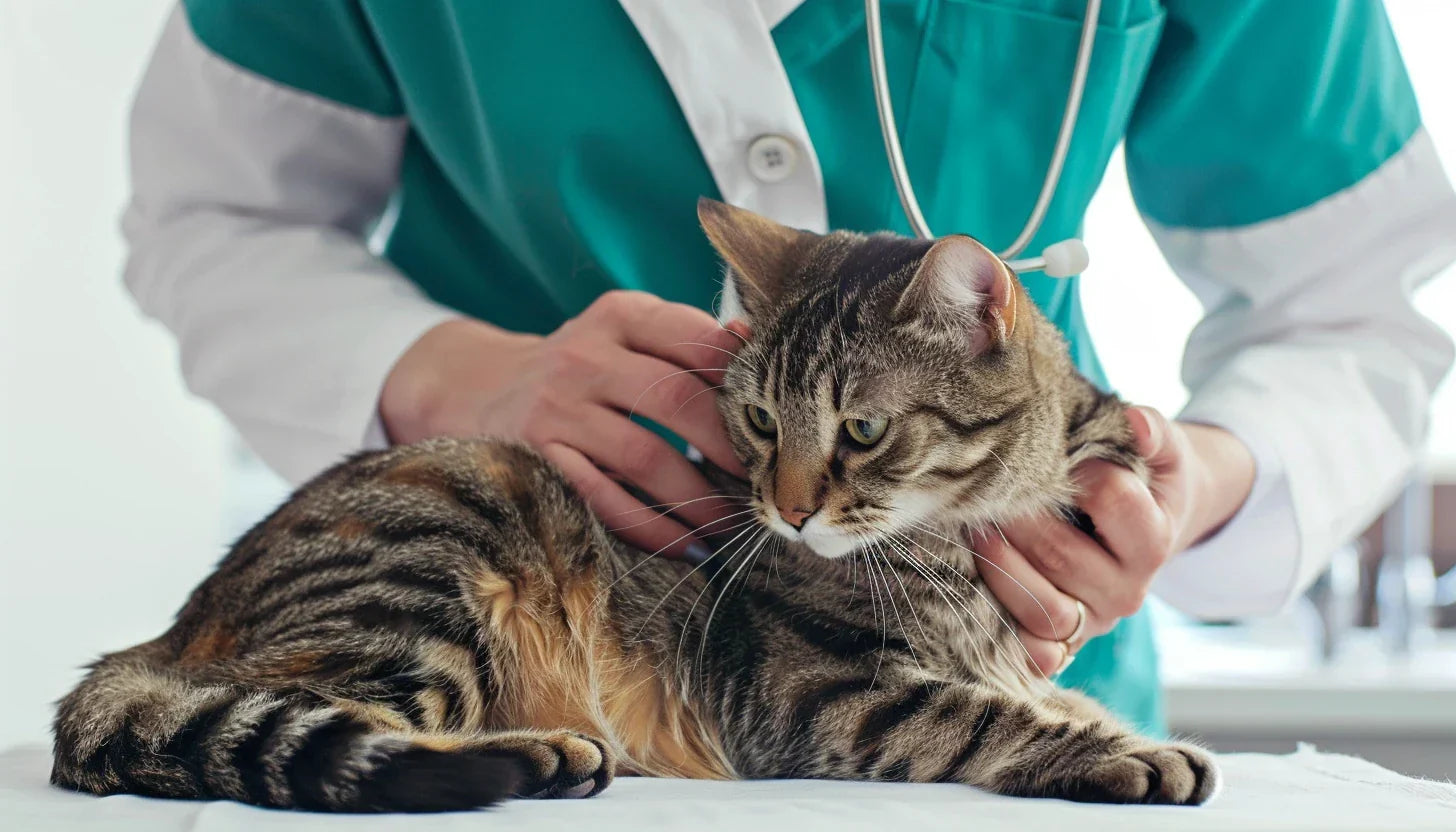
Due to the non-specific symptoms, the veterinarian cannot detect pancreatitis through palpation and a general examination alone. Therefore, they combine various diagnostic procedures to reliably confirm pancreatitis or rule out other diseases.
Blood values and fPLI test (lipase)
First, the veterinarian examines your cat's blood. Certain changes can indicate inflammation. These include abnormalities in inflammatory markers, liver values, or electrolytes.
An important marker is feline pancreatic lipase immunoreactivity, or fPLI for short. This test measures the concentration of an enzyme that comes exclusively from the pancreas. If the value is elevated, it indicates inflammation of the pancreas.
The fPLI test is also suitable for monitoring the course. If the value drops during therapy, it indicates improvement.
Ultrasound and further examinations
In addition, the veterinarian usually performs an ultrasound of the abdominal cavity. During this, they assess the size, structure, and surroundings of the pancreas. Swelling or fluid accumulations can indicate inflammation.
However, not every pancreatitis shows up on ultrasound. Therefore, the veterinarian always evaluates the results in connection with symptoms and blood values.
Depending on the situation, further examinations may be useful. These include:
- Urine examination
- X-ray to rule out other causes
- Tests for accompanying diseases
Treatment and therapy
The veterinarian often treats mild pancreatitis as an outpatient. If the condition worsens or the cat no longer eats, they admit it as an inpatient. The veterinarian can do the following for pancreatitis:
Fluid therapy and pain management
Many cats lose a lot of fluid through vomiting or diarrhea. If the cat does not eat, the body becomes additionally dehydrated. The veterinarian compensates for this loss with intravenous infusions. In this way, they stabilize the circulation and improve the blood flow to the pancreas.
At the same time, they treat the pain. Even though cats often hide discomfort, pancreatitis causes severe abdominal pain. Pain medication improves the animal's well-being, which supports recovery.
Medications against nausea and inflammation
If the cat suffers from nausea, it usually does not eat voluntarily. The veterinarian then gives medications against nausea and vomiting. This calms the gastrointestinal tract.
Depending on the findings, they can administer further medications. If there is a suspicion of bacterial involvement or accompanying inflammation of the intestines or bile ducts, they treat these diseases specifically.
Inpatient treatment in severe cases
If the cat is in poor general condition, it stays in the animal clinic for a while. There, the team closely monitors the circulation, body temperature, and blood values.
If the cat does not eat on its own, the veterinarian places a tube and provides it with food through this. This ensures that the body receives sufficient energy and the circulation stabilizes.
The earlier the veterinarian intensively treats pancreatitis, the better complications can be avoided.
Course and prognosis
The course of pancreatitis depends on the severity and the timing of treatment. If the veterinarian detects pancreatitis early and treats it consistently, the pancreas often recovers completely in mild cases.
If the disease progresses severely or remains undetected for a long time, the risk of complications increases.
Life expectancy with chronic pancreatitis
In chronic pancreatitis, the inflammation usually does not heal completely. The tissue of the pancreas changes permanently. As a result, the pancreas produces fewer digestive enzymes or hormones over time.
The life expectancy depends primarily on:
- how severely the pancreas is already damaged
- how frequently flare-ups occur
- whether follow-up diseases such as diabetes mellitus or exocrine pancreatic insufficiency develop
- how consistently therapy and feeding are implemented
If the disease progresses mildly, the cat can live for many years with a good quality of life. However, if severe flare-ups occur repeatedly or other organs fail, the prognosis worsens.
Food for pancreatitis – what is important?
In pancreatitis, the right feeding relieves the pancreas and supports healing.
The food should be easily digestible and have only a low to moderate fat content. Because very fat-rich food additionally puts a strain on the pancreas. At the same time, your cat needs sufficient energy and high-quality protein. Always coordinate the diet with the veterinarian.
Divide the daily ration into several small meals . Small portions spare the stomach, intestines, and small intestine. Avoid sudden changes in food.
If your cat additionally suffers from diarrhea or vomiting, easily digestible KATTOVIT Gastro food is well suited. The recipe relieves the digestive tract and stabilizes the stomach and intestines. If the cat's general condition is weakened, a recovery course can help. In addition to encouraging drinking, coordinated Gastro Vital Drinks can be used.
Preventing relapses: what you should consider in everyday life
After recovering from pancreatitis, flare-ups can occur again. With fixed routines, you reduce the risk.
Pay special attention to the following points:
- Consistent feeding: Stick to the recommended food. Do not change the food abruptly. Avoid fatty snacks.
- Early reaction to changes: If your cat eats less, vomits, or loses weight, contact the veterinarian early.
- Regular check-ups: Have the weight, general condition, and, if necessary, blood values checked regularly.
- Avoid stress: Major changes in the environment or pain from other diseases additionally strain the body.