


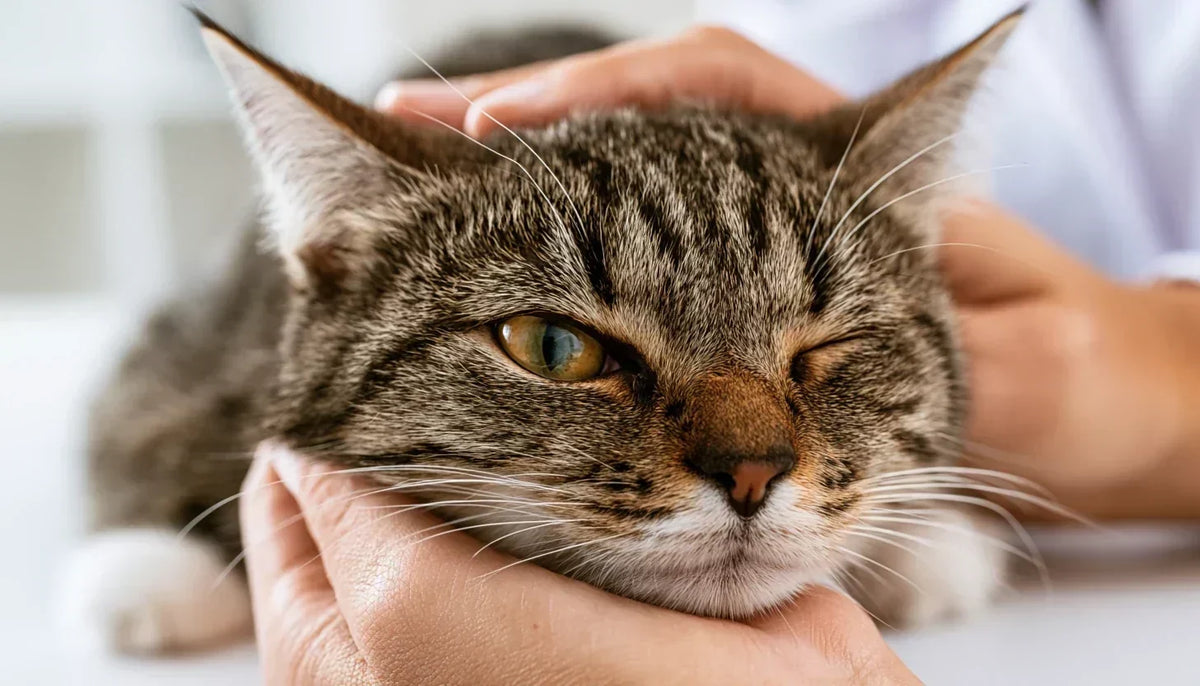

Teary or reddened eyes are usually quickly noticeable in cats. If your furry friend blinks more often than usual, squints one eye, or develops eye discharge, conjunctivitis may be the cause. Eye inflammation is not uncommon in cats and can have a wide range of causes – from mild irritation to infection with viruses or bacteria.
Table of Contents
- What is conjunctivitis in cats?
- How can I recognize conjunctivitis in my cat?
- Cat has conjunctivitis: possible causes
- Is conjunctivitis in cats contagious?
- Conjunctivitis: diagnosis by the veterinarian
- Treating conjunctivitis in cats
- Prevention: preventing conjunctivitis in cats
- FAQ - Frequently Asked Questions
What is conjunctivitis in cats?
Conjunctivitis, also known as conjunctivitis , is an inflammation of the conjunctiva in the eye. It is one of the most common eye diseases in cats and can affect one or both eyes . The causes range from harmless irritation to infections with viruses or bacteria. That is why you should always take changes in your cat's eyes seriously.
What is the function of the conjunctiva?
The conjunctiva is a thin mucous membrane that covers the inside of the eyelids and part of the eyeball. It protects the eye from dirt and pathogens and distributes the protective tear film on the surface of the eye together with tear fluid. This keeps the eye moist and allows foreign bodies to be washed out more easily.
Cats also have a third eyelid, the so-called nictitating membrane. It can also be affected by conjunctivitis and protrude visibly. You can learn more about this in our guide to nictitating membrane prolapse in cats.
Consequences of untreated conjunctivitis
A cat's eyes are very sensitive. If conjunctivitis is left untreated, the inflammation can spread to other areas of the eye and damage the cornea, among other things. In the worst case, there is a risk of permanent vision damage or even loss of sight.
Fortunately, conjunctivitis can be treated well in most cases. The earlier a veterinarian detects the cause and starts the appropriate therapy, the better the chances of recovery.
How can I recognize conjunctivitis in my cat?
Conjunctivitis usually makes itself noticeable early on through changes in the eyes . Often, only one eye is affected at first. Depending on the cause, however, the inflammation can also spread to the second eye. Observe the symptoms as closely as possible and pay attention to whether your cat's condition worsens within a short period of time.
Typical symptoms
Depending on the cause and course, different symptoms may occur. Affected cats often show several symptoms at the same time.
Typical signs are:
- The eye is reddened or swollen.
- The eyelids appear swollen or stuck together.
- The eye produces watery, mucous, or purulent discharge .
- The cat blinks unusually often or squints the eye.
- The furry friend rubs the eye with its paw or rubs its head against furniture.
- The animal avoids bright light.
- The eye tears more.
If viruses or bacteria cause the conjunctivitis, additional symptoms often occur. Many cats sneeze, have nasal discharge, or appear listless. Especially in young cats, conjunctivitis can be part of a cat cold.
When you should see the veterinarian
Slightly teary eyes can also be caused by dust or temporary irritation. However, if the symptoms persist or worsen, you should have your cat examined by a veterinarian.
A visit to the veterinarian is particularly important if:
- The eye is severely reddened or swollen .
- Purulent or yellowish-green eye discharge occurs.
- The cat keeps the eye permanently closed .
- The furry friend is in pain or avoids contact with the head.
- In addition, the cat has a fever, sneezing or loss of appetite .
- The symptoms do not improve after one to two days or even worsen.
The earlier the veterinarian detects the cause, the sooner they can start the appropriate treatment and prevent possible consequential damage to the eye.
Cat has conjunctivitis: possible causes
Conjunctivitis can have a wide range of causes. Some only temporarily irritate the eye, while others are caused by pathogens and must be specifically treated. That is why it is important not only to relieve the symptoms but also to find the cause.
Viruses and bacteria
Infections with viruses or bacteria are among the most common causes of conjunctivitis in cats. The feline herpesvirus and the bacterium Chlamydophila felis play a particularly important role. Both pathogens irritate the conjunctiva and can lead to reddened, swollen, and teary eyes.
In addition, bacteria can worsen an existing inflammation. That is why the veterinarian decides after the examination whether, for example, antibiotic eye drops or other medications are necessary.
Cat cold as a common cause
Especially in young cats, conjunctivitis often occurs in connection with a cat cold. This is not a harmless cold, but a complex of various viral and bacterial infections, which can affect the eyes and respiratory tract, among other things.
In addition to reddened eyes, affected cats often also have nasal discharge, sneezing, fever, or loss of appetite.
Foreign bodies and injuries
A foreign body can also irritate the sensitive conjunctiva. For example, if dust, sand, plant debris, or small insects get into the eye, the cat often reacts with increased blinking or teary eyes. Scratches from fights or other injuries can also trigger inflammation.
Possible signs are:
- The cat squints one eye.
- The eye suddenly tears more.
- The furry friend frequently rubs the eye with its paw.
- The symptoms usually occur very suddenly.
Allergies and irritants
Some cats react sensitively to substances in their environment. Pollen, house dust, or certain cleaning products can irritate the conjunctiva and promote inflammation. Food allergies can also be a cause, but are significantly rarer. Typically, the eyes tear and are reddened without a bacterial or viral infection.
Drafts and other possible causes
Dry air or drafts can also irritate sensitive cat eyes. Some furry friends, for example, react sensitively to a sleeping place right by an open window or near an air conditioner. Such irritations are usually temporary, but should still be observed.
In addition, other causes may be behind conjunctivitis, for example:
- Misalignment of the eyelids or eyelashes
- A narrowed or clogged nasolacrimal duct
- Diseases of the cornea
- More rarely, also parasites or fungal infections
Since many causes cause similar symptoms, the cause usually cannot be reliably identified on the basis of the symptoms alone. That is why a veterinarian should thoroughly examine your cat's eyes.
Is conjunctivitis in cats contagious?
Whether conjunctivitis is contagious depends on its cause. While irritation from drafts, a foreign body, or an allergy cannot be transmitted, many viral and bacterial conjunctivitis are contagious.
Contagion between cats
If viruses or bacteria cause the inflammation, the infection can easily spread to other cats. This applies especially to pathogens from the cat cold complex, such as the feline herpesvirus or Chlamydophila felis.
Transmission usually occurs via droplets when sneezing or through eye discharge. Shared bowls, sleeping places, or grooming utensils can also spread pathogens.
Particularly at risk are:
- Cats living with other cats
- Cats in animal shelters or foster homes
- Young cats whose immune system is not yet fully developed
- Older or weakened animals
If your cat has infectious conjunctivitis, you should limit contact with other cats as much as possible, until the veterinarian gives the all-clear. If several cats live in the household, you should also regularly clean bowls, blankets, and other items and avoid using them together as long as one cat has infectious conjunctivitis.
Can humans catch it?
The risk of transmission to humans is overall low. Depending on the pathogen, transmission is technically possible, but it occurs only rarely . Nevertheless, it is advisable to wash your hands thoroughly after contact with an infected cat and to avoid bringing eye discharge into contact with your own eyes or mucous membranes as much as possible.
Conjunctivitis: diagnosis by the veterinarian
Since conjunctivitis can have many different causes, the veterinarian examines not only the affected eye, but also the general health condition of your cat. This makes it easier to assess whether, for example, an infection, a foreign body, or another disease is behind the symptoms.
Examination of the eye
First, the veterinarian looks closely at the eye and the eyelids. They check, among other things, whether the conjunctiva is reddened or swollen and whether foreign bodies or injuries can be detected. They also examine whether the cornea is affected or whether there are other changes in the eye.
Swab
If a bacterial or viral infection is suspected, the veterinarian will often take a swab from the conjunctiva. In the laboratory, they can then examine which pathogens caused the inflammation. This is particularly important if the symptoms do not improve despite treatment or keep recurring.
Treating conjunctivitis in cats
The treatment is always based on the cause of the conjunctivitis. While a few measures are often sufficient for mild irritation, bacterial or viral infections require targeted medications. That is why you should never use eye drops or ointments on your own , but always coordinate the therapy with a veterinarian.
Eye drops and ointments
Eye drops and eye ointments are among the most common treatment options for conjunctivitis. Which preparations are suitable depends on what caused the inflammation.
Depending on the cause, the veterinarian may prescribe different preparations:
- Antibiotic eye drops or ointments are used if bacteria cause the inflammation or if a bacterial infection is also present.
- Antiviral medications may be necessary for certain viral infections, for example caused by the feline herpesvirus.
- Anti-inflammatory preparations help relieve swelling and discomfort if the veterinarian considers them appropriate.
It is important to use the medications exactly as instructed . Even if the symptoms quickly subside, you should not end the treatment prematurely.
Medications and further treatment
Not every conjunctivitis can be treated with the same medications. That is why the veterinarian first examines what caused the symptoms.
Depending on the cause further measures may be necessary, including, for example:
- Removal of a foreign body from the eye
- Medications against bacteria or viruses
- Treatment of the underlying disease, for example in the case of a cat cold
- Medications against allergies, if an allergic reaction causes the symptoms
How long does conjunctivitis last?
How quickly conjunctivitis heals depends mainly on its cause. Mild irritations often improve within a few days. If a bacterial or viral infection is the cause, treatment can last up to several weeks . Especially with diseases such as a cat cold, conjunctivitis often only heals once the underlying disease is also under control .
It is important to use the prescribed medications until the end of the treatment. Otherwise, the inflammation may flare up again or not heal completely.
How can I support my cat's recovery?
During an illness, your cat's body needs a lot of energy. Some furry friends eat less during this time or lose weight. A balanced diet can support the body during recovery, but it does not replace veterinary treatment.
If your cat temporarily eats less or is in the recovery phase after an infection, a recovery diet can be beneficial. The KATTOVIT Recovery Diet for example provides easily digestible nutrients and additional energy and is suitable for nutritional support during recovery or in cases of increased nutrient requirements.
Prevention: preventing conjunctivitis in cats
Not every conjunctivitis can be prevented. However, you can reduce the risk with a few measures:
- Keep your cat's vaccinations up to date, especially against pathogens from the cat cold complex.
- Remove eye discharge carefully as needed with a sterile compress and lukewarm water.
- Protect your cat as much as possible from drafts and irritating substances such as smoke or aggressive cleaning products.
- Watch out for injuries in the eye area after fights with other cats if your cat goes outdoors.
- Strengthen your cat's general well-being with a balanced diet and as little stress as possible.