


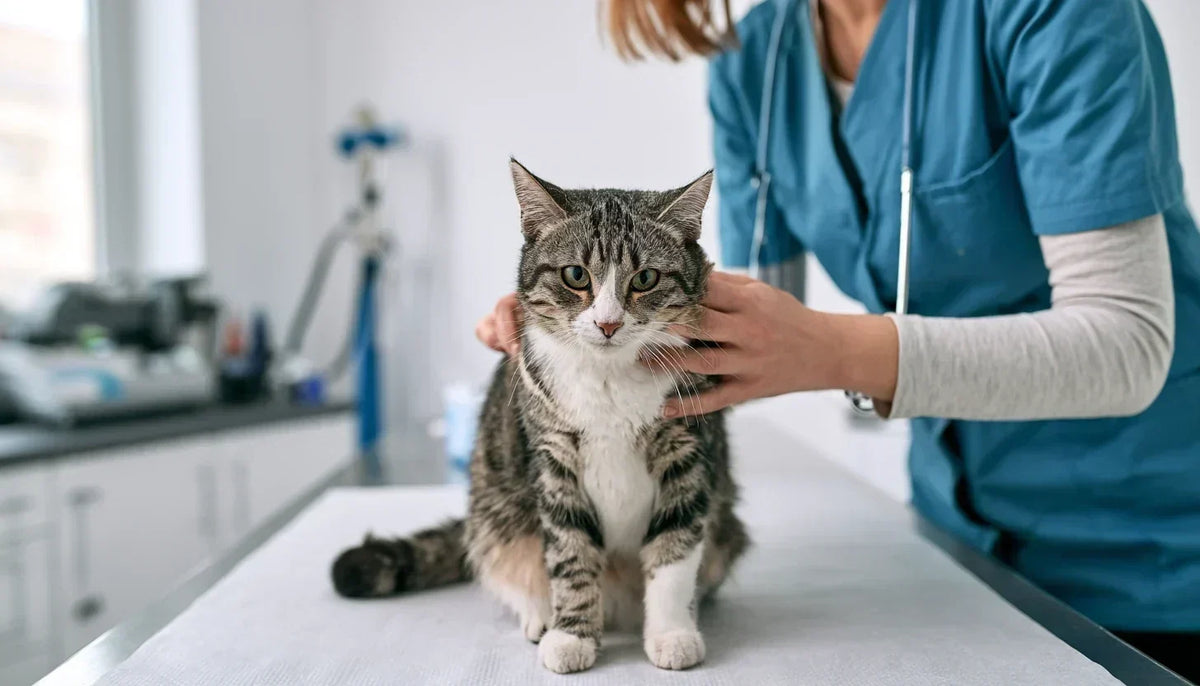

During your cat's first year of life, you face an important decision: Do you want to have your cat spayed or neutered or not? More and more cat owners are choosing neutering today – and for good reason: The procedure prevents uncontrolled reproduction and also helps to reduce hormone-related stress and avoid instinct-driven behavioral patterns.
Table of Contents:
- Spaying and neutering cats and tomcats – explained simply
- Benefits of neutering: Why should cats be neutered?
- Disadvantages of neutering: What risks does the procedure involve?
- Preparation, procedure and aftercare: How neutering works
- Costs: How much does it cost to neuter a cat?
- The right time to neuter your cat
- Is there a mandatory neutering requirement for cats in Germany?
- Conclusion: Neutering your cat
- FAQ - Frequently Asked Questions
Spaying and neutering cats and tomcats – explained simply
Neutering is a surgical procedure to remove the gonads, i.e., the animal's reproductive organs:
- In tomcats , the testicles are removed.
- In female cats , the ovaries are removed. In some cases, the veterinarian also removes the uterus. In healthy female cats, this is usually not necessary. The uterus will shrink on its own after neutering.
The reproductive organs are completely removed during neutering. As a result, the animals can no longer reproduce. In addition, the body no longer produces sex hormones. Consequently, neutered cats and tomcats no longer experience a mating instinct and stop exhibiting hormone-driven behavioral patterns:
- Female cats will no longer go into heat.
- Tomcats will no longer mark.
- Cats and tomcats will wander less.
What is the difference between neutering and sterilization?
During neutering, the cat's reproductive organs are completely removed. During sterilization, only the fallopian tubes or vas deferens are severed. Both procedures make the animals unable to reproduce.
But: After neutering, the body no longer produces sex hormones. This also changes the cat's (hormonal) behavior. This change does not occur after sterilization.
Generally, neutering is considered the standard approach. Most cats and tomcats are therefore neutered – not sterilized.
| Neutering | Sterilization | |
|
Procedure/Measure |
|
|
|
Reproduction and hormone production |
|
|
|
Behavior and temperament |
|
|
Benefits of neutering: Why should cats be neutered?
- No unwanted offspring – and therefore fewer free-roaming cats and cat suffering caused by uncontrolled reproduction
- No hormone-related behavior – less stress for cats/tomcats and owners, as heat and marking behavior are prevented or greatly reduced
- Less wandering – lower risk of accidents and injuries, lower risk of escaping due to a smaller range of movement than with unneutered animals
- Less competition among tomcats – more harmonious coexistence in multi-cat households, fewer territorial fights among free-roaming cats than with unneutered animals
- Lower risk of reproductive organ diseases – for example testicular cancer in tomcats, uterine cancer, uterine inflammation, or mammary gland hyperplasia and tumors in cats
- Containment of infectious diseases – serious diseases such as feline AIDS and leukemia are usually transmitted during territorial fights or mating
- Longer life expectancy – and often a higher quality of life, especially for cats for whom prolonged heat cycles, pregnancy and birth can cause enormous stress
Disadvantages of neutering: What risks does the procedure involve?
Neutering is a routine procedure. Both the procedure itself and the healing process usually proceed without complications. The veterinarian examines the cat thoroughly in advance and informs you about the exact procedure and potential risks. These include:
- Anesthesia and surgical risks: Every general anesthesia and operation carries a certain risk. In rare cases, bleeding, wound healing problems, infections, or inflammation may occur. Complications due to an intolerance of the anesthetic or pre-existing conditions are also possible, but are rare due to the preliminary examination.
- Possible weight gain: Neutering changes a cat's hormone balance and metabolism. The calorie requirement decreases. As a result, neutered cats gain weight more quickly. To prevent obesity, you can adjust the amount of food, introduce regular weight checks and make sure your cat gets plenty of exercise. For indoor and house cats, play sessions and walks can help.
Tip: In addition to sufficient exercise, food adapted to the changed energy requirements can also be useful to prevent weight gain after neutering. Specially developed recipes such as KATTOVIT Vital Care Sterilised support neutered cats with an adjusted energy content and high-quality proteins.
Preparation, procedure and aftercare: How neutering works
Preparing for neutering: Health check and consultation
- Preliminary examination: Before neutering, the veterinarian performs a health check. He examines the cat's general condition and determines whether it is fit for the procedure. Depending on the veterinary practice, the preliminary examination may take place at a separate appointment or directly on the day of neutering.
- Consultation: As part of the check-up or when scheduling the appointment, the veterinarian or staff will inform you about the neutering procedure and potential risks. You will usually receive an information sheet and will need to sign a consent form.
- Additional measures: General anesthesia during neutering often provides an opportunity to perform other minor medical procedures. Therefore, discuss in advance with the veterinarian whether you want to have your cat microchipped right away, for example, or if you are planning further examinations that require a blood sample.
Neutering your cat: Anesthesia and surgery
- Fasting requirements: The cat must fast for the anesthesia. This means: no food for 12 hours, no water for 2 hours. On the morning of the neutering appointment, bring your beloved to the veterinary practice.
- General anesthesia: The veterinarian injects the cat with the anesthetic. The animal falls asleep and will not be aware of anything from then on.
- Surgicalpreparation: The affected area is shaved, washed, disinfected, and covered with a sterile cloth until the procedure – for cats, it is the belly; for tomcats, the hindquarters.
- Neutering: The veterinarian removes the reproductive organs using an incision: In female cats, he makes an incision in the abdomen and removes the ovaries. In tomcats, he removes the testicles through small incisions in the scrotum.
- Wound care: In female cats, the abdominal incision is sutured. In tomcats, the incisions are so small that sutures are usually not necessary. The skin is often additionally sealed with a wound spray.
- Waking up: The animal is moved to the recovery room and comes to. There, it is monitored and cared for by the practice team until the anesthetic wears off.
- Pickup: The practice will call you as soon as your cat is awake and able to walk. Then you can pick up your beloved.
Supporting recovery: Aftercare and healing
- Recovery after anesthesia: In the first few hours, the after-effects of the anesthesia are still clearly noticeable. The cat is exhausted and often still a little groggy. Coordination difficulties when walking and grooming are normal. Provide a warm, quiet place to rest with a short path to the litter box, stay close by, and let your cat rest.
- Care: Be sure to follow the veterinarian's recommendations regarding food and water. Do not offer food until after a few hours and start with small portions. Cats often receive medication and pain relief in the first few days to support the healing of the abdominal incision. The veterinarian will give you everything you need for your furry friend and inform you about the dosage, frequency, and duration.
- Monitoring: Make sure your cat does not lick the wound. If in doubt, a bodysuit or Elizabethan collar can help. Check the wound daily. If you notice redness or swelling, or if the wound leaks, oozes, bleeds, opens up, or smells bad, contact the treating veterinarian immediately. Fever, lethargy, and continued withdrawal must also be checked by a veterinarian.
- Healing: After just a few days, most cats have recovered from the procedure. Free-roaming cats should still stay indoors until the wound has healed – at least 10 to 14 days. Here too, follow your veterinarian's recommendation. In tomcats, the healing process usually progresses faster than in female cats. In female cats, the sutures may need to be removed – but self-dissolving sutures are often used.
Tip to support recovery: If your cat eats very little after surgery or has an increased energy requirement, a highly digestible recovery food may be useful. The KATTOVIT Recovery was specially developed for weakened and recovering cats. The nutrient- and energy-rich recipe supports regeneration and is suitable, among other things, for the recovery phase after surgery.
Contact the veterinarian immediately in case of complications
If no complications occur, medical aftercare is usually not necessary. If you notice abnormalities in wound healing or changes in your cat's behavior , you should seek veterinary advice. These include:
- Redness and swelling around the wound
- Fluid, pus, or blood leaking from the wound
- A bad smell emanating from the wound
- Open areas or a gaping incision
- Severe, persistent withdrawal and lethargy
- Fever, vomiting or persistent loss of appetite
Costs: How much does it cost to neuter a cat?
The exact costs depend on the extent of the procedure and other factors and can vary depending on the veterinary practice and the animal. On average, the costs for neutering are around:
- €150 to €200 for tomcats
- €300 to €400 for female cats
The basis for calculating neutering costs is the German Veterinary Fee Schedule (GOT). This sets the following costs for the surgical procedure alone:
- €30.32 for the removal of testicles in tomcats
- €56.48 for the removal of ovaries in female cats
- €89 for the removal of ovaries and the uterus in female cats
This is the minimum rate. Depending on the severity of the conditions and complications, veterinarians may charge two to four times the fee. In addition, 19% VAT is added.
Additional costs are incurred for:
- necessary examinations
- anesthetic and injection
- medication and pain relief
- consumables such as gloves, cotton swabs, disinfectants, syringes, razors, wound closure materials, sterile coverings, and, if necessary, a bodysuit or Elizabethan collar.
The right time to neuter your cat
Ideally, you should have your cat or tomcat neutered at around 4 to 6 months of age – still before sexual maturity. For reference:
- Female cats reach sexual maturity at around 5 to 9 months of age.
- Tomcats reach it slightly later, at around 8 to 10 months.
- In large breeds, sexual maturity is often delayed by several months.
Important: The assumption that cats can only be neutered once they have gone into heat once has long been disproven and is therefore incorrect. Instead, there is now a tendency toward early neutering. There are good reasons for this:
- Heat cycles are especially stressful for young cats and can take a toll on the animals' health and quality of life. This also increases the risk of unplanned pregnancy. Therefore, neutering before the first heat cycle is recommended.
- It is also worth neutering tomcats before they start marking for the first time – or as soon as possible afterward. Because: If a tomcat has first learned marking behavior, there is a high risk, that he will continue the behavior despite neutering. Although removing the testicles suppresses the physical urge to mark his territory, it does not automatically stop the tomcat from continuing learned behavioral patterns.
Good to know: If your cat is currently in heat , you should wait to have her spayed until her condition has returned to normal. During heat, the tissues in the abdominal area and around the reproductive organs receive increased blood flow. This increases the risk of blood loss and complications during surgery. It is best to discuss this directly with your veterinarian, and do not hesitate to ask questions or express your concerns.
Is there a mandatory spaying requirement for cats in Germany?
There is currently no nationwide mandatory spaying requirement for cats and tomcats in Germany. However, you may still be required to have your cat spayed, depending on where you live and how you intend to keep your cat.
Key points at a glance:
- In more than 3,300 cities and municipalities in Germany cat protection ordinances are currently in effect, which require cat owners to have their cats spayed, microchipped, and registered under certain circumstances.
- In the affected regions, the requirement generally applies to cats and tomcats that roam freely. Indoor-only and house cats are therefore not affected.
- The legal basis is Section 13b of the Animal Welfare Act. This authorizes state governments to issue cat protection ordinances. The federal states are not required to create uniform regulations. This leads to differences between municipalities.
- Mandatory spaying is primarily intended to prevent uncontrolled breeding and thus reduce the number of free-roaming stray cats in the long term—and consequently reduce the strain on animal shelters.
- Schleswig-Holstein is currently the only federal state in which such a cat protection ordinance applies throughout the entire state. In Berlin and Hamburg, the requirement applies to the entire city area. In many other federal states, individual cities or municipalities are affected.
Conclusion: Spaying your cat
Spaying is one of the most common routine procedures in veterinary medicine and offers many benefits for both cats and tomcats. It prevents uncontrolled breeding, can thus relieve pressure on animal shelters, reduces hormone-related behaviors such as heat and marking, and can lower the risk of certain diseases.
The ideal time is usually before sexual maturity, so that unwanted behavior and unplanned pregnancies do not occur in the first place. Most cats recover within a few days after the procedure. With proper aftercare and regular weight checks, you can support a quick recovery and help your cat stay healthy in the long term.