



Table of Contents
- Recognizing Common Dental Problems in Cats
- Dental Care at Home – How to Do It Right
- Dental Problems: When to See the Vet
- Professional Dental Cleaning at the Vet
- FAQ - Frequently Asked Questions
Recognizing Common Dental Problems in Cats
Dental problems are among the most common conditions in cats. Because cats often hide pain well and for a long time, many problems are only detected late. Therefore, pay attention to even small changes in your cat's behavior and to these symptoms:
Typical Symptoms of Dental Problems
- Your cat eats less or only soft food
- They chew noticeably on one side or drool more
- They have bad breath
- The gums are red or bleed when eating
- Your cat withdraws or seems irritated
Common Causes
- Tartar: forms from plaque that hardens on the teeth
- Gingivitis: bacteria irritate the gums and cause pain
- FORL (resorptive lesions): painful dissolution of tooth substance, usually only detectable and treatable by the vet
Dental Care at Home – How to Do It Right
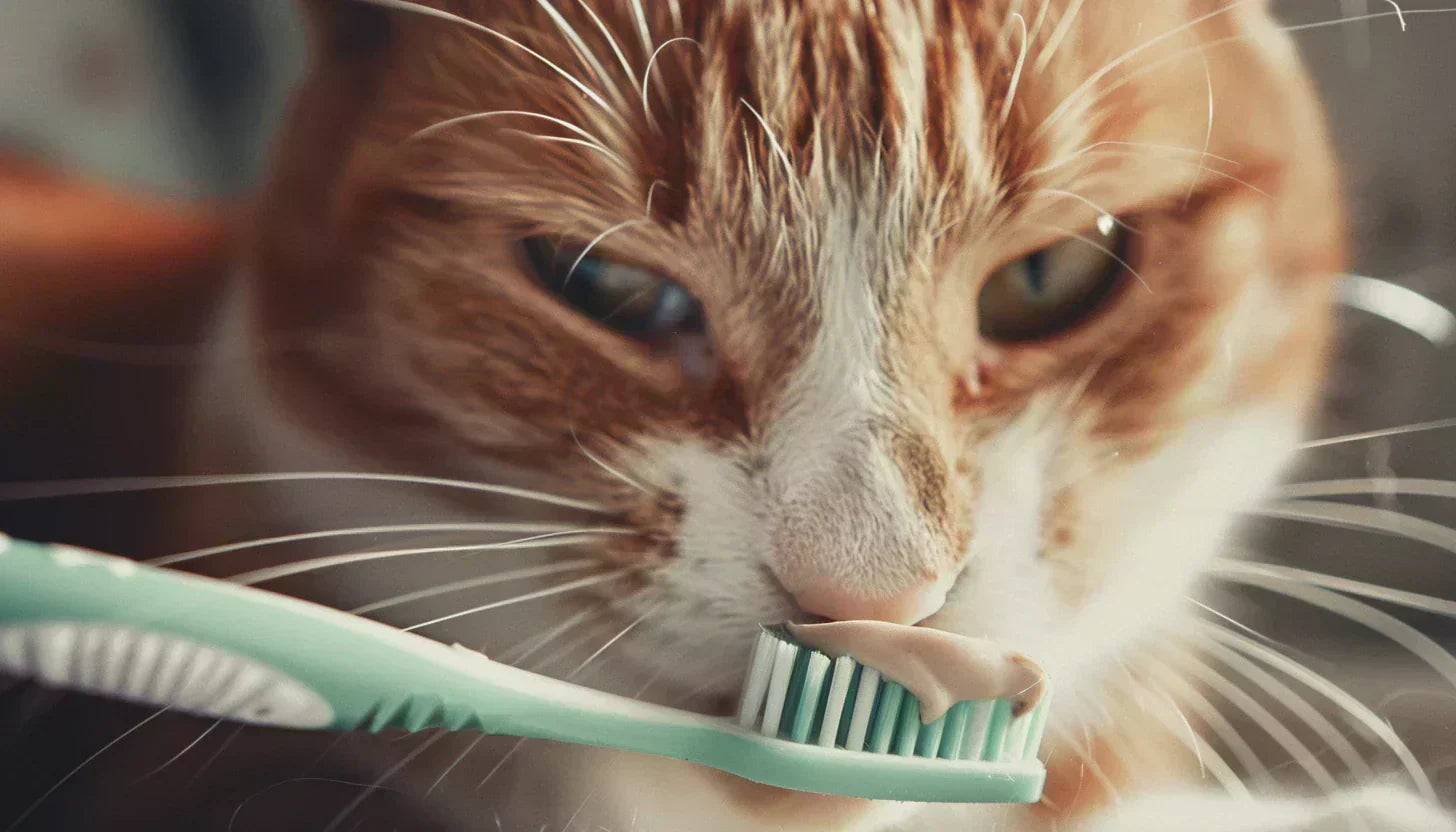
After eating, cats lick their teeth to remove food residue. However, this is often not enough. Soft food and treats promote plaque and tartar, which in turn cause inflammation and bad breath. Clean teeth are therefore just as important for cats as they are for humans.
Should a cat's teeth be brushed?
Yes, it is recommended to brush your cat's teeth regularly to remove dental plaque and prevent tartar. This helps prevent gingivitis, cavities, and painful dental diseases.
How do I get my cat used to having their teeth brushed?
With patience and positive reinforcement, this usually goes well:
- Gently touch your cat's mouth to build trust.
- Reward every cooperative behavior.
- Start with short brushing sessions and gradually increase them.
- Make brushing teeth a regular ritual – preferably daily.
The earlier you start, the easier it will be. Ideally, you should start training when they are still kittens. But even adult cats can get used to the routine with patience.
How often should a cat's teeth be brushed?
Ideally, you should brush your cat's teeth daily to effectively remove plaque and bacteria. If that is not possible, it is also sufficient to clean the teeth thoroughly two to three times a week.
Which toothbrush is suitable?
- Finger toothbrushes consist of soft silicone and are placed on the finger. This gives you good control when brushing teeth and a low risk of injuring your kitty's gums.
- Double-headed toothbrushes have two brush heads of different sizes. This allows you to optimally reach both the front and back teeth.
- 360° toothbrushes have bristles all around the head, so you can easily clean the cat's teeth from all sides without having to turn the toothbrush in the mouth.
Which toothpaste is suitable for cats?
When choosing toothpaste, you should make sure that it was specially developed for cats. Human toothpaste is unsuitable because it contains ingredients that can be toxic to animals.
- Natural ingredients: Choose toothpastes based on natural or plant-based ingredients. They are usually milder and gentler on teeth and gums.
- Enzymatic formula: Some cat toothpastes contain enzymes that actively fight plaque and bacteria in the mouth. They also support natural cleaning and work where the brush cannot directly reach – ideal for cats that do not yet fully accept brushing.
- Free from harmful substances: Make sure that the toothpaste contains no fluoride, xylitol, or alcohol. These substances are toxic to cats and can cause health problems. You should also avoid artificial flavors or sweeteners.
Alternative dental care for sensitive cats
Not every cat accepts having their teeth brushed. In this case, you can use some alternatives:
- Chews and snacks clean the teeth while chewing and simultaneously massage the gums.
- Drinking water additives and gels can inhibit bacterial growth in the mouth.
- Dental care toys support mechanical cleaning and also provide enrichment.
Dental Problems: When to See the Vet
Despite careful dental care at home, some dental problems cannot be avoided. In such cases, a visit to the vet is important to treat pain and inflammation early.
A vet appointment is necessary if you notice one or more of these signs:
- persistent bad breath,
- redness or bleeding of the gums,
- pain when touched
- refusal to eat or chewing on one side,
- increased drooling,
- if your cat rubs or scratches its mouth a lot or avoids being touched on the mouth.
These symptoms may indicate gingivitis, tartar, or deeper inflammation in the mouth.
Professional Dental Cleaning at the Vet
If dental care at home is not possible for your cat, for example because they will not get used to having their teeth brushed, a professional dental cleaning at the vet may occasionally be useful.
The vet can gently remove tartar and plaque with special equipment. The cat is placed under anesthesia to avoid stress and injury. After cleaning, the teeth are polished so that new deposits form more slowly.
In older cats, with dental problems, or with suspected FORL, the vet uses X-rays to check whether the tooth roots are affected and can specifically treat diseased teeth. In addition to cleaning, depending on the diagnosis, anti-inflammatory medications or antibiotics may also be used.
After a professional dental cleaning, you should regularly check the health of the mouth. The vet recommends a suitable schedule for follow-up appointments – usually every six to twelve months.
Tip: Good dental care works best when your cat is generally healthy. To support overall health, you can use special recovery products such as the KATTOVIT Recovery Course. It strengthens the immune system and promotes regeneration after illness.