


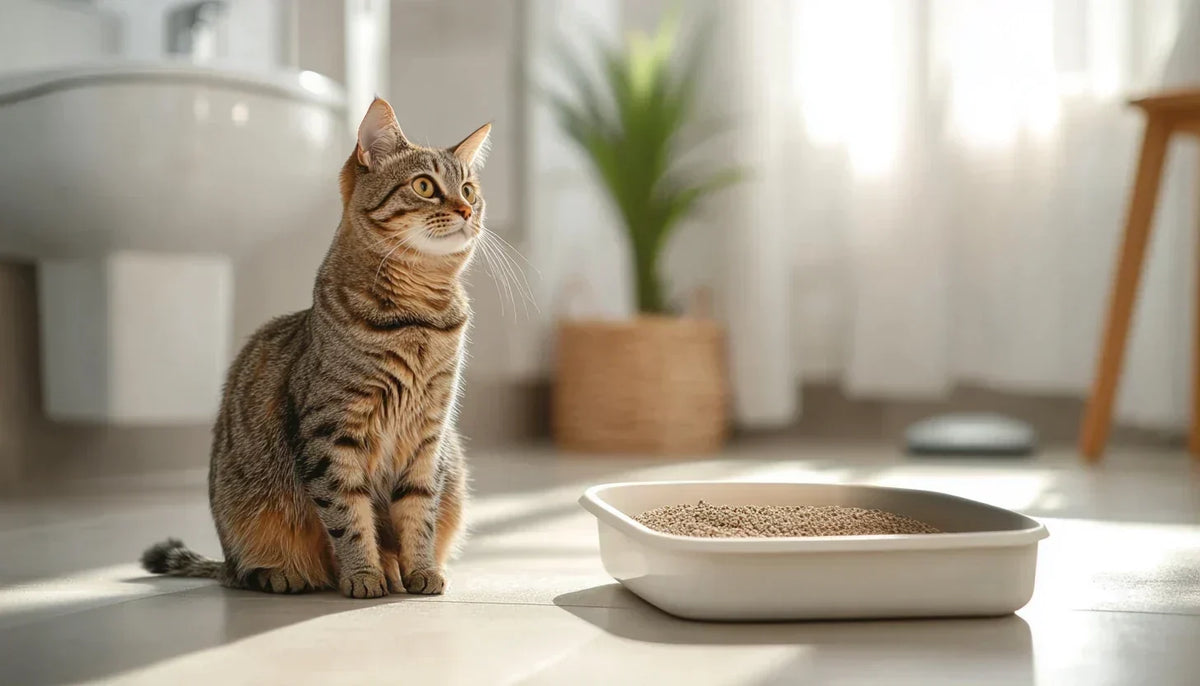

Although cat poop is not a pleasant topic, it is worth taking a close look at the litter box. This is because color, consistency, and odor can provide clues about your cat's health. For example, different diseases, parasites, or dietary issues can be detected in the stool.
Here you will learn what healthy cat poop looks like, which abnormalities you should take seriously, and when a visit to the vet is necessary.
Table of Contents
- Cat poop as a health indicator
- What healthy cat poop looks like
- Unusual cat poop: These changes you should pay attention to
- When should I go to the vet?
- Possible causes for changes in cat poop
- What to do in case of unusual cat poop?
- Is cat poop dangerous for humans?
- FAQ - Frequently Asked Questions
Cat poop as a health indicator
While the food passes through the cat's body, it is processed in the stomach and intestines. Disruptions in this process are often first reflected in the poop.
Even small changes can indicate that something is wrong. These include, for example:
- a different consistency
- an unusual color
- a changed odor.
These characteristics provide important clues about possible diseases or problems with feeding. A quick look into the litter box can therefore help to detect changes early and prevent health consequences.
What healthy cat poop looks like
Color, shape, and consistency provide clues as to whether your cat's digestion is working normally.
Typical characteristics of healthy poop are:
- Color: medium to dark brown
- Shape: uniformly shaped, usually log-shaped
- Consistency: firm, but not hard
- Odor: intense, but not unusually strong
These characteristics indicate that the gastrointestinal tract is processing the food well. Minor deviations are possible and often depend on the food.
Correctly assessing color, consistency, and odor
To detect changes early, you should monitor the cat poop regularly.
You should pay attention to:
- Color: Slight fluctuations are normal. Significant deviations can indicate problems in the intestines or other organs.
- Consistency: Stool that is too soft or too hard often indicates digestive problems.
- Odor: Cat poop naturally smells strong. However, a significantly changed or extremely intense odor can be an indication of diseases or a disrupted intestinal flora.
How often should a cat poop?
The frequency depends on several factors, including the food and the cat's activity level .
As a rule:
- A healthy cat poops once a day .
- Minor deviations are possible.
- If the cat does not poop for several days, there may be constipation .
The digestive process usually takes about one day. Therefore, a regular rhythm is a good sign of a functioning digestion.
Unusual cat poop: These changes you should pay attention to
If the cat poop changes, it is often an early sign that something is not working correctly in the digestive tract. Minor deviations are not always directly problematic. However, you should pay attention to whether the change persists or occurs together with other symptoms.
To better assess your cat's condition, you should pay particular attention to consistency, color, and odor .
Changes in consistency
The consistency of the poop shows how well the digestion is working. It provides clues as to whether the intestines are processing the food correctly.
Typical abnormalities are:
- Soft or runny poop: Diarrhea is often the cause, triggered by a change in food, intolerant food, stress, or infections. Parasites such as worms or giardia are also possible causes.
- Very hard or dry poop: Such a change often indicates constipation. This frequently occurs when the cat drinks too little, moves too little, or the food is not optimally formulated.
- Slimy poop: A visible layer of slime usually indicates irritation or inflammation in the intestines. A parasite infestation can also be the cause.
- Sticky or greasy poop: If the poop remains unusually sticky or looks shiny, it may indicate that nutrients are not being processed correctly in the gastrointestinal tract.
Changes in color
The color of cat poop is an important clue to possible diseases in the body.
Typical color deviations at a glance:
| Color of cat poop | Possible indication of … |
|---|---|
| Black | … digested blood from the upper digestive tract |
| Red/Blood in the stool | … bleeding in the lower intestinal area; possible causes: inflammation, injuries, parasites |
| Light/Gray | … liver, bile, or pancreas problems |
| Yellowish | … digestive disorders or impaired nutrient utilization |
Unusual odor and inclusions
Cat poop naturally has an intense odor. However, a significant change can be a warning sign.
You should pay attention to:
- Extremely strong or unusual odor: A significantly more intense or changed odor can indicate a disrupted intestinal flora, infections, or unsuitable food.
- Slime in the poop: Slimy deposits are often a sign of irritation or inflammation in the intestines.
- Foreign substances: Hair, plant remains, or visible parasites can provide clues about your cat's health problems.
When should I go to the vet?
Changes in cat poop are not always a cause for concern. However, in certain cases, it is important to see a vet early to rule out possible diseases .
In the following situations, you should not wait:
- Persistent changes: If the color, consistency, or odor of the cat poop does not return to normal over several days.
- Diarrhea for a prolonged period: If diarrhea lasts longer than one to two days, there is a risk of fluid loss.
- Blood in the poop: Even small amounts of blood should always be checked by a vet.
- Severe constipation: If the cat has difficulty pooping or does not poop for several days, a visit to the vet is advisable.
- Additional symptoms: These include vomiting, fever, lethargy or loss of appetite.
- Unusual behavior: If your cat withdraws or is in pain, you should have the cause investigated.
Special caution for certain cats
Some animals react more sensitively to gastrointestinal problems. In these cases, you should act more quickly:
- Kittens lose fluid more quickly during diarrhea.
- Older cats are often more susceptible to chronic diseases.
- Weakened animals require special support, for example if they already have existing diseases.
What happens at the vet?
The vet tries to find out what might be wrong with the cat through various examinations. Typical measures are:
- General examination: Check of weight, condition, and behavior
- Poop examination: Detection of parasites or infections
- Blood test: Checking important organ values
- Further diagnostics: e.g., ultrasound or X-ray if organic causes are suspected
Possible causes for changes in cat poop
Changes in cat poop can have different causes. A disease is not always behind it. Everyday factors such as food, stress, or environmental conditions also often play a role.
More harmless everyday causes
In many cases, changes in the stool are temporary and can be attributed to external influences.
Typical triggers are:
- Change in food: A sudden change in diet can temporarily disrupt digestion and lead to soft or altered poop.
- Unsuitable food: Low-quality or hard-to-digest cat food can change the consistency and odor of the poop.
- Stress: Changes in the environment, such as moving house or new animals in the household, can affect the gastrointestinal tract.
- Outdoor behavior: Cats that go outdoors often eat prey or foreign food, which can temporarily change the poop.
- Plants or foreign objects: Ingested plant parts or indigestible components can be visible in the poop.
Such causes usually only lead to short-term changes. If the cat poop returns to normal after a short time, there is generally no cause for concern.
Parasites and diseases
If the change persists or additional symptoms occur, parasites or diseases may be the cause.
Common triggers are:
- Parasite infestation: Worms, giardia, or other parasites impair digestion and often lead to diarrhea or slimy poop.
- Infections: Bacterial or viral infections can affect the entire gastrointestinal tract and change the appearance of the poop.
- Intestinal inflammation: Chronic or acute inflammation often leads to recurring stool problems.
- Organ disease: Problems with the liver, pancreas, or kidneys can also show up in cat poop.
- Poisoning: Ingested toxins can severely impair digestion and lead to unusual poop.
What to do in case of unusual cat poop?
If the cat poop is unusual, but your cat otherwise looks fit and healthy, you can first try to narrow down the cause and stabilize the digestion at home.
What you can do:
- Check the food: Pay attention to whether a change in food has taken place and whether the cat may not tolerate the food well.
- Adjust the food: Offer well-tolerated, easily digestible food to relieve the gastrointestinal tract.
- Provide fresh water: Adequate fluid intake is especially important during diarrhea or constipation.
- Create a calm environment: Stress can affect digestion, so a calm environment helps.
- Monitor the poop: Pay attention to changes in consistency, color, and odor.
For a sensitive digestion or unusual cat poop, a tailored diet can be useful. Specially formulated products such as KATTOVIT Sensitive or KATTOVIT Gastro can help to relieve the gastrointestinal tract and stabilize digestion.
Is cat poop dangerous for humans?
In principle, cat poop can contain pathogens that are also relevant for humans. The risk is usually low in everyday life, but increases for certain groups of people or in cases of poor hygiene.
Possible risks from cat poop
- Toxoplasmosis: This is an infection with parasites that can be transmitted through cat poop. Toxoplasmosis often goes unnoticed in healthy people, but can be problematic for pregnant women and people with weakened immune systems.
- Worms and other parasites: Parasite eggs can be ingested through contact with poop and lead to infections in humans.
- Bacteria: Certain bacteria from the cat's gastrointestinal tract can also be transmitted, especially through direct contact.
When is there an increased risk?
- With poor hygiene: If hands are not washed thoroughly after contact with cat poop.
- With outdoor cats: These have a higher risk of becoming infected with parasites and shedding them.
- With sensitive people: This includes pregnant women, older people, and people with weakened immune systems.