


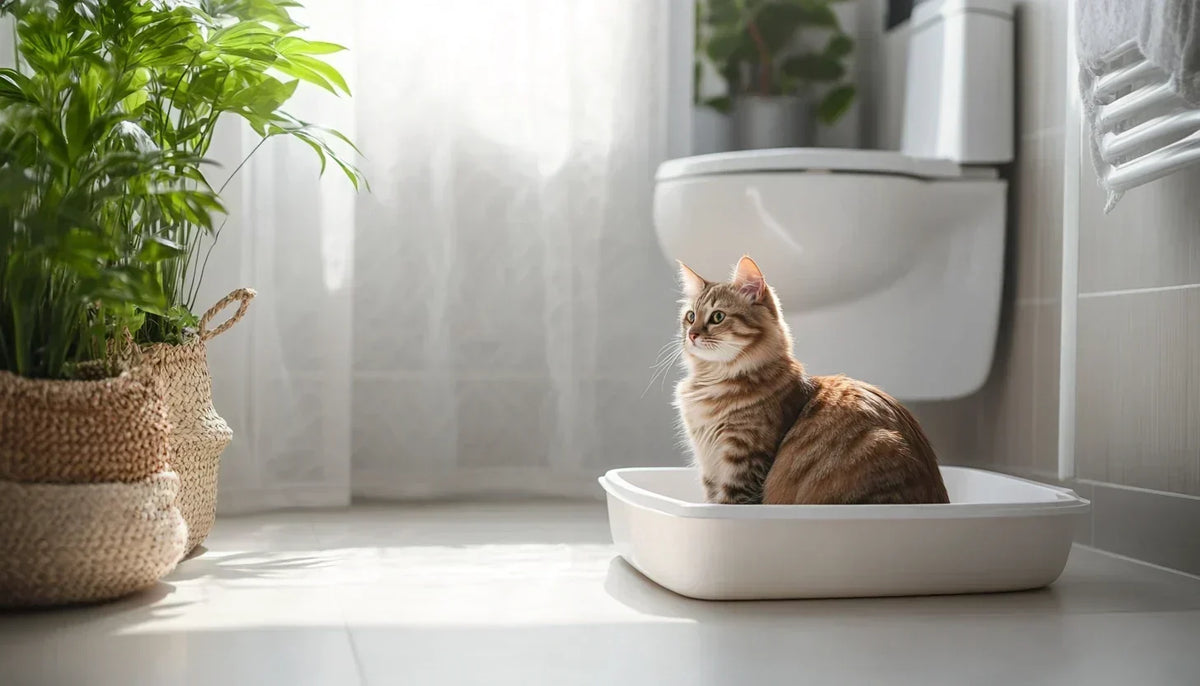

If your cat hasn't had a bowel movement for several days, you should pay close attention. Constipation in cats is relatively common and can have various causes – from harmless triggers to serious illnesses.
Typically, the stool becomes hard and dry or bowel movements stop altogether. This is often painful for the cat and can therefore affect its general condition and well-being. If left untreated, constipation can in the worst case lead to an intestinal obstruction or permanent enlargement of the large intestine.
Table of Contents
- How to recognize that your cat has constipation
- Causes: Why cats get constipated
- Relieving constipation in cats: these measures help
- When you should take your cat to the vet for constipation
- FAQ - Frequently Asked Questions
How to recognize that your cat has constipation
Constipation (obstipation) is usually not immediately obvious in cats. Especially with free-roaming cats, it is often only noticed late that something is wrong with the digestion. This makes it all the more important to know the typical signs and interpret the symptoms correctly.
Typical symptoms of sluggish bowel movements in cats
The following changes can indicate that your cat is having problems with bowel movements:
- Infrequent or absent bowel movements: Your cat has not passed stool for a long period or passes significantly less than usual.
- Hard, dry stool: If stool is present, it often consists of small, hard or round pieces.
- Straining heavily on the litter box: The cat repeatedly tries to pass stool without anything happening.
- Pain during bowel movements: Pain is often manifested by restlessness, loud meowing or a tense posture.
- Changes in behavior: Withdrawal, reduced activity or restlessness can indicate abdominal discomfort .
- Loss of appetite or Vomiting: In cases of severe constipation, food intake may also be affected.
- Hard or bloated belly: The intestinal contents are backed up and can be felt from the outside.
- Stool outside the litter box: Some cats avoid the litter box if they associate it with pain.
- Mucus or blood in the stool: Mucus or bloody stool can indicate irritation or inflammation in the intestine.
A healthy cat usually passes stool daily. If the bowel movement is absent for more than about 48 hours or several of these symptoms occur at the same time, you should consult a veterinarian.
Causes: Why cats get constipated
Constipation in cats usually does not occur suddenly, but develops over a certain period. During this time, the intestinal contents remain in the large intestine for too long, lose moisture there, and thus become increasingly hard. Eventually, the cat can only have difficulty or no longer be able to pass the stool. To find the right treatment, it is important to know the possible causes.
Typical everyday triggers of sluggish bowels:
- Insufficient fluid intake: Cats often naturally drink little. If the cat does not consume enough fluid, additional water is drawn from the stool in the intestine. This makes it hard and dry.
- Unsuitable diet: Hard-to-digest food and a lack of fiber can slow down intestinal motility and make bowel movements difficult.
- Predominantly dry food: Dry food contains little moisture and can promote the dehydration of the intestinal contents.
- Lack of exercise: Exercise stimulates intestinal motility. Especially with indoor-only cats, a lack of activity can slow down digestion.
- Hairballs: The cat picks up hair while grooming. This can accumulate in the intestine and hinder the further passage of stool.
- Stress and changes: Moving house, new animals or problems with the litter box can lead the cat to consciously hold back its stool. This causes the stool to remain in the intestine longer and become harder.
Diseases and serious causes of constipation in cats
If constipation persists or recurs, there may be an underlying medical cause. In these cases, a simple adjustment to daily life is usually not enough.
Possible causes of constipation in cats are:
- Foreign bodies in the intestine: Swallowed objects, bone fragments or even larger hairballs can partially block the intestine and prevent bowel movements.
- Intestinal obstruction: If the intestine is completely blocked, stool can no longer be passed further. This is an acute emergency and must be treated immediately.
- Megacolon: In this condition, the large intestine is pathologically enlarged and the intestinal muscles no longer work properly. Stool backs up in the intestine, becomes increasingly hard, and often can no longer be passed on its own. Megacolon usually develops over a long period and can be a consequence of recurrent constipation.
- Inflammation and infections: Parasites, bacteria or chronic inflammation can impair intestinal function.
- Narrowing of the intestine: Tumors, scars or anatomical changes can make the passage of intestinal contents difficult.
- Pain during bowel movements: If the cat is in pain, e.g. due to injuries, inflammation or joint problems, it will try to avoid bowel movements. This further exacerbates constipation.
- Diseases of other organs: Problems such as kidney disease or metabolic disorders can lead to dehydration and thus harden the stool.
Relieving constipation in cats: these measures help
If your cat is having problems with bowel movements, there are several things you can do to stimulate digestion, soften the stool, and thus make bowel movements easier. Which measures are appropriate depends on how severe the constipation is and what cause is behind it.
Immediate measures for sluggish bowels
In cases of mild constipation, you can take action yourself at first.
What you can do:
- Increase fluid intake: Offer your cat several water sources or mix water into the food to soften the intestinal contents.
- Prefer wet food: Wet food supports fluid supply and makes bowel movements easier.
- Promote exercise: Play with your cat regularly to stimulate intestinal motility.
- Optimize the litter box: Make sure the litter box is clean, easily accessible and located in a quiet area. This prevents your cat from delaying bowel movements.
- Gently massage the belly: A gentle massage can support intestinal motility, but should only be done if the cat is not in pain and allows you to touch its belly.
- Change the food gradually: An abrupt change can further disrupt digestion.
For a sensitive digestive system or recurrent constipation, a tailored diet can provide additional support. Specially formulated products such as KATTOVIT Sensitive, KATTOVIT Gastro or KATTOVIT Digestive can help relieve the house cat's gastrointestinal tract, regulate digestion, and improve stool consistency. With dietetic wet food , you increase moisture intake, allowing the intestine to work better. Feeding exclusively dry food promotes constipation.
Home remedies for constipation
Home remedies can provide support, but should always be used with caution and preferably only in consultation with a veterinarian.
Possible options:
- Psyllium husks or bran: They can bind water in the intestine and soften the stool. However, the amount should always be coordinated with the veterinarian. Too much can further strain the intestine, cause flatulence, or worsen constipation. It is also important that the cat drinks enough, otherwise bulking fiber is counterproductive.
- Milk in small amounts: Milk has a laxative effect on some cats and is therefore often used as a home remedy for constipation. However, since not all cats tolerate milk, its administration can lead to other problems.
- Malts paste: This creamy paste is primarily used for hairballs and can help facilitate the further passage of stool in the intestine.
When you should take your cat to the vet for constipation
Not every case of constipation in cats is an immediate emergency. However, in certain situations, you should not wait and should consult a veterinarian promptly.
The following signs indicate that simple treatment at home is not enough:
- No bowel movement for several days: If bowel movements are absent for more than about 48 hours, the cause should be investigated.
- Straining heavily without success: Your cat sits frequently on the litter box but cannot pass stool.
- Significant pain: Restlessness, increased meowing or a tense posture when trying to pass stool are signs of severe pain.
- Loss of appetite or vomiting: The cat's general condition visibly deteriorates.
- Bloated or hard belly: A noticeable change in the belly can indicate that the intestinal contents have already backed up significantly.
- Blood or mucus in the stool: Irritation or inflammation in the intestine should be examined urgently.
In some cases, constipation can quickly become a serious problem. If left untreated, stool can continue to accumulate and harden in the intestine. This is known as coprostasis. In this condition, the intestine is so filled with hard stool that the cat can no longer pass it on its own. In severe cases, this is a medical emergency and must be treated immediately.
Pay particular attention to these signs:
| Situation/Symptom | Urgency | Recommended measure |
|---|---|---|
| No stool for < 24 hours, cat is alert | low | Increase fluid intake, feed wet food, monitor |
| No stool for < 48 hours, straining heavily | medium | Seek veterinary advice |
| Vomiting, lethargy, hard belly, dry mucous membranes, condition deteriorates rapidly (suspected intestinal obstruction) | high (emergency!) | Seek a veterinarian or emergency clinic immediately |
| Recurrent constipation | medium | Have the medical cause (e.g. megacolon) thoroughly investigated |
Treatment at the vet: what happens for constipation
At the beginning, the veterinarian examines your cat thoroughly. The main goal is to find out why the constipation occurred.
Typical steps are:
- General examination: The veterinarian checks the belly, general condition, and for possible pain.
- Palpation of the belly: Hardened intestinal contents can often be felt.
- X-ray: An X-ray shows whether a lot of stool is in the large intestine or whether there is a foreign body or intestinal obstruction.
- Further examinations: Depending on the findings, blood tests or an ultrasound may be useful.
Treatment methods
Treatment depends on how severe the constipation is and what caused it.
Possible measures are:
- Enema: The intestine is flushed with fluid to soften the hardened stool.
- Manual evacuation: In severe cases, the intestine is carefully emptied under anesthesia.
- Intravenous infusions: They help stabilize the fluid balance and soften the stool.
- Medication: This includes medications that stimulate intestinal motility or make bowel movements easier.
- Pain management: If the cat is in pain during bowel movements, this is often also treated to relieve the animal and help it relax.