











Table of Contents
- What happens when cats pant?
- Why do cats pant? – the most common causes
- Harmless causes of panting in cats
- Serious causes: panting as a symptom of illness
What happens when cats pant?
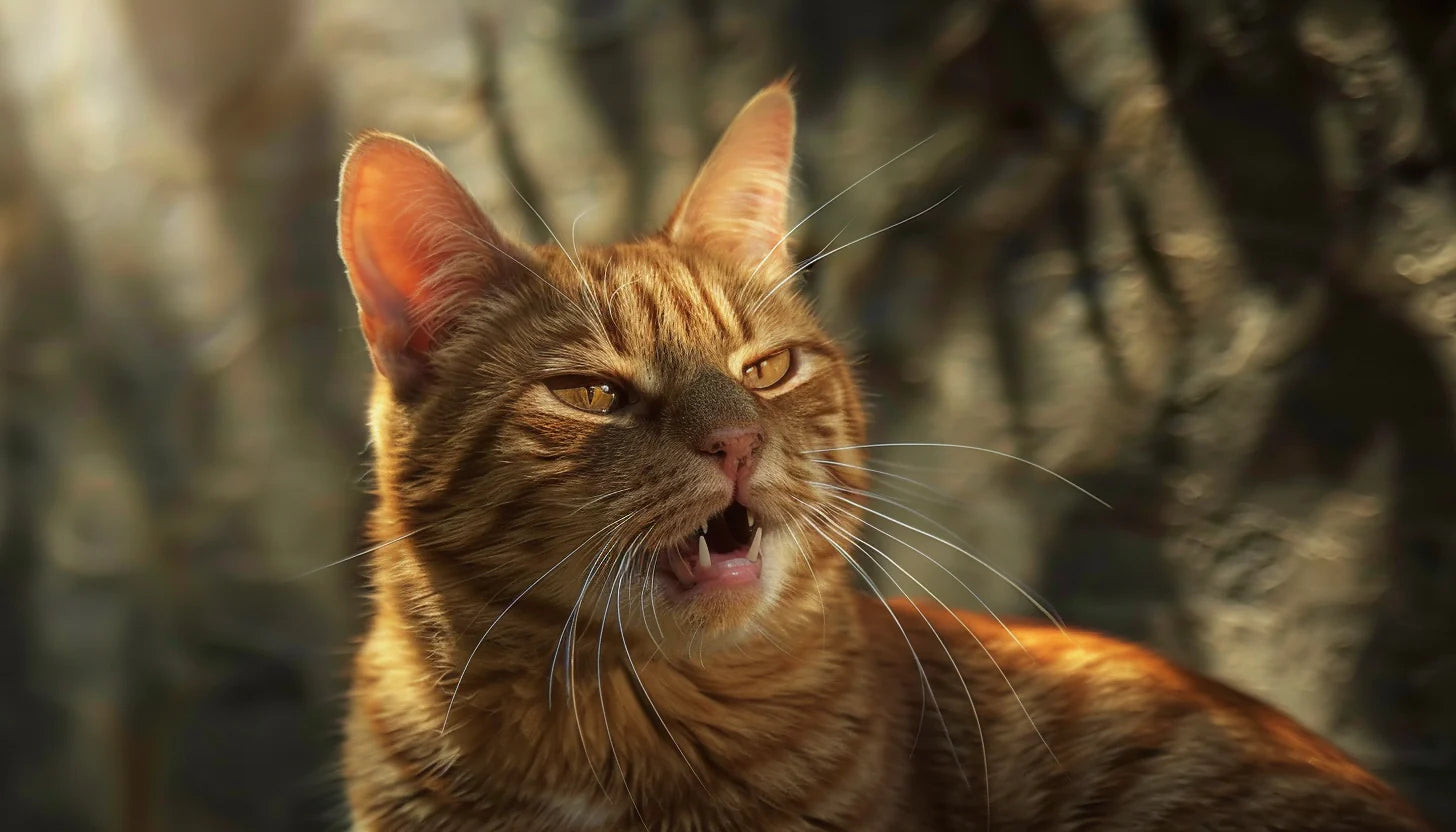
Panting in cats is a physical reaction that manifests as an altered breathing pattern: the mouth is open, the breathing rate is significantly increased, and the tongue may protrude visibly. Cats that pant breathe faster and more shallowly than they usually do – due to the increased breathing rate, the chest and body also only rise slightly when panting.
Why do cats pant? – the most common causes
When cats pant, it usually has a simple reason: they are reacting to an oxygen deficiency in the body. By increasing their breathing rate, the animals try to take in as much oxygen as possible in the shortest possible time and thus compensate for the deficiency through breathing itself. Physically, panting can therefore be explained quite simply – but the question of why remains. Because:
To assess whether the unusual breathing is a serious symptom of illness, it is important to know the cause of the increased oxygen demand – and this cannot always be clearly determined. That is why we will now take a closer look at which triggers are possible and how you can tell whether your cat's panting is harmless or should be interpreted as a symptom of illness.
Harmless causes of panting in cats
Panting is considered one of the classic signs of exertion in cats. Various scenarios can be the cause: from vigorous play to heat, or stress or fear.
Physical exertion
During play, hunting, and frolicking, cats can reach their physical limits. If your cat's breathing becomes shallower and faster after it has exerted itself physically, this is completely normal and not a cause for concern: The cat pants to boost its oxygen supply and thus refill its energy reserves after strenuous play. Panting also creates evaporative cooling, which helps indoor cats acclimate.
Heat
Unlike us humans, cats cannot sweat, or can barely sweat, because their bodies are almost completely covered in fur. The few sweat glands they have – for example under their paws – are not enough to regulate body temperature through the skin. That is why four-legged friends in the heat must take other measures: they find a shady spot, groom themselves, and pant. Rapid breathing with an open mouth and extended tongue has – just like the evaporation of saliva during grooming – a pleasant cooling effect.
Stress and fear
Cats are intelligent and sensitive creatures and are therefore susceptible to stress – some more, some less. If your cat is exposed to psychological stress, feels uncomfortable in a situation, or is afraid of something, it may start to pant. This is a kind of coping mechanism of the body: To compensate for the exertion caused by stress, the oxygen supply is increased – through rapid, shallow breathing.
Common triggers for stress include car rides, encounters with other animals or strangers, an unfamiliar environment, visits to the vet, or the confinement of the carrier. In some cats, even the sight of the carrier can evoke negative feelings and thus represent a fear or stress factor.
When is panting normal in cats?
If your cat pants in a situation that can clearly be linked to physical exertion, heat, or psychological stress, this is usually not a cause for concern. If the panting is due to a harmless cause, it usually subsides quickly as soon as the cat has recovered or calmed down.
However, if the altered breathing persists over a longer period or occurs repeatedly at short intervals, you should nevertheless have the background checked by a vet , because:
- Rapid overexertion or an unusually long recovery time can indicate health problems.
- An elevated body temperature that is difficult to cool down can also be an indicator of illness or a weakened immune system.
- Enormous, prolonged stress can lead to personality changes and illnesses and thus represents a risk.
Serious causes: panting as a symptom of illness
In some cases, panting in cats can also indicate an acute or chronic illness . Especially if there is no logical reason for the altered breathing apparent to you, or if the panting proves to be particularly intense or persistent , you should take a closer look and, ideally, consult a vet to get to the bottom of the cause. Various cat diseases can manifest through panting – from respiratory diseases to dysfunction in the thyroid or heart area, and even to feline enteritis.
Respiratory diseases
When cats pant, they are essentially struggling for breath – possibly because they have difficulty breathing. This, in turn, is often associated with a respiratory disease. This involves swelling in the nasal or throat area, inflammation of the respiratory organs or mucus deposits, which make it difficult for the cat to breathe and impair its oxygen supply. By panting, affected indoor cats still try to take in enough oxygen.
Respiratory diseases in cats are diverse and range from viral or bacterial infections, including cat flu, to lungworms, asthma and allergies, and even foreign bodies and growths, for example in the form of polyps or tumors.
As accompanying symptoms , other abnormalities in breathing or in the respiratory tract and organs usually appear, for example:
- Runny nose or blocked nose
- Sneezing
- Coughing
- Gagging
- Breathing noises
The tricky thing: The disease pictures are often very close to each other and are difficult for laypeople to distinguish from one another due to the partly ambiguous symptoms. However, since some respiratory diseases can take a severe course if left untreated, you should definitely leave the final diagnosis to your trusted vet.
Feline enteritis: feline infectious peritonitis (FIP)
Feline enteritis can be triggered in cats by an infection with coronaviruses. Feline infectious peritonitis, or FIP for short, is one of the most feared cat diseases, because unfortunately it is usually fatal. Affected cats often suffer from:
- Loss of appetite and weight loss
- Cramps and paralysis symptoms
- Fever and lethargy
Typical are also nodule formations in the skin area as well as internally and fluid accumulations in the abdominal cavity and chest cavity. The latter finally leads to the fact that sick cats pant.
In our guide on the cat disease FIP, you will find out everything important about infection, symptoms, diagnostics, and treatment.
Heart diseases: hypertrophic cardiomyopathy (HCM)
Cats with heart disease suffer particularly often from inadequate oxygen supply due to the restricted heart performance and therefore tend to have shallow, rapid breathing. Among cardiovascular diseases, hypertrophic cardiomyopathy, or HCM for short, is one of the most common in cats.
In affected cats, the heart muscle is thickened – this means the heart chambers hold less blood, which in turn leads to the body not being supplied with enough oxygen. That is why panting and acute difficulty breathing are among the classic symptoms of hypertrophic cardiomyopathy, often in combination with:
- Decrease in performance and weakness up to fainting
- Pain and paralysis in the area of the limbs
Each of the mentioned symptoms severely affects the cat's life, even if it occurs in isolation. As soon as you even consider that your cat might suffer from HCM or another heart weakness, you should therefore see a vet immediately.
Hyperthyroidism: hyperthyreosis
Another organ that can lead to cats panting if it malfunctions is the thyroid gland. It controls the cat's hormone balance – however, if the thyroid gland works too little or too much, this balance is disrupted and health impairments can occur. In hyperthyroidism, known as hyperthyreosis in professional circles, too many thyroid hormones are produced. The overproduction puts the cat's body under enormous stress and manifests itself, in addition to panting, for example through:
- Increased heart rate
- Increased thirst and appetite
- Weight loss and urge to move
- Nervousness, restlessness, and aggression
- High urine output, diarrhea, and vomiting
Overweight, pregnancy, and pain
Panting does not always occur as a specific symptom of a disease. In some cases – especially when the accompanying symptoms seem inappropriate or are not apparent at all – it can also indicate another physical impairment: for example, extreme physical exertion or severe pain.
- If pregnant cats start to pant, this may indicate that birth is imminent.
- Pain can also cause cats to start panting – as if to breathe away the pain. Both internal injuries or ulcers and tumors, as well as fight injuries, are possible triggers.
- If cats suffer from overweight, even short distances and small movements can become a conditioning test and trigger panting. In some cases, diseases such as diabetes can also be a cause or occur alongside the overweight. A diet food such as KATTOVIT Diabetes helps to regulate the cat's weight and restore its quality of life.