










Cat sneezing – why and what to do?
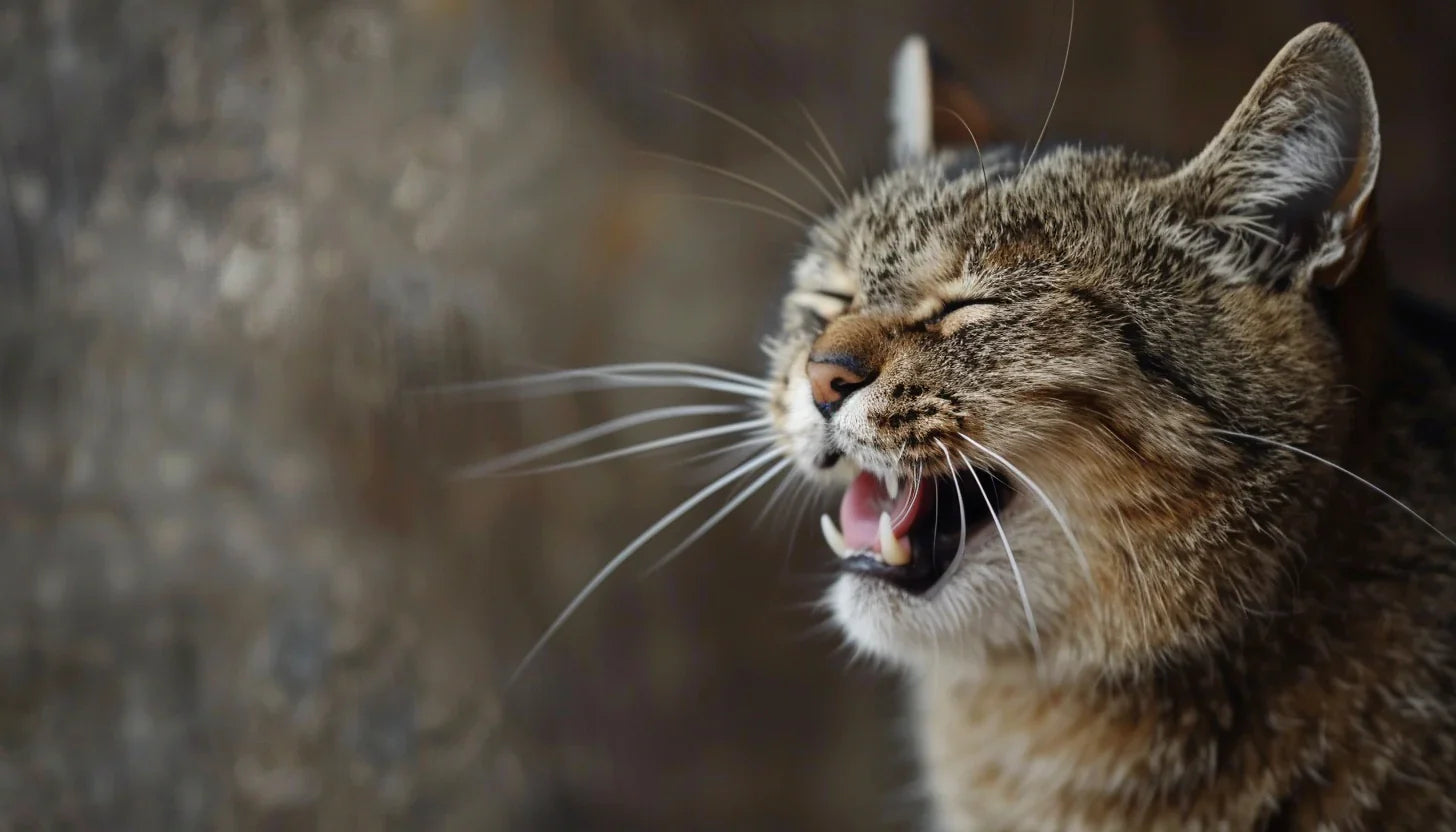
Sneezing is a reflex – for us humans just as much as for our beloved four-legged friends. Your cat uses it to react to an irritant in its nose. This can, for example, be triggered by a pungent odor or a tickle. If cats sneeze every now and then, it is highly likely that there is nothing serious behind it. However, if the sneezing occurs more frequently, it may indicate an illness or an allergy. We clarify what potential causes exist, when you should visit a veterinarian, and how you can help your cat if necessary.
Table of contents
- Sneezing as a reflex: harmless causes
- Sneezing as a symptom of illness and allergy
- Other causes for sneezing in cats
- Conclusion: What to do if your cat is sneezing?
- FAQ – Frequently asked questions
Sneezing as a reflex: harmless causes
Occasional sneezing can be caused by external irritants and is usually harmless. Often, an unfamiliar scent that irritates the olfactory cells of the sensitive cat nose is enough – for example, a room fragrance, perfume, or cleaning agent.
Also, dust and lint that are stirred up can find their way into the cat's olfactory organ and trigger an irritation there, leading to a single sneeze or even a sneezing fit. Through the reflex-like, forceful expulsion of air during a sneeze, the cat tries to get rid of small foreign objects – usually with success.
Sometimes even a change in humidity is enough to make cats sneeze: be it dry heating air in winter or the sudden change when your outdoor cat returns from the cold dampness to a warm, dry home.
Sneezing as a symptom of illness and allergy
Only when your cat has to sneeze again and again or suffers from additional symptoms should you become attentive and get to the bottom of the cause. Depending on the accompanying symptoms and the appearance of the condition, various illnesses may be considered:
Sneezing as a cold symptom
Cats can also catch a cold – for example, if they are out and about in cold temperatures or catch cold viruses from other cats. House cats are particularly susceptible to colds when the immune system is already weakened: whether by stress, previous illnesses, or an operation.
Colds in cats manifest themselves similar to those in us humans. In addition to sneezing, this often leads to other signs of illness, including:
- Coughing and hoarseness when meowing
- Nasal discharge and watery eyes
- Fatigue and loss of appetite
As long as the symptoms are not too severe, cats usually handle a cold quite well and recover on their own within a few days. Nutrient-rich food, plenty of water, as well as warmth and rest support recovery.
If the cold persists and the symptoms worsen, however, you should consult a veterinarian – then your darling may need medical treatment to get healthy again quickly.
Cat flu: Sneezing as a typical symptom
Cat flu is a respiratory disease triggered by a range of viruses and bacteria. Various pathogens of the so-called cat flu complex can be involved. These spread quickly – not only through direct contact with an infected cat but also via contaminated objects.
The tricky thing about cat flu: What initially sounds harmless and is often not clearly identifiable can lead to serious secondary illnesses such as bronchitis or pneumonia – and in the worst case, it can even end fatally for the sick cat. That is why it is important to recognize potential warning signs early and have the cat flu treated promptly.
Sneezing is a classic symptom of cat flu. This is joined by:
- Runny nose, blocked nose, and breathing difficulties
- Discharge in the nose and eye area
- Possibly coughing, fever, or ulcers in the mouth
While some cats only show mild cold symptoms, others suffer from severe discomfort. But: Every sick cat can transmit the pathogens. If you suspect it, you should urgently consult a veterinarian: Cat flu can now be well treated with antibiotics – and there is even a vaccination against part of the complex.
Sneezing – an allergic reaction
If a cat has to sneeze frequently, an allergy can be the cause in addition to an infection. The cat's immune system then reacts overly sensitively to a certain external stimulus. What is harmless for other animals immediately triggers an immune response in allergic cats, which can be noticed, for example, by sneezing. Furthermore, there can be more severe defense reactions such as shortness of breath, itching, or skin inflammation.
If allergies remain undetected, they can sooner or later trigger chronic secondary illnesses such as feline asthma. This is precisely why it is important for you as an owner to react immediately if an allergic condition is suspected.
In most cases, allergy-related sneezing points to an environmental allergy – also referred to as atopy in professional circles. The irritation can be triggered by various allergens. Among the most common causes are:
- Dust
- Mold spores
- Pollen
- Fragrances
Dust mite and mold spore allergy
If a cat suffers from a dust mite or mold spore allergy, the corresponding symptoms probably occur almost constantly. This is because dust and mold are usually omnipresent and affect the entire apartment or at least individual rooms.
Pollen allergy
A pollen allergy, on the other hand, appears seasonally. Particularly strong pollen counts occur in this country in the spring and summer months, roughly from April to August. However, there are also early and late-flowering pollens that, depending on the weather, can be floating around as early as February or into October. Nevertheless, a pollen allergy can be recognized by the fact that it does not occur year-round, but at certain times of the year.
While outdoor cats are constantly in contact with pollen in the summer months, symptoms in indoor cats may increase when windows are open or after airing out the room.
Fragrance allergy
Fragrances can be found, for example, in cat litter. In this case, the affected cats are not permanently exposed to the allergen, but only when using the toilet. This can lead to the immune system's defense reaction also occurring more situationally – especially if it manifests itself through sneezing. Even if allergies should generally be diagnosed by a veterinarian, switching to a product without fragrances and additives can quickly provide relief here.
But: Fragrances are just as frequently used in laundry detergents, cleaning agents, and room sprays. An allergy test provides clarity and helps to identify the culprit and remove it promptly.
Food allergy in cats
In rare cases, sneezing can also point to a food allergy. Although this primarily manifests itself through diarrhea, vomiting, and other complaints in the gastrointestinal area or through skin irritations such as swelling and rash. Every now and then, however, non-specific symptoms, for example in the respiratory tract, also occur with a food allergy.
Through an elimination diet, it can be determined – together with the treating veterinarian – which ingredients a cat is reacting to. Then it is a matter of gradually changing the diet. Sensitive special food can be a great help. KATTOVIT Sensitive is specifically tailored to the needs of sensitive cats and combines a gentle recipe based on veterinary findings with rich, digestible nutrients.
[Aufbaukur+Sensitive]
Other causes for sneezing in cats
In most cases, cats sneeze because their nasal mucosa is irritated. Such irritation also occurs when pressure is exerted inside the nose: for example, by a foreign object or an ulcer.
Foreign objects in the cat's nose are not a rarity. Usually, this involves a stray blade of grass or something similar that bothers the cat when breathing. If the sneezing does not stop on its own, your darling may need help removing the troublemaker. Take a careful look and, in case of doubt, consult an expert so that the cat can breathe freely again and the foreign object does not become inflamed.
Ulcers can develop almost anywhere – including in a cat's nose. There, they narrow the airways and irritate the mucous membrane, which can sometimes manifest itself through frequent sneezing, often in combination with unilateral discharge. A medical examination will show whether it might be a tumor – and whether it is benign or malignant. This ultimately also decides the course of treatment.
Conclusion: What to do if your cat is sneezing?
If your cat sneezes every now and then, you can stay relaxed. Only when the symptom persists over a longer period of time and occurs paired with other abnormalities should you consult a veterinarian.
Accompanying symptoms such as fever, a blocked nose, discharge from the nose and eyes, as well as coughing can indicate a cold or a cat flu infection. Perhaps your cat is also suffering from an allergy, for example to dust mites or pollen. Last but not least, frequent sneezing can also point to a tumor or a foreign object in the nose.
Observe your cat carefully, note down potential accompanying symptoms, and document when or in what situations your house cat sneezes more frequently. This information helps the veterinarian to take the right steps to quickly make a diagnosis and, if necessary, begin treatment.