


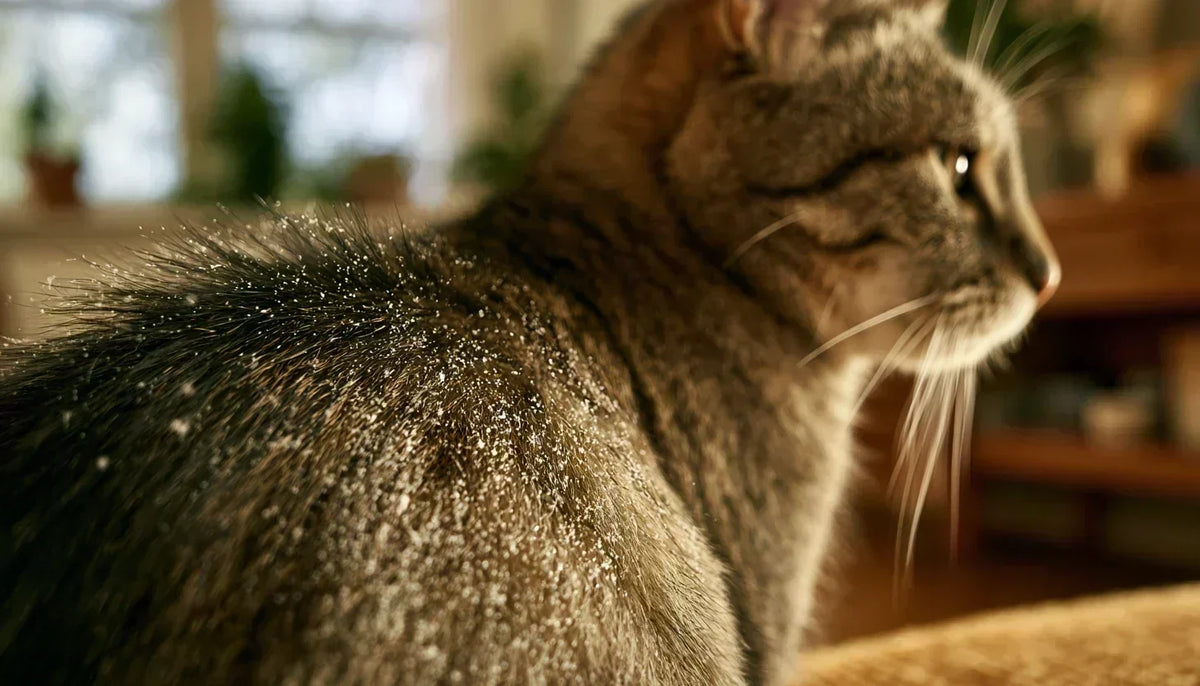

If you suddenly find white flakes on your cat's back, it is usually no cause for panic. Often, a harmless cause such as shedding or dry heating air is behind it. However, flakes can sometimes also indicate parasites, skin problems, or other diseases.
Table of Contents:
- At a glance: Flakes on the cat's back
- Flakes on the back in cats: When are they normal?
- Cat has flakes on its back: possible causes
- Parasites, fungi, and infections as causes
- Flakes or mites: How to tell the difference?
- When should a cat with flakes go to the vet?
- What helps with flakes on the back?
- FAQ - Frequently Asked Questions
At a glance: Flakes on the cat's back
Flakes on the cat's back (seborrhea) occur when the natural renewal process of the skin is disrupted. Since the lower back area along the spine is the hardest to reach during daily grooming, dead skin cells tend to accumulate there particularly easily. The most common causes are dry heating air, seasonal shedding, obesity, or parasites such as mites.
Flakes on the back in cats: When are they normal?
Not every case of flaking is automatically a sign of illness. Small amounts of dead skin cells are part of the skin's natural renewal process. Normally, the cat removes them while grooming daily, so they are barely noticeable. It is only when the cat develops more flakes or grooming is no longer sufficient that the white skin flakes become visible.
Individual flakes are usually harmless. However, if you suddenly notice significantly more flakes or your cat shows other noticeable symptoms, you should observe the animal more closely to find out the cause.
Many owners first discover flakes along the spine or in the lower back area. Dead skin cells often get caught in the fur more easily there and stand out particularly.
Cat has flakes on its back: possible causes
Flakes on the back [seborrhea] can have various causes. Often, a harmless cause is behind it. Sometimes, however, skin changes can also indicate health problems.
Shedding and normal skin renewal
During shedding, the cat not only loses hair but often also more skin flakes than usual. Especially long-haired cats sometimes cannot keep up with grooming during this time. Loose hair and dead skin cells then get caught in the fur and become visible.
Typical signs:
- The flakes occur mainly in the spring or autumn .
- The cat has no other symptoms.
- The fur otherwise looks healthy and well-groomed.
Dry skin due to heating air and environmental influences
Indoor cats in particular often react to dry indoor air in winter. The skin loses moisture – flaky fur is the result.
Possible causes:
- Dry heating air
- Warm favorite spots near radiators or heaters
- Low indoor humidity
Inadequate grooming and restricted mobility
Some cats can no longer reach certain parts of their body as well as they used to with increasing age. As a result, dead skin cells accumulate particularly frequently on the back and along the spine.
Those affected often include:
- Overweight cats: The cat often can no longer reach the back and the area along the spine without difficulty.
- Older cats: With increasing age, grooming becomes harder for many cats.
- Cats with pain or mobility restrictions: Discomfort in the joints or musculoskeletal system can lead to the cat skipping certain body areas when grooming.
Poor diet and nutrient deficiency
The skin and fur need various nutrients to stay healthy. If important fatty acids are missing, for example, the cat can develop flaky skin and dull fur.
Possible signs:
- Flakes occur over a longer period .
- The fur looks dull.
- The cat loses more hair than usual.
Targeted nutrient intake can accelerate the regeneration of the skin barrier from within. The following have proven particularly effective:
- Essential fatty acids: Omega-3 and omega-6 have been proven to relieve skin inflammation and reduce flaking. Specialty food such as KATTOVIT Feline Diet - Hair & Skin is precisely tailored to this increased requirement and supports the barrier function of the cat's skin.
- Reduction of hairballs: Since flaky cats often groom themselves more, the amount of swallowed hair also increases. Here, KATTOVIT Anti Hairball helps to facilitate the passage of hair through the gastrointestinal tract.
Stress as a possible cause
Stress can also affect the skin and fur. Some cats groom themselves less, while others overgroom their fur. Both can irritate the skin and promote flaking.
Possible stressors:
- Changes in the household
- New animals or people
- Moving or other changes in the environment
Parasites, fungi, and infections as causes
If the flakes persist for a long time or additional symptoms occur, an illness may be behind it. You should become particularly attentive if the cat has severe itching , scratches itself frequently, or loses more hair.
Mites, fleas, and other ectoparasites
Parasites are among the most common health causes of flaking in cats. They irritate the skin and can cause inflammation as well as increased flaking .
Typical parasites are:
- Mites: Flakes, itching, and skin irritation occur frequently, especially in the head and ear area.
- Fleas: Flea bites can cause severe itching and persistently irritate the skin.
- Lice: These small parasites live in the fur and can cause flakes and an unkempt appearance of the fur.
Signs of a parasiteinfestation:
- The cat scratches itself frequently.
- The fur looks dull or unkempt.
- It develops bald spots or increased hair loss.
- The skin is red or develops small scabs.
Skin fungi
Skin fungi can also cause flakes on the back. In this case, fungi attack the outer layers of the skin, which can also damage the cat's fur in addition to the skin.
Typical signs:
- Round bald spots
- Increased flaking
- Brittle or dull fur
- Reddened skin areas
Important to know: Some skin fungi are contagious and can also be transmitted to other animals or humans. Therefore, fungal diseases should be checked and treated by a veterinarian as early as possible.
Allergies and skin irritations
Some cats react sensitively to certain environmental influences or ingredients in the food. The result can be dry skin, itching, and flakes.
Possible causes:
- Flea saliva
- Ingredients in cat food
- Pollen or house dust mites
- Contact with irritating substances
Metabolic diseases and other underlying conditions
In some cases, flakes are not caused directly by a skin problem, but rather as a symptom of another illness or infection. Since the skin works closely with many organs, health problems can also become noticeable through flaky fur.
Possible causes include:
- Kidney diseases
- Thyroid diseases
- Diabetes mellitus
- Other chronic diseases
Typical signs:
- The flakes persist.
- The fur loses its shine.
- You notice other changes such as weight loss, fatigue or changed behavior in your cat.
Flakes or mites: How to tell the difference?
Many cat owners wonder whether the white spots in the fur are harmless flakes or a sign of mites. In fact, both often look similar at first glance. Nevertheless, there are some signs that can help in the assessment.
Flakes do not always cause discomfort
Normal skin flakes occur when the skin sheds old skin cells. Often, they are only noticeable when stroking or brushing. Many cats have no other symptoms.
Typical characteristics:
- The flakes lie loose in the fur.
- The cat behaves normally.
- There is little or no skin irritation.
- The fur otherwise looks healthy.
Mites often cause additional itching
Mites live on the cat's skin or in the fur and irritate the tissue. As a result, the cat usually scratches itself significantly more often than usual. In addition, redness, bald spots, or scabs can develop.
Possible signs of mites:
- The cat scratches itself conspicuously often.
- The skin looks reddened or irritated.
- The fur becomes thinner in places.
- Particularly many flakes occur in the head and ear area.
When should a cat with flakes go to the vet?
Not every flake in the fur is a cause for concern. If the skin flakes only occur temporarily during shedding and the cat shows no other noticeable symptoms, observation is often sufficient at first.
The situation is different if additional symptoms occur or the flakes persist for a long time. If your cat has other symptoms in addition to the flakes, you should plan a visit to the veterinarian.
These include:
- The cat scratches itself frequently or appears restless.
- The fur becomes dull or loses its shine.
- The cat loses more hair.
- Bald spots develop in the fur.
- The skin looks reddened or inflamed.
- Scabs or thickened skin areas develop.
- The flakes continue to increase despite grooming.
- The flakes occur suddenly and very severely.
- Several animals in the household develop similar symptoms.
- The cat also appears tired or loses weight.
What helps with flakes on the back?
Which treatment is appropriate always depends on the cause. While flakes during shedding often disappear on their own, parasites, skin fungi, or other diseases require targeted treatment. Therefore, it is worth narrowing down the possible causes first.
Regular brushing and grooming
Many cats benefit from additional support with grooming. By brushing regularly, you remove loose hair and dead skin cells before they accumulate in the fur. This can significantly reduce flaking, especially during shedding.
A positive side effect: The cat swallows fewer loose hairs while grooming, which can also reduce the risk of hairballs .
Diet to support the skin and fur
Diet also plays an important role in the health of the skin and fur. If important nutrients are missing, this can become noticeable through dry skin, flakes, or dull fur, among other things. Especially omega-3 and omega-6 fatty acids support the natural skin barrier and contribute to healthy fur.
For sensitive skin or recurring fur problems, an adapted diet with special food can be useful:
- Products such as KATTOVIT Hair & Skin were specially developed to provide the skin and fur with important nutrients.
- Additionally, KATTOVIT Anti Hairball can help to better excrete swallowed hair and support grooming from within.
Important: A change in diet does not eliminate parasites, fungal infections, or other diseases. However, special food can help the skin and fur regenerate and stay healthy in the long term.
Sufficient fluids and a good indoor climate
Dry skin often occurs in the winter months. Indoor cats in particular react sensitively to dry heating air.
The following measures can help:
- Provide several water bowls.
- Use a drinking fountain if necessary.
- Ventilate regularly.
- Ensure sufficient indoor humidity.
This can often significantly reduce flaking, especially in winter.
When home remedies are useful and when they are not
Numerous home remedies against flakes in cats circulate on the internet. Not all of them are useful. Measures such as regular brushing, a pleasant indoor climate, and a balanced diet are harmless.
However, caution is advised with oils, creams, or other home remedies . What helps humans is not automatically suitable for cats either. Some products can irritate the skin further or lead to problems when licked.
Therefore, the rule is: If the flakes persist for a long time, the cat scratches itself frequently, or other symptoms occur, you should have the cause checked by a veterinarian instead of relying on your own treatment attempts.