



Table of Contents
- What is cat flu?
- Causes and pathogens of cat flu
- Symptoms: How to recognize cat flu early
- Diagnosis and treatment of cat flu
- Prognosis and possible long-term damage
- Prevention: How to protect your cat
- FAQ - Frequently Asked Questions
What is cat flu?
Cat flu is a contagious disease of the respiratory tract and mucous membranes. It primarily affects the cat's nose, eyes, and mouth cavity. Unlike a common cold, cat flu is caused by various viruses and bacteria that often occur together. The most common pathogens include feline herpesvirus (FHV-1) and feline calicivirus (FCV).
The infection can be mild, but can also cause severe symptoms such as purulent nasal discharge, fever, or difficulty breathing. Young animals, unvaccinated cats, and animals with weakened immune systems are particularly at risk. Without timely treatment, the disease can become chronic or life-threatening.
Causes and pathogens of cat flu
Cat flu is caused by infection with various viruses and bacteria. The pathogens attack the mucous membranes of the upper respiratory tract and weaken the cat's immune system. Cats often become infected with several pathogens at the same time, which can worsen the course of the disease.
Main causes: Viruses
The most important causes are two types of viruses:
- Feline herpesvirus (FHV-1): This virus primarily affects the nose, eyes, and throat. It can cause severe conjunctivitis and corneal inflammation. After an infection, the pathogen remains in the body and can become active again in case of stress or weakness.
- Feline calicivirus (FCV): Caliciviruses cause mouth ulcers, nasal discharge, and fever. Some strains also cause joint inflammation or lung problems. Even after recovery, cats can continue to shed the virus and infect other animals.
Bacterial co-pathogens
In addition to viruses, bacteria also play an important role. They often occur as so-called secondary infections and worsen the course of the disease.
Typical bacterial pathogens include:
- Chlamydophila felis: causes purulent eye discharge and chronic conjunctivitis
- Bordetella bronchiseptica: affects the respiratory tract and can cause coughing or pneumonia
- Mycoplasmas: lead to inflammation of the nasal and oral mucous membranes
How cats become infected
Infection usually occurs through direct contact with sick animals, for example through sneezing, licking, or eating together. Droplets in the air or contaminated objects such as bowls, blankets, or toys can also transmit pathogens.
Even humans can bring the viruses or bacteria in on clothing or shoes, which is why even indoor cats are not completely protected.
Risk factors
A weakened immune system increases the risk of infection. The following factors increase the risk:
- lack of vaccination
- Stress, e.g. due to moving or new animals in the household
- Malnutrition or worm infestation
- confinement in animal shelters or breeding facilities
Symptoms: How to recognize cat flu early
Cat flu usually develops gradually. At first, the cat sneezes more often or has watery nasal discharge – typical signs that can easily be mistaken for a harmless cold. However, the disease can quickly worsen and become life-threatening without treatment.
Typical early signs
- repeated sneezing
- clear nasal discharge or a moist nose
- watery, reddened eyes
- slight lethargy or loss of appetite
At this stage, the disease is often still easy to treat. However, a visit to the vet is already advisable to prevent the infection from spreading.
Advanced symptoms
If the infection spreads, the symptoms worsen significantly:
- purulent eye and nasal discharge
- blocked nose and difficulty breathing
- fever and general weakness
- difficulty swallowing, sometimes with drooling
- ulcers in the mouth or on the tongue
- coughing or rattling breathing sounds
Cats often hardly take in any food at this stage, as they cannot smell the food due to their blocked nose. Some animals refuse to eat completely, which can become dangerous.
When to see the vet
If sneezing, nasal discharge, or lethargy persist for more than two days, you should definitely see a vet. The earlier treatment begins, the better the chances of recovery and the lower the risk of permanent damage to the cat.
Diagnosis and treatment of cat flu
If cat flu is suspected, you should always see a vet.
Typical signs are:
- eye or nasal discharge
- sneezing and fever
- loss of appetite or lethargy
A swab from the nose, throat, or eyes can determine which pathogens are involved.
Treatment options
The therapy is tailored to the cause and severity of the infection.
- Antibiotics: help against bacterial pathogens and prevent secondary infections.
- Symptomatic treatment: viral infections are treated with medication to relieve symptoms, e.g. with eye ointments, inhalations, or immune boosters.
- Fluid intake: If the cat does not drink, infusions are necessary.
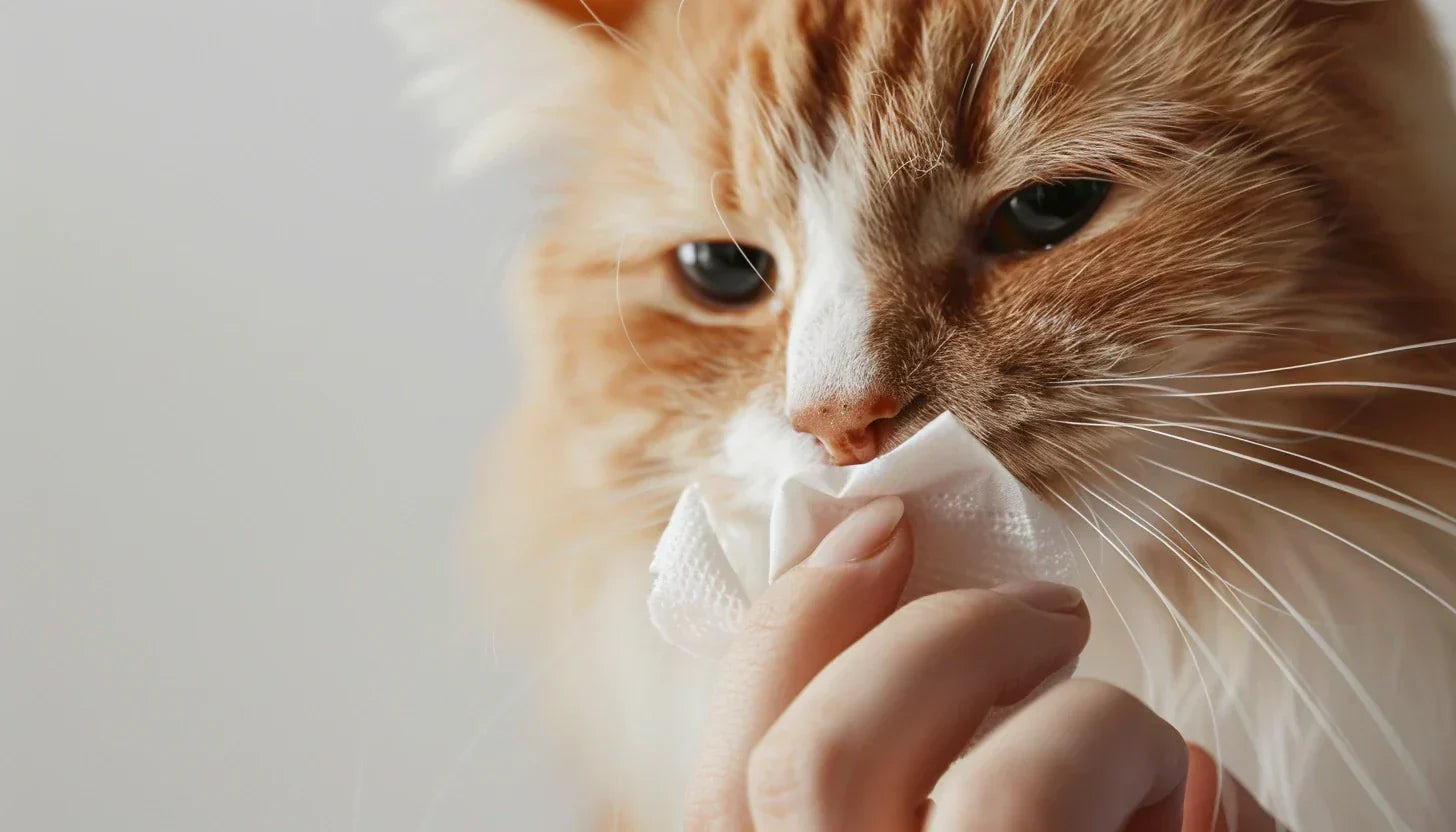
- Care: The nose and eyes should be cleaned regularly with lukewarm water to make breathing easier.
Prognosis and possible long-term damage
The chances of recovery from cat flu depend heavily on how early treatment begins and which pathogens are involved. In most cases, cats recover completely if they receive timely veterinary care.
Acute and chronic course
- Acute course: With early treatment, the disease usually subsides after one to two weeks.
- Chronic course: If cat flu is detected too late or not fully treated, the pathogens can remain in the body. The cat then repeatedly suffers from nasal discharge, a blocked nose, or eye inflammation.
Possible long-term damage
A severe course can leave permanent damage:
- Corneal or conjunctival inflammation with visual impairments
- Blocked nasal passages or chronic cat flu
- Dental damage or ulcers in the mouth area
- In rare cases: pneumonia or general weakening of the immune system
Prevention: How to protect your cat
Cat flu cannot always be prevented, but the right precautions reduce the risk. The most important measure is regular vaccination in combination with good hygiene and a strong immune system.
Vaccination as the most effective protection
- The vaccination protects against the most common pathogens – herpesviruses and caliciviruses.
- It usually starts from the 8th week of life and is repeated after 3–4 weeks (primary immunization).
- Subsequently, boosters are necessary: annually for outdoor cats, every three years for indoor cats.
- Although a vaccination does not completely prevent infection, it ensures a milder course of the disease.
Hygiene and environment
- Food bowls, blankets, and toys should be cleaned regularly.
- Avoid contact with unfamiliar cats, especially unvaccinated animals.
- Clean clothing and hands thoroughly after visits to the vet or animal shelter, as pathogens can be transferred by clinging to surfaces.
Strengthen the immune system
A strong immune system is the best foundation for protection against infections:
- balanced diet with all important nutrients – for weakened cats, the KATTOVIT Aufbaukur can help
- sufficient rest and a stress-free environment
- regular deworming and veterinary check-ups