



Table of Contents
- What to do when my cat has died?
- Burying a cat in a pet cemetery
- Cremation at a pet crematorium
- Pet funeral home: Support with your cat's burial
- Alternatives to traditional burial
- Saying goodbye and preserving memories
- FAQ - Frequently Asked Questions
What to do when my cat has died?
If your cat has died, you can first take some time to say your goodbye. After that, you should decide how you would like to handle your pet's body.
If the cat died at home, it is best to place the body on an absorbent surface, such as a towel or blanket. A cool room will slightly slow down the decomposition process. If you cannot arrange the burial immediately, you can carefully wrap your cat in a blanket and store it in a cool place.
If your cat died at the vet or was put to sleep there, you can often leave the body at the practice, provided you wish to do so. Many veterinary practices work with a pet crematorium or a pet funeral home and organize the further process for you.
Alternatively, you can take your cat home and decide for yourself how you would like to bury it. In Germany, owners have several options. They can bury their cat in their own garden, have it laid to rest in a pet cemetery, or have it cremated at a pet crematorium. Which option is right for you depends on legal requirements and your personal wishes.
Burying a cat in the garden: It is allowed
Many owners want to bury their cat in their own garden. In Germany, this is generally possible. However, you must observe certain legal requirements.
Requirements for burial in the garden
- The property must belong to you. Burial is usually not allowed on rented property or in community gardens.
- The garden must not be located in a water or nature conservation area.
- The cat must not have died from a notifiable disease, such as rabies or certain animal diseases, which must be reported to the authorities.
- The grave must be deep enough: it must be at least 50 to 60 centimeters deep.
- There must be sufficient distance from property boundaries, roads, and water sources. The exact requirements may vary depending on the federal state or municipality. If in doubt, the responsible veterinary office can provide information.
Preparing the grave and laying the cat to rest
If these requirements are met, you can prepare the grave:
- Dig a grave at least 50 to 60 centimeters deep.
- Wrap the body in biodegradable material, such as a blanket, cloth, or newspaper, or place it in a cardboard box.
- Avoid plastic or other materials that are difficult to break down.
- Then cover the body completely with soil and gently press down the surface.
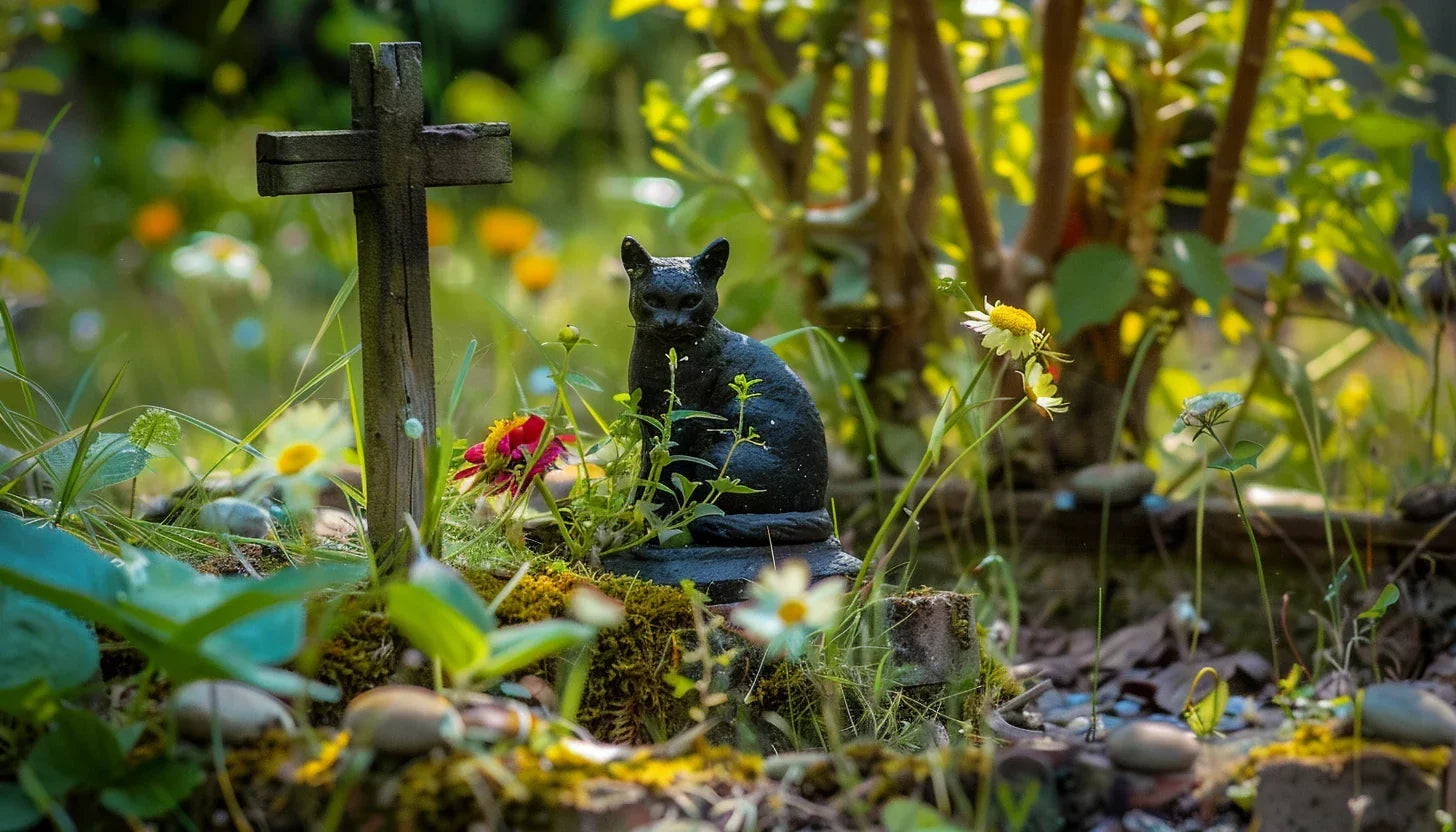
If you wish, you can later decorate the site with a stone, plant, or small grave marker.
Burying a cat in a pet cemetery
If you cannot or do not want to bury your beloved cat in your own garden, a pet cemetery is another option. There, your pet will receive a permanent resting place that you can visit at any time.
At a pet cemetery, the operators or a pet funeral home usually take care of organizing the burial. As a rule, you first choose the type of grave and then agree on the date for the burial.
What types of graves are there?
At many pet cemeteries, you can choose between different types of graves:
- Individual grave: Your cat will have its own grave site. You can design and maintain the grave individually.
- Communal grave: Several deceased animals are laid to rest together here. Individual grave maintenance is usually not provided here.
Costs and maintenance
A grave at a pet cemetery usually incurs annual fees. The costs depend, among other things, on the size of the grave, its location in the cemetery, and the duration of the grave site. At many facilities, prices for a cat grave start at around 150 euros per year.
Many pet cemeteries allow you to decorate the grave site with plants, stones, or small grave markers. Some facilities also offer regular grave maintenance, so you do not have to take care of the design and planting yourself.
Cremation at a pet crematorium
Another option is the cremation of your cat at a pet crematorium. The animal's body is cremated. Afterwards, upon request, you will receive the ashes of your pet back in an urn .
Many pet owners choose this form of burial if they cannot bury their pet in the garden or wish for a different way to remember them. Pet crematoriums often work with veterinarians or pet funeral homes and take care of the entire cremation process.
What types of cremation are there?
Pet crematoriums usually offer two forms of cremation:
- Individual cremation: Your cat will be cremated alone. You will then receive the ashes back in an urn.
- Communal cremation: Several animals are cremated together. In this case, you will not receive your cat's ashes.
What happens to the ashes?
After cremation, you have several options:
- You can keep the urn at home.
- You can bury the ashes later, for example in the garden or in a pet cemetery.
- Some pet owners have a part of the ashes incorporated into keepsakes such as jewelry.
Pet funeral home: Support with your cat's burial
If you cannot or do not want to take care of your cat's burial yourself, you can hire a pet funeral home. These service providers guide owners through all the steps surrounding the burial of a pet.
A pet funeral home can, for example, take care of the transport of the animal's body and coordinate the further organization of the burial. Depending on your wishes, it can arrange cremation at a pet crematorium, a burial in a pet cemetery, or advise you on other burial options.
Many providers also offer a personal farewell. In special farewell rooms, you can say goodbye to your cat one last time in peace before the burial takes place.
In addition, pet funeral homes can assist with further organizational questions, such as the selection of an urn, the design of a resting place, or keepsakes such as a paw print.
Alternatives to traditional burial
It is not always possible or desired to bury a cat in the garden or lay it to rest in a pet cemetery. In such cases, there are other options for handling the body of the deceased animal.
Handing over the deceased cat to the vet
If your cat died at the vet or was put to sleep there, you can often leave the animal's body at the practice. The practice then hands the pet over to an animal carcass disposal facility, where the body is disposed of professionally.
Some owners choose this solution if they do not want to organize their own burial or if another form of burial is not an option.
Aquamation
In addition to traditional cremation, alternative methods are now also available. This includes, for example, aquamation. In this process, the animal's body is decomposed in a water-based process. This method is offered in some pet crematoriums as an alternative to cremation.
Saying goodbye and preserving memories
The death of a beloved cat is a major loss for many people. A conscious goodbye can help to process this moment and the grief and preserve the memory of the animal.
Some owners take time before the burial to say goodbye to their cat in peace. This can happen at home, at the vet, or in a farewell room at a pet funeral home. Some people place a blanket, a toy, or a small letter with the animal in the grave.
Keepsakes can also help to preserve the time spent together, for example:
- a paw print made of clay or plaster
- a lock of fur as a keepsake
- a photo album or a small memory box
- an urn with the ashes of the animal
Such memories can help ensure that the animal retains a permanent place in your life even after its death.