
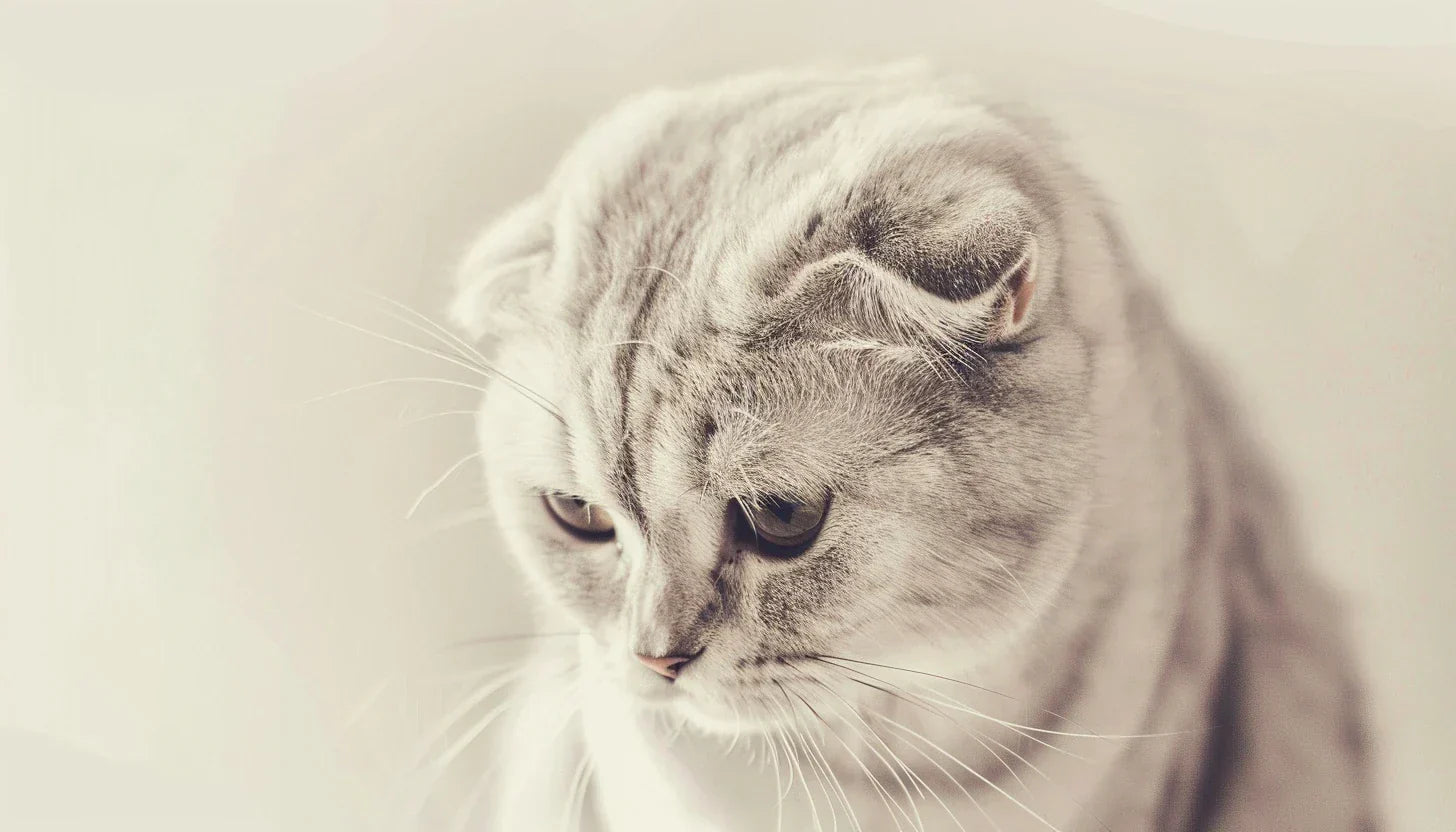

Graue Katze mit Faltohren blickt nach unten.

Folded ears in cats: Causes and treatment options

Folded ears in a cat may look cute, but they often indicate a health problem. In breeds such as the Scottish Fold, the folded ears are congenital and are caused by a cartilage abnormality (osteochondrodysplasia). In other cases, folded ears can be caused by an injury or ear infection, for example. This guide explains the causes of folded ears, how to recognize symptoms, and what you can do to help your cat.

Table of Contents

  1. What is a folded ear in cats?
  2. Causes of folded ears in cats
  3. Genetic causes: Scottish Fold
  4. Symptoms and signs: When to see a veterinarian
  5. Treatment options for cats with folded ears
  6. Preventing cruel breeding – avoiding folded ears
  7. FAQ - Frequently Asked Questions

What is a folded ear in cats?

A folded ear is a visible deformity of the cat's ear. The ear flap is bent or folded at one point instead of standing upright. This can occur on one or both sides.

Cats with folded ears, such as the Scottish Fold, are born with this ear shape. The cause is a genetic cartilage disorder: so-called osteochondrodysplasia (OCD). It affects not only the ears but also other cartilage in the body. This can lead to pain, limb deformities, and restricted movement.

However, a folded ear can also develop during the cat's life. Typical causes include:

  • Injuries
  • Ear infections
  • Cartilage damage

If the ear suddenly changes or becomes sensitive, you should take your cat to the veterinarian.

Causes of folded ears in cats

A folded ear can have various causes. An important distinction is whether the change is congenital or developed during the cat's life.

Genetic causes: Scottish Fold

In the Scottish Fold, a folded ear is not a coincidence but the result of an inherited cartilage disorder. So-called osteochondrodysplasia causes the cartilage to be too soft, making the ear fall forward. Unfortunately, this hereditary disease often also affects other areas of the body, such as the limbs, bones, and joints. Affected cats may therefore develop pain, restricted movement, or deformities.

Injuries or ear infections

Not every folded ear is genetically determined. If the ear suddenly changes, it is often due to an injury, a hematoma (blood blister), or an ear infection. Scratching, shaking, or rubbing can damage the sensitive cartilage. The ear then becomes permanently folded.

Symptoms and signs: When to see a veterinarian

A folded ear alone is not always a cause for concern; it depends on whether your cat has any symptoms . Many affected animals initially appear normal. Over time, however, typical symptoms may develop that you should take seriously.

Physical signs

  • The ear appears swollen, warm, or sensitive
  • The cat scratches its ear or frequently shakes its head
  • There is redness, crusting, or discharge on the ear
  • The ear is deformed or folded, although it was normal before
  • The cat limps or moves stiffly: this is an indication of cartilage problems in the limbs

Behavioral changes

  • Your cat avoids having its head or ear touched
  • It appears restless, sleeps more, or withdraws
  • It is unsteady when playing or jumping, which may indicate pain

See the veterinarian if the folded ear is new, changes, or if accompanying symptoms such as pain, itching, or inflammation are visible. Especially in folded-ear cats, an early examination can help prevent consequential damage to joints and cartilage.

Treatment options for cats with folded ears

Treatment depends on the cause behind the folded ear. In some cases, simple care is sufficient, while in others, veterinary treatment is necessary. It is important to recognize the cause early and take targeted action.

Conservative therapies

If an ear infection or injury caused the folded ear, the veterinarian can treat it specifically. Often, an anti-inflammatory or antibiotic ointment is sufficient. In the case of blood blisters (ear hematomas), the fluid is usually drained or aspirated so that the cartilage can recover.

A gentle cleaning of the ears is also part of the treatment. Use only ear cleaners recommended by the veterinarian. This helps prevent new infections and supports healing.

Surgical procedures

If the folded ear does not recover on its own due to cartilage damage or a congenital deformity, surgery may be necessary. During the procedure, the affected tissue is stabilized or removed. The procedure is primarily intended to relieve pain and improve the quality of life of the folded-ear cat.

Cats with cartilage or joint problems benefit from a good nutrient supply. A balanced diet strengthens the metabolism and supports regeneration. The KATTOVIT Recovery can help improve overall condition and strengthen the immune system – especially after illness or surgery.

Preventing cruel breeding – avoiding folded ears

The best way to prevent folded ears in cats is responsible breeding. Many cases are caused by genetic changes that are deliberately passed on. The Scottish Fold is particularly affected – a breed whose folded ears are popular, but are the result of a hereditary disease.

The folded ears of the Scottish Fold look cute, but they are a visible sign of a cartilage disorder (osteochondrodysplasia). This affects not only the ears but also the joints and bones. Many animals therefore suffer from chronic pain, stiffness, and restricted mobility. This is why breeding this breed is considered cruel breeding and is therefore already banned in some countries.

If you want to adopt or buy a kitten, look for a reputable origin:

  • Do not buy solely for aesthetic reasons, but inform yourself about the breed's characteristics.
  • Ask specifically for veterinary records and breeding goals.
  • Support breeders who do not breed folded-ear cats and instead focus on healthy lines.

popular products

Recommended by us

Your questions - our answers!

Frequently Asked Questions

Ein Knickohr ist eine sichtbare Verformung der Ohrmuschel. Es kann angeboren sein, wie bei Scottish Fold Katzen oder sich durch Verletzungen oder Entzündungen entwickeln. Angeborene Knickohren entstehen durch eine Knorpelveränderung, die auch andere Körperbereiche betreffen kann.

Nicht immer, aber häufig ja. Besonders Katzen mit Osteochondrodysplasie leiden im Laufe ihres Lebens unter Schmerzen in Gelenken und Gliedmaßen. Auch erworbene Knickohren durch Entzündungen oder Hämatome sind oft schmerzhaft. Wenn Ihre Katze Berührungen am Ohr meidet oder sich häufig kratzt, sollten Sie den Tierarzt aufsuchen.

Die bekannteste Rasse mit Knickohren ist die Scottish Fold. Ihre gefalteten Ohren sind das Ergebnis einer vererbten Knorpelerkrankung. Es gibt auch Mischlinge mit ähnlicher Ohrform, die das Gen teilweise tragen.

Ein plötzlich auftretendes Knickohr kann auf eine Verletzung, ein Ohrhämatom oder eine Entzündung hinweisen. Wenn das Ohr vorher normal war und sich erst verändert hat, steckt meist eine Erkrankung des Knorpels oder der Haut dahinter. Lassen Sie die Ursache unbedingt vom Tierarzt abklären.

Ja. Scottish Fold-Katzen sind Qualzuchten, die ihr Leben lang unter den Schmerzen des Gendefekts Osteochondrodysplasie (OCD) sowie unter weiteren erblichen Erkrankungen leiden. Jede Scottish Fold-Katze ist betroffen – selbst wenn nur ein Elternteil das fehlerhafte Gen weitergibt. Von der steigenden Nachfrage profitieren vor allem Züchter, die die Tiere aus Profitgründen vermehren, ohne Rücksicht auf deren Wohlergehen.

In einigen Ländern wie Österreich und Belgien sind Zucht, Handel und Haltung der Scottish Fold gesetzlich verboten. In Deutschland wird Qualzucht über das Tierschutzgesetz geregelt. Die Scottish Fold gilt als tierschutzwidrig, doch ein eindeutiges Verbot von Kauf oder Haltung gibt es bisher nicht. Das Bundesministerium für Ernährung und Landwirtschaft empfiehlt jedoch ein Zuchtverbot.

Trotz gerichtlicher Urteile wird die Zucht hierzulande kaum geahndet. Auf Onlineplattformen werden immer wieder Kitten angeboten. Verantwortungsvolle Halter sollten keine Scottish Fold Katzen kaufen, da sie dadurch Tierleid unterstützen.

Oft wird eine Lebenserwartung von 12 bis 15 Jahren angegeben. In der Realität erreichen viele Scottish Fold-Katzen dieses Alter jedoch nicht. Tiere mit ausgeprägter Osteochondrodysplasie leiden häufig so stark, dass sie bereits nach zwei bis vier Jahren eingeschläfert werden müssen, weil die Schmerzen nicht mehr erträglich sind.

Züchter kreuzen Scottish Fold-Katzen mit Faltohren häufig mit sogenannten Scottish Straight-Katzen, die in Deutschland als Britisch-Kurzhaar-Katzen bekannt sind.
Der Gendefekt, durch den die Faltohren entstehen, wird dabei trotzdem weitergegeben. Selbst wenn die Kätzchen keine sichtbaren Knickohren haben, tragen sie die genetisch bedingte Krankheit OCD in sich. Diese führt früher oder später zu starken Schmerzen und schweren Gelenkproblemen.

Cat advisor

Cat advisor

More on cat diseases

Katze springt auf einer grünen Wiese.
Cat keeping

Lesedauer: Min.

Anatomy of the Cat

Cats move gracefully and skillfully, going through life on quiet, nimble paws. Their lightness, speed, and exceptional balance are thanks to their anatomy. Here you will learn everything important about the cat's body structure: from the skeleton and musculature to the organs and senses of the feline.

Kattovit Redaktion
KATTOVIT Redaktion 24 Aug 2026
Katze liegt in einem Korb und schläft tief.
Cat behavior

Lesedauer: Min.

Cat twitches in sleep – harmless or cause for concern?

You may have noticed it before: your cat is lying peacefully curled up in its favorite spot – and suddenly its paws twitch, its whiskers quiver, or its tail moves slightly. In such moments, many owners wonder if everything is alright. In most cases, this behavior is completely normal. Cats dream while they sleep and process the day's experiences. However, sometimes twitching or trembling can also indicate health problems. Here you will learn what is behind the movements and when you should pay close attention.

Kattovit Redaktion
KATTOVIT Redaktion 24 Aug 2026
Katze beißt in eine ausgestreckte Hand.
Cat behavior

Lesedauer: Min.

Cat bites: What’s behind it

One moment your velvet paw is purring contentedly, and the next it suddenly bares its teeth – if your cat bites, it may initially cause you confusion or even worry. A cat bite can hurt and unsettle – but often there is no malicious intent behind it.
Cats communicate differently than humans. A bite can mean play, defense, or even affection. Sometimes the kitty reacts out of fear or pain, in other cases it simply wants more attention. It is important to interpret the signals correctly to avoid misunderstandings and to strengthen the trust between them.

Kattovit Redaktion
KATTOVIT Redaktion 24 Aug 2026

Certified quality

Proven quality based on the latest veterinary findings

Always fresh

Guaranteed freshness, directly from the manufacturer—for the best care for your pet.

40 years of experience

More than 40 years of experience and expertise in manufacturing high-quality animal feed.