










Table of Contents:
- How often is bowel movement normal in cats?
- Healthy cat feces: Color, consistency, and shape
- What the color of the stool reveals about your cat's health
- Recognizing diarrhea in cats
- Causes of frequent bowel movements in cats
- Bowel movements in cats by age
- Conclusion: Properly monitoring your cat's bowel movements
- Frequently Asked Questions
How often is bowel movement normal in cats?
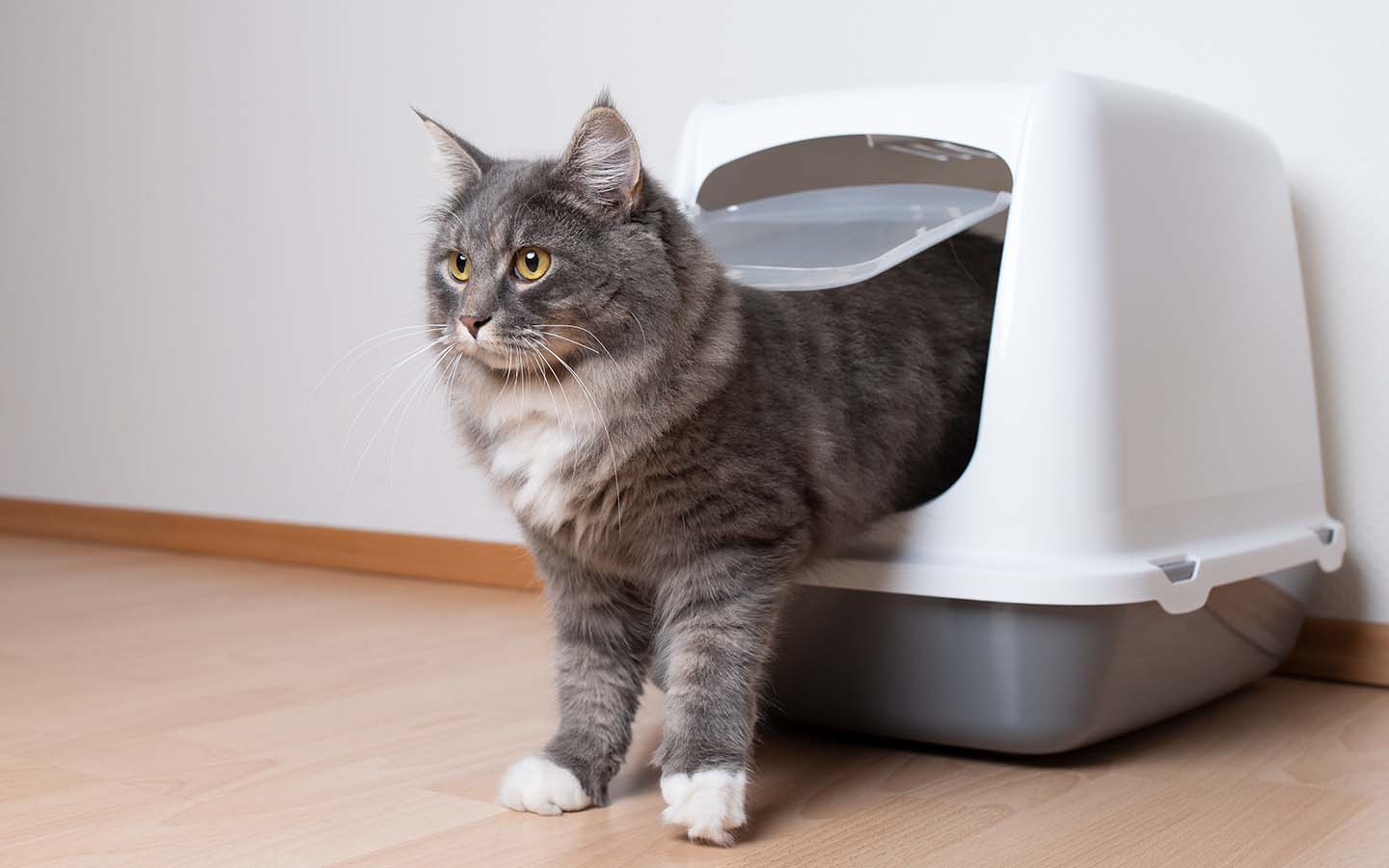
Most cats pass stool once to twice a day. Up to 36 hours can pass between two trips to the litter box. The digestion time from food intake to excretion is usually 12 to 24 hours. If your feline friend passes stool more than twice a day, it may indicate a problem in the gastrointestinal tract.
Therefore, regularly monitor the frequency of bowel movements, as well as the amount, consistency, color, and odor. Changes provide clues about digestive problems or feline diseases.
Healthy cat feces: Color, consistency, and shape
The stool of healthy cats has typical characteristics:
|
Characteristic |
Normal state |
|
Color |
medium to dark brown |
|
Consistency |
firm but malleable |
|
Diameter |
|
|
Odor |
unobtrusive |
The consistency of the feces also depends on the cat food. High-quality food often leads to less and firmer stool. Very soft or liquid stool, on the other hand, indicates diarrhea. Pellet-shaped stool often points to constipation or insufficient fluid intake.
What the stool color reveals about your cat's health
The color of the stool provides important clues about diseases in your cat's intestines or stomach:
|
Stool color |
Possible cause / disease |
Urgency |
|
Medium to dark brown |
Normal state / healthy digestion |
No action required |
|
Black (tarry stool) |
Bleeding in the upper digestive tract (e.g., stomach ulcer, tumors) |
Emergency! See a vet immediately |
|
Red / traces of blood |
Fresh blood from the lower intestinal area / inflammation |
High – consult a veterinarian |
|
Gray / clay-colored |
Pancreas (pancreatitis) or gallbladder problems |
High – consult a veterinarian |
|
Yellow / very light |
Liver or gallbladder diseases, food intolerance, antibiotics |
Medium to high |
Recognizing diarrhea in cats
Diarrhea is one of the most common digestive problems in cats. Veterinarians distinguish between two forms of diarrhea:
Small intestinal diarrhea
- very liquid stool
- frequent excretion
- sometimes weight loss
Large intestinal diarrhea
- soft, but not watery
- mucus in the stool possible
- frequent straining
Diarrhea quickly leads to fluid loss and electrolyte imbalances. Kittens and older cats are particularly sensitive. If diarrhea lasts longer than 24 hours, you should definitely have your cat examined by a veterinarian.
Causes of frequent bowel movements in cats
Many different factors can affect your cat's digestion.
Food or food intolerance
Cats have sensitive digestion. A sudden change in food often leads to diarrhea. A food intolerance or allergy can also cause diarrhea.
Typical triggers are:
- inferior proteins in cat food
- too high a proportion of grain
- new types of food
Tip: A slow transition over 7–10 days is gentler on the intestines.
Dietary food for digestive problems & sensitivity
If your cat is sensitive to changes in food or suffers from recurring soft stool, switching to an easily digestible specialty food can specifically relieve the gastrointestinal tract:
- KATTOVIT Gastro: easily digestible light diet with increased electrolyte content to compensate for diarrhea and gastrointestinal complaints.
- KATTOVIT Sensitive: specially for cats with food allergies and intolerances to reduce skin and intestinal reactions.
- KATTOVIT Recovery: high-calorie support for recuperation after severe diarrhea or weight loss.
Important note: Specialty food supports your cat's digestion but does not replace a veterinary diagnosis.
If your cat has persistent diarrhea or the color of the stool changes significantly, you should always have a veterinarian determine the cause. If the veterinarian recommends a suitable specialty food, you should consistently stick with this specialty food even after symptoms have improved to avoid relapses and stabilize your cat's intestines long-term.
Parasites like worms or Giardia
Parasites are among the most common causes of digestive problems.
Typical parasites:
- roundworms
- tapeworms
- Giardia
Signs of these are usually diarrhea, slimy stool, weight loss, or worms in the stool. For an accurate diagnosis, a veterinarian will examine a stool sample from your feline friend.
Stress and changes
Cats are sensitive to changes in their daily routine.
Stress can be caused by:
- moving
- new furniture
- new pets, e.g., other cats or a dog
- changes in daily routine
Stress affects intestinal movement and sometimes leads to frequent bowel movements.
Poisoning
Toxic substances or foods trigger severe gastrointestinal symptoms in a cat.
Possible causes:
- cleaning agents
- pesticides
- toxic plants
- medications
Typical symptoms are diarrhea, vomiting, and lethargy. In this case, you should go to the vet immediately.
Intestinal inflammation or other diseases
Chronic diseases also lead to digestive problems.
These include:
- chronic intestinal inflammation (IBD)
- intestinal tumors
- pancreatitis
- metabolic diseases
These feline diseases also require a veterinary diagnosis.
Bowel movements in cats by age
A cat's bowel movements change over the course of its life. Age, metabolism, activity, and cat food influence digestion. Kittens, adult cats, and seniors therefore have different digestive patterns.
Bowel movements in kittens
In young cats, digestion works faster than in adult animals. Kittens eat many small meals and therefore excrete stool more frequently. In the first weeks of life, the mother cat helps the kitten with digestion by licking its abdomen and genital area; later, bowel movements regulate themselves.
Typical characteristics in kittens:
- up to four bowel movements per day are normal
- the stool is soft but formed
- food changes strongly influence consistency
Kittens are more sensitive to changes. Common causes for diarrhea or stool issues are:
- parasites like worms or Giardia
- a food intolerance
- too fast a change in cat food
- stress due to moving or a new environment
Bowel movements in adult cats
Healthy adult cats usually have stable digestion. A feline usually excretes stool once to twice a day.
The frequency depends primarily on the following factors:
- composition of the cat food
- activity and exercise
- stress or changes in daily routine
Outdoor cats often show different digestive patterns than indoor cats. They move more and hunt their prey. This changes their food intake and thus their bowel movements. At the same time, the risk of parasites or worms, which in turn can cause diarrhea, increases for outdoor cats.
Indoor cats, on the other hand, suffer somewhat more frequently from constipation, especially if they have little exercise or drink too little. High-protein food can also make stool firmer.
Bowel movements in senior cats
Metabolism changes with increasing age. Digestion works slower, and many older cats move less.
Typical changes in seniors:
- constipation occurs more frequently
- the stool becomes harder
- bowel movements become more irregular
Furthermore, certain age-related diseases increase, for example, chronic intestinal inflammation, pancreatic diseases, or metabolic disorders.
Veterinarians often recommend an easily digestible cat food and special light diet food such as KATTOVIT Sensitive or the GASTRO line. If your cat is underweight due to digestive complaints and possible illnesses or needs to be built up again after an operation, specially developed recovery diets help them absorb sufficient nutrients and calories with only small amounts of food.
Why bowel movements change with age
The differences arise from changes in metabolism and the gastrointestinal tract.
In short:
- Kittens: fast digestion, frequent bowel movements
- Adult cats: usually stable digestion
- Seniors: slower intestinal movement, frequent constipation
Regular monitoring of the litter box helps to detect changes early. Your cat's stool provides important clues about its health.
Conclusion: Properly monitoring your cat's bowel movements
Your cat's bowel movements provide important clues about its health and well-being. As a rule, a cat passes stool once to twice a day, whereby age, activity, and cat food influence digestion. Changes in frequency, consistency, color, or odor of the stool can indicate digestive problems, parasites, food intolerances, or other diseases.
Therefore, regularly monitor your feline's litter box. If diarrhea lasts longer than 24 hours, blood appears in the stool, or your cat shows other symptoms such as vomiting, fatigue, or weight loss, a veterinarian should clarify the cause.