
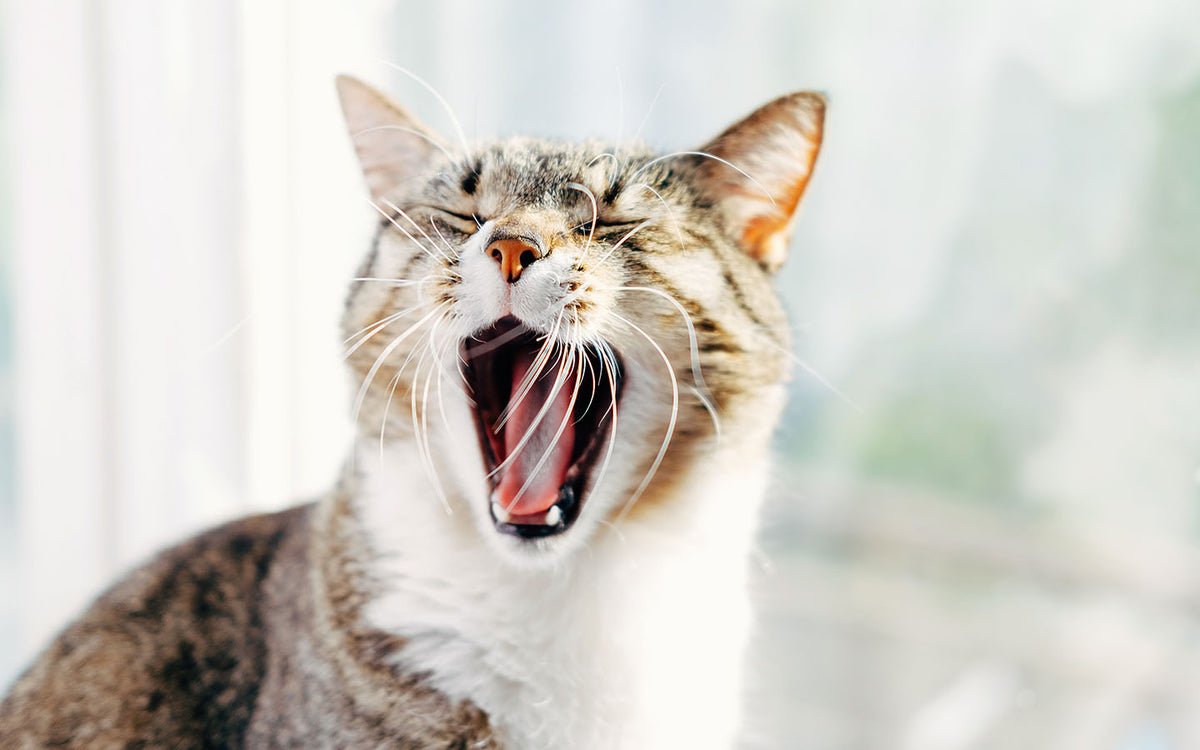

Have you noticed that your cat's mouth smells unpleasant? In addition to harmless causes, serious illnesses can also be behind bad breath in cats. Find out here when you should pay attention to an unpleasant smell coming from your cat's mouth, what causes bad breath and how you can prevent bad breath and subsequent illnesses in your house cat.
bad breath in cats
It is not surprising that cats, as fish and meat eaters, do not necessarily have a pleasant smell coming from their mouths. A slight bad breath is normal, especially after eating, and should not cause you any concern. The smell usually disappears on its own after a while.
However, if the bad breath persists over a long period of time or if you notice a significant deterioration in your cat's bad breath, you should pay attention. Because a strong smell from the mouth is not always just due to eating. Instead, bad breath can also be a symptom of a serious illness or injury.
[VC+Sensitive1]
Causes of Bad Breath in Cats
The following aspects and health problems can trigger bad breath in cats:
- dental problems
- gastrointestinal infection
- worm infestation
- liver diseases
- kidney problems
- diabetes
- tumors
- Inferior cat food
dental problems
When it comes to dental problems, tartar is one of the most common causes of bad breath in cats. Tartar is yellow to brownish discoloration of the teeth that hardens over time. It occurs because food remains stick to the teeth. In combination with saliva and bacteria, it often causes gingivitis. Inflammation of the gums or oral mucosa manifests itself in bad breath, as well as red and swollen areas and even bleeding gums. Cats can also suffer from tooth decay and tooth infections.
It is not uncommon for problems in a cat's mouth to be caused by an injury: your cat's gums can easily become injured while eating. Such a wound - especially if it becomes infected - also causes bad breath.
Simple tooth misalignments can also be responsible for bad breath: unusual gaps between the teeth provide space for food residues to settle and react with bacteria. Short-nosed cat breeds such as Burmese, Persian or British Shorthair cats often suffer from misaligned teeth and therefore have an increased risk of dental problems and the associated bad breath.
A widespread cat disease is FORL (short for Feline Odontoclastic Resorptive Lesions). In this disease, the teeth are attacked from the inside by the cat's own cells and gradually dissolved. The insidious thing about FORL is that the decay of the teeth is not visible from the outside. Only X-rays at the vet can reliably diagnose the disease.
Problems with the teeth can also be identified by increased salivation and drooling, problems with chewing and reduced food intake of cats.
gastrointestinal tract and liver diseases
Problems in the gastrointestinal tract such as infections or worm infestations, as well as liver diseases, cause bad breath in cats. Other viral infections can also cause bad breath. A particularly sour or fishy smelling breath is characteristic of diseases in the gastrointestinal tract or liver. Gastrointestinal infections and liver diseases are also often accompanied by other symptoms such as vomiting , Diarrhea , loss of appetite, fever and Tiredness . In the case of a worm infestation, parts of the worms or their eggs are often found in the cat's feces. It is important that you regularly deworming .
diabetes
Due to the increased blood sugar levels, the breath of cats suffering from diabetes often smells fruity and sweet and is reminiscent of fruit vinegar. If your furry friend also drinks a lot and urinates frequently , these are further signs of the presence of diabetes.
kidney problems
Kidney problems affect more and more cats as they get older and in the worst case lead to chronic Kidney failure . Since there is an increased amount of urea and other toxins in the blood, the animals' mouths often smell of ammonia or urine. Kidney failure also causes loss of appetite, tiredness, increased drinking and frequent urination.
tumors
Tumors in a cat's mouth or throat, such as squamous cell carcinoma or fibrosarcoma, can also be responsible for unpleasant odors from the mouth.
Inferior cat food
Bad breath in cats can also occur without any health problems - for example due to poor quality food. Low-quality cat food often contains a lot of carbohydrates. Carbohydrates, especially sugar, provide an ideal breeding ground for bacteria. Dry food in particular contains a lot of starch and often an excess of sugar. Therefore, pay attention to the ingredients of the cat food you feed and choose food with as few carbohydrates and sugar as possible. In contrast, high-quality food should have a high meat content.
Do you also prefer wet food Dry food . Wet food helps your cat to drink enough fluids and thus prevents further health problems. The assumption that dry food removes food residues between the teeth and prevents tartar due to the hardness of the food pieces cannot be proven in this form. Most dry food pieces are too small for cats to actually chew thoroughly and rub sufficiently against their teeth.
Diagnosis and further procedure
So how can you proceed in the case of bad breath to quickly diagnose health problems? If you notice that your cat's mouth smells unpleasant, you should, if possible, observe whether there are any other Symptoms can be identified. A look into your cat's mouth can also reveal whether there is inflammation or injury there. However, very few cats like having their mouths examined. If your cat is already in pain, it can react aggressively and, in the worst case, bite you. Therefore, do not force your cat to have it examined yourself; it is best to leave it to a vet.
In any case, if bad breath persists and is unpleasant, you should consult a veterinarian and have your cat examined. If symptoms such as bleeding gums, diarrhea or vomiting occur, you should see a veterinarian immediately in order to detect or rule out one of the above-mentioned diseases as quickly as possible.
In addition to examining the cat's mouth, the vet can also find out what is wrong with your cat and what problems are causing the bad breath by taking a blood sample, stool sample or biopsy.
Preventing Bad Breath in Cats
There are a few steps you can take to prevent bad breath and dental problems in your cat. First of all, you should make sure that your cat always drinks enough. Drinking is important for the health of your cat and also promotes dental hygiene. Specially tailored to the four-legged friends Cat drinks provide high-quality and tasty variety when drinking. You can find more tips on how to encourage your cat to drink in this guide .
Put cat grass in your home so that your house cat can eat it. Cat grass removes bacteria from the mouth and thus helps prevent bad breath.
In special cases, the use of toothbrushes and toothpaste for cats may also be an option. You should discuss this with your vet beforehand, who can also show you how to get your cat used to the unusual brushing routine. Very important: never use toothpaste for humans - it is poisonous for cats.