






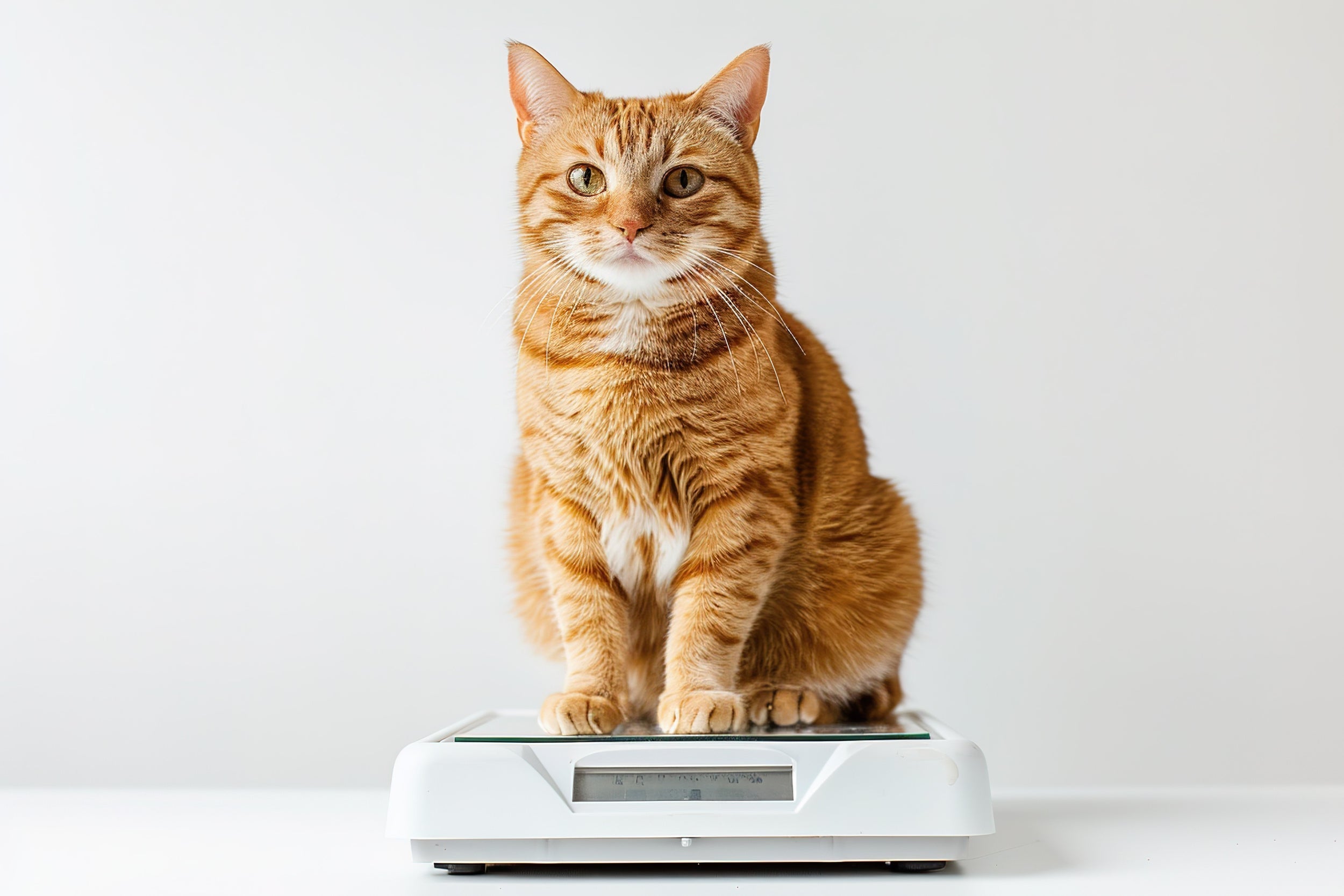

At what point is a cat too heavy? When does it weigh too little? And what factors must be taken into account to properly assess and determine the ideal weight of a velvet paw? We get to the bottom of the question regarding the ideal cat weight: We provide benchmarks and tips for the healthiest possible physical shape, address nutrition, and clarify when you should visit a veterinarian with your cat.
Table of Contents
How much should a cat weigh?
The normal weight of a cat averages between 3.5 kg and 5.5 kg. However: what weight is ideal for your cat depends on various factors. The breed, age, and also the sex of the velvet paw are primarily what determine how much it weighs – or rather, should weigh.
The ideal weight varies significantly in some cases: For example, adult, agile Maine Coon cats can weigh more than 10 kg – a weight that is completely within the normal range for this large cat breed. In contrast, delicate Singapura cats rarely weigh more than 3 kg – and they are also healthy and well-nourished, just naturally small and muscularly built.
Benchmarks: Normal weight by breed and sex
The following table gives you a rough overview of the average normal weight of some widespread cat breeds:
|
Breed |
Weight (Tomcat) |
Weight (Cat) |
|
Domestic cat |
4 – 5 kg |
3 – 4 kg |
|
European Shorthair |
5 – 7 kg |
4 – 6 kg |
|
British Shorthair |
6 – 8 kg |
3.5 – 6 kg |
|
Maine Coon |
6 – 10 kg |
4 – 6 kg |
|
Persian cat |
2.5 – 6 kg |
3 – 7 kg |
|
Siamese cat |
4 – 5 kg |
3 – 4 kg |
|
Singapura |
2 – 3.5 kg |
2 – 2.5 kg |
|
Bengal cat |
5 – 7 kg |
3 – 4 kg |
Important: These values are meant as averages and serve only as a guide. To determine whether your cat is prone to being overweight or underweight, an individual assessment is necessary.
Determining ideal weight – using body condition
You do not determine whether your cat's weight is within range by putting it on a scale – there are simply too many factors that influence a velvet paw's body weight. Instead, you can look more closely at its build to weigh whether it is in good physical condition.
It is best to palpate the cat's body thoroughly from all sides:
- First the ribs: These should not be visible to the naked eye. Gently stroke the cat's chest, using light pressure. You should be able to feel the ribs here.
- Next the waist: Gently run your hands from the ribs to the waist and then on to the hips. Apply as little pressure as possible – many cats are very sensitive in this body region. The body circumference should be noticeably smaller in the waist area than in the chest and hip area. This difference is not necessarily visible through the fur, but you will feel it all the better when palpating.
- Finally, the belly: Run your flat hand from the ribcage over the belly; in the best case, you should also feel the cat's body circumference taper here. If the cat reacts irritably to being touched on the belly, your eye is sufficient here. An indicator: When walking, the cat's belly should not swing from one side to the other.
Tip: Incorporate the examination into a lengthy petting session – this ensures your cat is relaxed and cooperates well.
Overweight in cats
If a cat is too heavy, it negatively affects its quality of life and life expectancy – and can lead to serious health risks.
Health consequences and contributing factors
Persistent overweight frequently leads, for example, to joint problems such as osteoarthritis and can trigger numerous secondary diseases such as diabetes, cardiovascular problems, respiratory difficulties, or urinary tract diseases.
Strictly indoor/house cats and neutered cats are considered particularly susceptible. Inside the home, the animals often lack exercise; after neutering, the shift in hormone balance and metabolism can promote weight gain.
Furthermore: Tomcats are more prone to being overweight than female cats, older animals are more affected than young ones, and pedigree cats suffer from overweight rather rarely compared to ordinary domestic cats.
Is my cat too fat? – Recognizing signs
You can recognize overweight in cats by the fact that:
- the waist is no longer visible and cannot be felt – with severe overweight, the body circumference in the waist area even increases.
- the cat's belly is covered by a layer of fat – with slight overweight, the ribs can still be felt underneath; with more severe obesity, the fat pads are thicker and the belly swings back and forth during movement.
- Fat pads grace the head and legs of the cat – if this is the case, the animal is already suffering from severe overweight.
Attention: Pregnant cats also gain body weight, belly circumference, and appetite. Therefore, rule out a cat pregnancy in advance.
Combating overweight: with movement and nutrition
When it comes to losing weight, the same applies to cats as it does to us humans: exercise and a balanced, planned diet are essential.
These tips help with the new feeding routine:
- Determine the cat's individual daily food requirement for the desired weight loss – in cooperation with the attending veterinarian.
- Ration wet food and dry food and feed only enough so that the recommended daily amount is not exceeded.
- Reduce treats and definitely include them in the calculation so that the amount of dry or wet food can be reduced accordingly if necessary.
Be sure to consult your veterinarian regarding this. They will help you determine the ideal food amount and select the right cat food to ensure a balanced diet.
Underweight in cats
Even when cats are too thin, it poses a danger to their health – and must be taken seriously and treated accordingly.
Consequences and causes of underweight in cats
If a cat doesn't weigh enough, it is problematic in two respects: On one hand, because the undersupply weakens the immune system and, via deficiency symptoms, can lead to organ damage in the long term. On the other hand, because being underweight often occurs as a result of health problems.
Thus, in addition to stress and heat, for example, dental problems, gastrointestinal complaints, or a parasite infestation can be to blame for cats losing significant weight. A vet visit is therefore unavoidable if you suspect the cat is underweight.
Is my cat too thin? – Recognizing and treating underweight
Being underweight is visible in cats in various ways:
- The ribs as well as individual vertebrae – especially in the lumbar region – can not only be felt but recognized with the naked eye.
- The cat's body circumference decreases significantly at the waist.
- The belly is firm and no layer of fat is recognizable under the skin.
- With severe underweight, these physical signs are extremely pronounced and the cat's spine and hip bones are also easily recognizable.
To gain weight quickly and in a controlled manner, affected cats primarily need high-quality food. The KATTOVIT Aufbaukur was developed especially for weakened and underweight cats and supports needy indoor cats with weight gain – with balanced, nutrient-rich ingredients and a digestible recipe.