










Table of Contents
- What does it mean when a cat snores?
- Common causes of snoring in cats
- When should I take my snoring cat to the vet?
- What can I do about my cat's snoring?
- FAQ – Frequently Asked Questions
What does it mean when a cat snores?
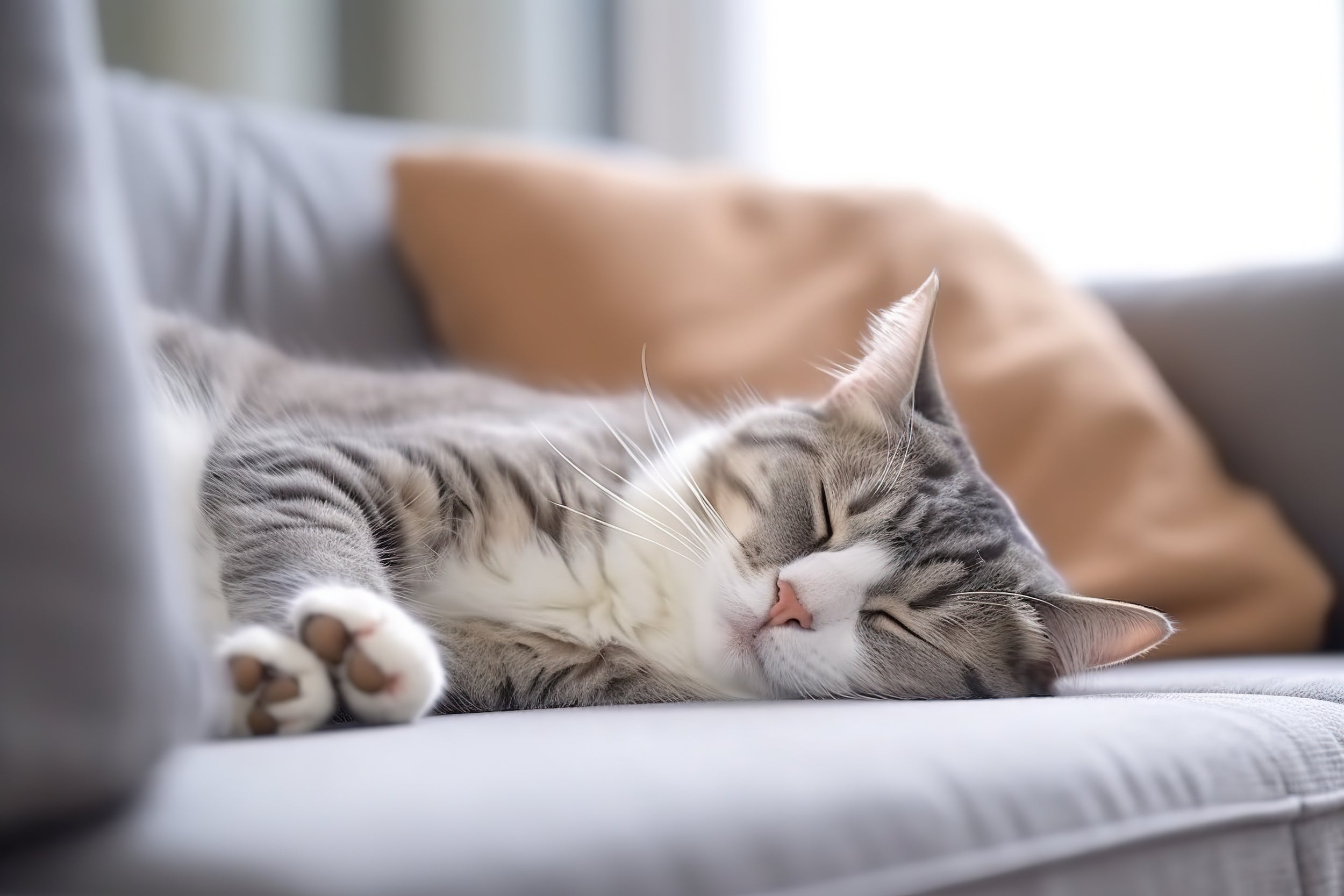
Snoring in cats is essentially a sound produced while breathing during sleep. It is often caused by the airways being partially obstructed: air flows past the soft palate, creating the snoring sound. As a rule, this is harmless – many cats snore occasionally, especially when they are in a deep and relaxed sleep.
Snoring sounds in cats can be quiet and barely audible, but sometimes they are loud and noticeable. If your cat snores, it does not automatically mean that it is sick. Some breeds – for example, British Shorthairs or Persians – snore more frequently due to their short noses. The sleeping position can also play a role: if the cat is curled up or lying with its head tilted back, it can promote snoring.
Important: Observe your cat closely. If the snoring occurs suddenly, becomes very loud, or is accompanied by other symptoms such as sneezing, wheezing, or pauses in breathing, you should pay attention. There could be an underlying medical condition that needs to be investigated.
Common causes of snoring in cats
There are many potential reasons why cats snore. These are often harmless, but sometimes there is a serious underlying cause.
Nasal polyps
Polyps are benign growths in the nose or throat. They block the airways and can cause loud, persistent snoring. This condition is often accompanied by sneezing, breathing difficulties, or nasal discharge. Usually, nasal polyps are not dangerous for pets. However, if they prevent the animal from breathing freely, they should be removed by a vet.
Tumors
Malignant tumors in the airways are rarer, but they should not be ruled out – especially in older cats. Tumors often grow unnoticed for some time before they cause problems. They constrict the airways similarly to polyps and lead to noticeable breathing sounds. If a tumor is suspected, you should urgently see a vet, who may be able to remove the tumor.
Cat flu and other infectious diseases
Infections such as cat flu cause the mucous membranes to swell and clog the airways. If the cat snores due to an infection, you will notice it because the cat has never snored before and suddenly starts doing so. In this case, a visit to the vet is definitely in order, as it could be dangerous cat flu. In addition to snoring, symptoms may also include sneezing, coughing, or eye/nasal discharge.
Sleeping position and relaxation
Many cats snore when they are sleeping particularly deeply. If your cat, for example, lies on its back or twists its head in a certain direction, the airways can be slightly kinked. This creates air resistance, which leads to snoring sounds. In such cases, the snoring is harmless and usually disappears when the cat changes its position.
Sleep apnea
With sleep apnea, there are short pauses in breathing during sleep, which can also be accompanied by snoring sounds. If you notice such breathing pauses in your pet, it is advisable to see a vet. This is because these pauses can lead to a lack of oxygen, which can cause health problems.
Overweight
Overweight is a common but often underestimated reason for snoring. Fatty tissue is deposited not only on the body but also in the throat and neck area. This constricts the airway, making breathing more difficult and promoting snoring sounds. Furthermore, excess weight puts a strain on the heart and lungs, which additionally affects breathing.
Foreign bodies in the nose
If your cat suddenly starts snoring, it could also be because a foreign body is stuck in its nose or throat – such as a blade of grass or a small piece of a toy. In such cases, the snoring may be accompanied by other symptoms, such as sneezing, gagging, or difficulty breathing. A vet can carefully remove the foreign body from the nose.
Allergies
Allergies to pollen, dust, or certain types of food irritate the mucous membranes and cause them to swell. The result is altered breathing sounds and sometimes loud snoring. A vet can determine if your cat suffers from an allergy, what triggers it, and how it might be treated.
For food intolerances, our Sensitive food can help: the gentle formula ensures optimal tolerance – even for sensitive cats.
[Sensitive]
Anatomical features: Snoring in specific cat breeds
Not all cats snore with the same frequency. In certain breeds, snoring is much more common – and this is often due to their anatomy.
Breeds such as British Shorthairs, Persians, or Exotic Shorthairs have a shortened nose and a round head. These characteristics are referred to as brachycephalic. Due to the shortened muzzle, the airways are narrower and the soft palate can be longer than in other cats. This forces the air to pass through a narrower channel when breathing, which promotes snoring sounds.
If you have a short-nosed cat, you should regularly monitor its breathing sounds. Snoring is often part of everyday life for these breeds, but it can be further exacerbated by obesity, allergies, or infections. Therefore, be sure to pay attention to any changes! If your cat suddenly starts snoring louder, has difficulty breathing, or makes unusual noises, you should urgently visit a vet.
When should I take my snoring cat to the vet?
If your cat's snoring starts suddenly, becomes noticeably louder, or the breathing sound changes, it is a warning sign. Especially if additional wheezing sounds occur during breathing, or there is frequent sneezing, gagging, or coughing, you should see a vet. Breathing pauses, where the cat stops breathing for a short time, are also an alarm signal.
If your cat has always snored, especially when sleeping in a relaxed state, this is usually harmless. However, if the snoring occurs suddenly or persists over a long period, an underlying medical condition may be the cause. Reasons can include polyps, growths, or an infection.
Diagnosis at the vet
The vet will first examine your cat's airways. This includes identifying any swelling in the nasal area as well as palpating the trachea to detect possible changes. Furthermore, the vet can use an otoscope to check the cat's mouth and ears for swelling and secretions that may be causing the snoring. A stethoscope will be used to listen to the lungs to identify noticeable breathing sounds that could be causing respiratory problems.
If these examinations do not yield clear results, imaging techniques such as X-rays can help detect polyps, foreign bodies, tumors, or other changes. Allergies or infections can also be diagnosed through specific tests. Depending on the cause, the vet will decide what treatment is necessary.
The rule is: It is better to have it checked once too often than too little. If you are unsure whether your cat's snoring is normal, seek medical advice.
What can I do about my cat's snoring?
If your cat's snoring is bothersome or has underlying health causes, there are several measures that can help.
- Improvement of the sleeping environment: Ensure your cat sleeps comfortably and in a healthy position. A soft, adapted bed that provides good support for the head and neck can help. Avoid places with a lot of dust so that the airways are not further irritated.
- Weight reduction for better breathing: If your cat is overweight, losing weight helps. Less weight relieves the airways and reduces snoring sounds. Your vet can help you create a suitable diet plan.
- Treatment of allergies and infections: If allergies or an infection like cat flu are the cause, targeted treatment is important. The vet can prescribe anti-allergic medication, antibiotics, or other medicines to relieve the airways.
- General health support: A good general condition supports the immune system and the health of the airways. Here, supplementary feeds like the KATTOVIT Aufbaukur can help. They strengthen the cat after infections or when the immune system is weakened and support recovery.
- Regular vet visits: Even if the snoring seems harmless, a regular check-up at the vet is worthwhile – especially for older cats or breeds with a short nose. This allows potential problems to be recognized and treated early.