


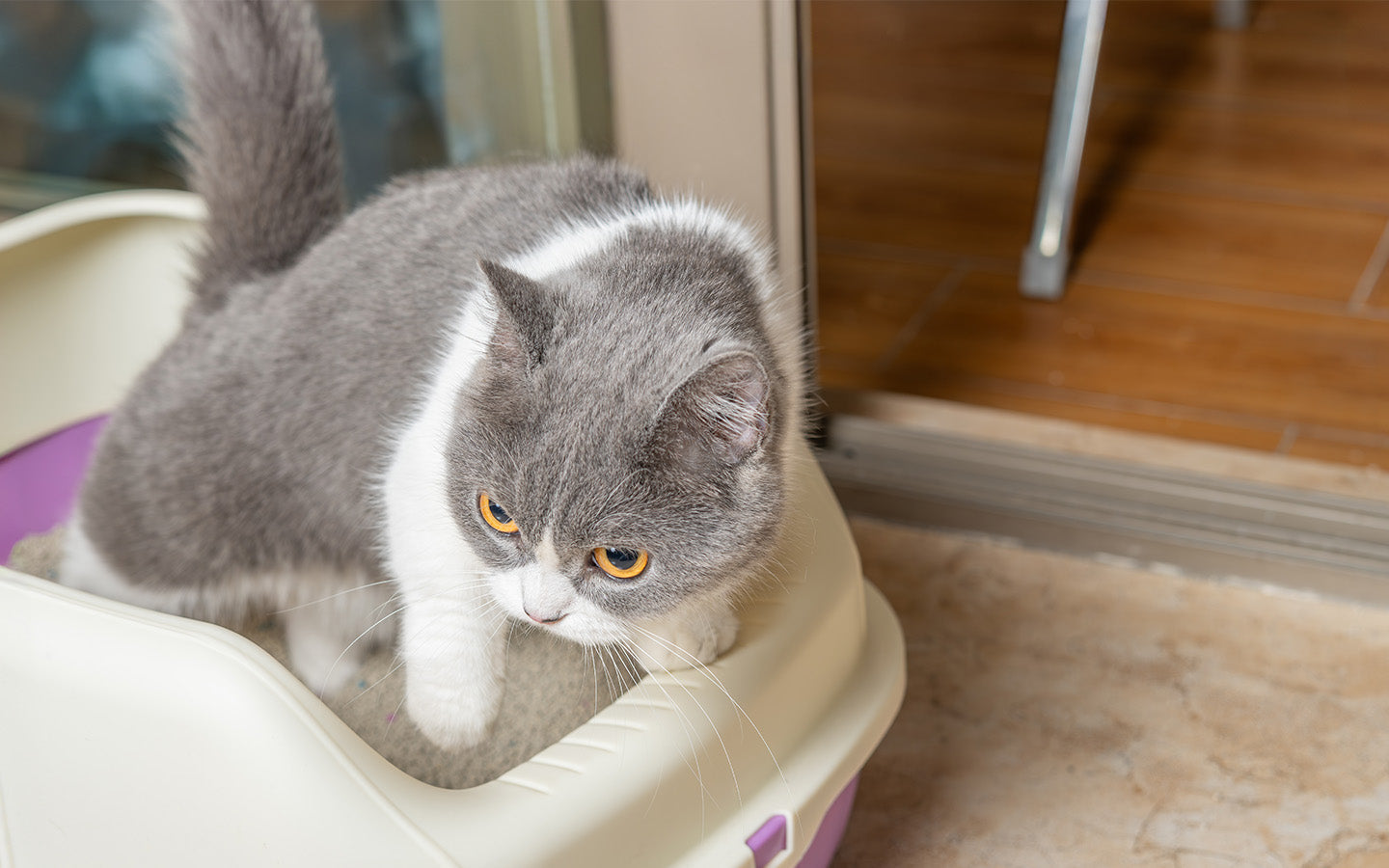

Just like in humans, bladder infections in cats are an unpleasant affair: frequent, painful urination, blood in the urine or soiling are typical signs. Many cats temporarily lose control over the urge to urinate. Since bladder problems in cats have different causes and can become dangerous if left untreated, prompt treatment is important. In this article, you will learn how bladder infections develop, how to recognize them and which therapy and food solutions can sustainably support your cat.
Bladder problems and FLUTD: your cat's urinary tract
Your cat's urinary tract consists of the kidneys, ureters, bladder and urethra. The kidneys filter waste products from the blood and form urine. Through the ureters, it reaches the bladder, where it is stored and finally excreted through the urethra.
Inflammations, crystals or infections in this system lead to pain and functional disorders. Veterinarians group these diseases under the term FLUTD (Feline Lower Urinary Tract Disease).[1]
Typical symptoms of bladder infections in cats
A bladder infection (cystitis) in cats is primarily noticeable when urinating. Changes in toilet behavior are among the earliest and most reliable warning signs and should always be taken seriously.
Changes in urination
- significantly more frequent trips to the litter box
- painful urination, often accompanied by loud meowing
- only a few drops of urine or no urine flow at all
- blood in the urine (discolored red to brown)
- pungent, unusually intense urine smell
Changes in behavior
- intense licking in the genital and abdominal area
- withdrawal or aggressive reactions when touched
- hunched posture, lowered head
- reduced activity, increased sleeping
If there is no urine flow, it is an emergency.[2] In this case, visit a veterinary practice as quickly as possible!
Causes of bladder infections in cats
The causes behind bladder infections in cats are varied. Often, an interplay of several factors leads to cats developing cystitis. The classic triggers can be divided into three subgroups: diet and deficiencies, pre-existing conditions and medications, and abnormalities in the urine.
Diet and lifestyle
- long-term dry food rich in magnesium
- low water intake
- overweight and lack of exercise
Pre-existing conditions
- diabetes mellitus
- chronic kidney disease
- hyperthyroidism
Abnormalities in the urine
- urinary stones
- especially struvite stones
- urinary sediment
- altered urine pH (e.g. due to incorrect food)
Stress as a trigger
Moving, new animals, changed routines or even boredom are proven to increase the risk of idiopathic cystitis.[3]Indoor cats are particularly sensitive to such changes.
Different forms of bladder infections and their treatment
Depending on what is behind the illness, there are different types of cystitis in cats: besides bacteria and urinary stones, inflammatory plugs can also be considered as triggers for inflammation of the bladder and urinary tract – but a clear cause is not always identifiable.
Bacterial bladder infection
Bacteria enter the bladder through the urethra and multiply there. This form occurs mainly in older cats and animals with pre-existing conditions. Veterinarians treat them specifically with antibiotics after a urine culture.
Bladder infection caused by urinary stones
Struvite and calcium oxalate stones mechanically irritate the bladder wall. Toms have an increased risk of life-threatening urethral obstruction.[4]
Therapy:
- dietetic dissolution (for struvite)
- surgical removal (for large stones)
Idiopathic cystitis
Here veterinarians find no organic cause. Stress is considered the main factor.
Therapy:
- stress reduction
- adjustment of the environment
- increased water intake
Cat with a bladder infection: What to do?
As soon as you notice symptoms in your beloved that indicate FLUTD, you should see a veterinarian promptly. Because if a bladder infection is left untreated, the condition can quickly worsen: in the case of a bacterial cause, it can lead to extremely painful pyelonephritis, for example. Urinary stones, in turn, can block the urethra and cause dangerous urinary retention.
In practice, the cause is usually clarified with the help of a urine test – ideally, you should bring a fresh urine sample with you if possible. Depending on the suspicion, ultrasound or X-rays may also be necessary to reliably rule out urinary stones, for example.
Conventional medical treatment: specifically treating the cause
Veterinary treatment is always based on the specific cause of the bladder infection. Diagnostics usually include:
- urine test (incl. sediment analysis and bacterial culture if necessary)
- ultrasound or X-rays to detect urinary stones or inflammatory plugs
Antibiotics for bacterial inflammation
If bacterial cystitis is present, the veterinarian prescribes a specifically selected antibiotic based on a urine test. If pre-existing conditions such as diabetes or kidney insufficiency are detected, a change in diet to special diet food can help adjust the nutrient supply to the cat's needs.
Treatment for bladder infection caused by urinary stones
Urinary crystals, urinary sediment or bladder stones can be reliably detected with imaging. Small stones can be dissolved through a targeted change in food. If the stones are too large or block the urinary tract, surgical intervention may be necessary.
After acute treatment, the focus is on relapse prevention. A special diet supports long-term stabilization. KATTOVIT Urinary Cat Food was specially developed for cats with urinary tract diseases: DL-methionine and calcium sulfate help regulate the pH of the urine, while a balanced supply of minerals and vitamins rounds off the daily feeding.
Home remedies for bladder infections: sensible or risky?
Home remedies can support veterinary therapy, but they do not replace it. They are exclusively suitable as accompanying measures.
Sensible:
- increased fluid intake, e.g. through drinking fountains or wet food
- warmth, rest and stress-free retreat areas
Not recommended:
- herbs, vinegar or human painkillers
- independent administration of antibiotics
Important: Home remedies can alleviate symptoms at most, but they neither remove urinary stones nor bacterial infections in your indoor cat.
Love and care as an important therapy component
In addition to medications and feeding, the well-being of your beloved plays a central role in the healing process. Clean cat litter boxes (ideally several), regular attention, gentle warmth, sufficient fluid and a quiet retreat area are proven to lower the stress level of your furry friend – a crucial factor, especially with idiopathic bladder infection.
Conclusion: How to properly deal with bladder infections in cats
A bladder infection in cats is painful, but easily treatable with early diagnosis. Abnormalities in urination or blood in the urine should always be clarified by a veterinarian. For successful treatment, several factors are important:
- a quick and targeted diagnosis
- a cause-dependent therapy with medications
- specialized food adapted to support the urinary tract
- sufficient fluid intake and stress reduction
Home remedies can have a supportive effect, but they replace no veterinary treatment. In the long term, a suitable diet, a quiet environment and fixed routines help to avoid relapses. With the right support and a lot of love, your furry friend will soon be completely back to normal.