



Table of Contents
- How much withdrawal is normal for cats?
- Withdrawal as a warning sign: When cats suddenly withdraw
-
Conclusion and tips: What to do when your cat withdraws?
- Frequently Asked Questions
How much withdrawal is normal for cats?
How much withdrawal is normal depends on the cat's personality and individual need for rest. However, one thing is certain: cats withdrawing is a natural behavior.
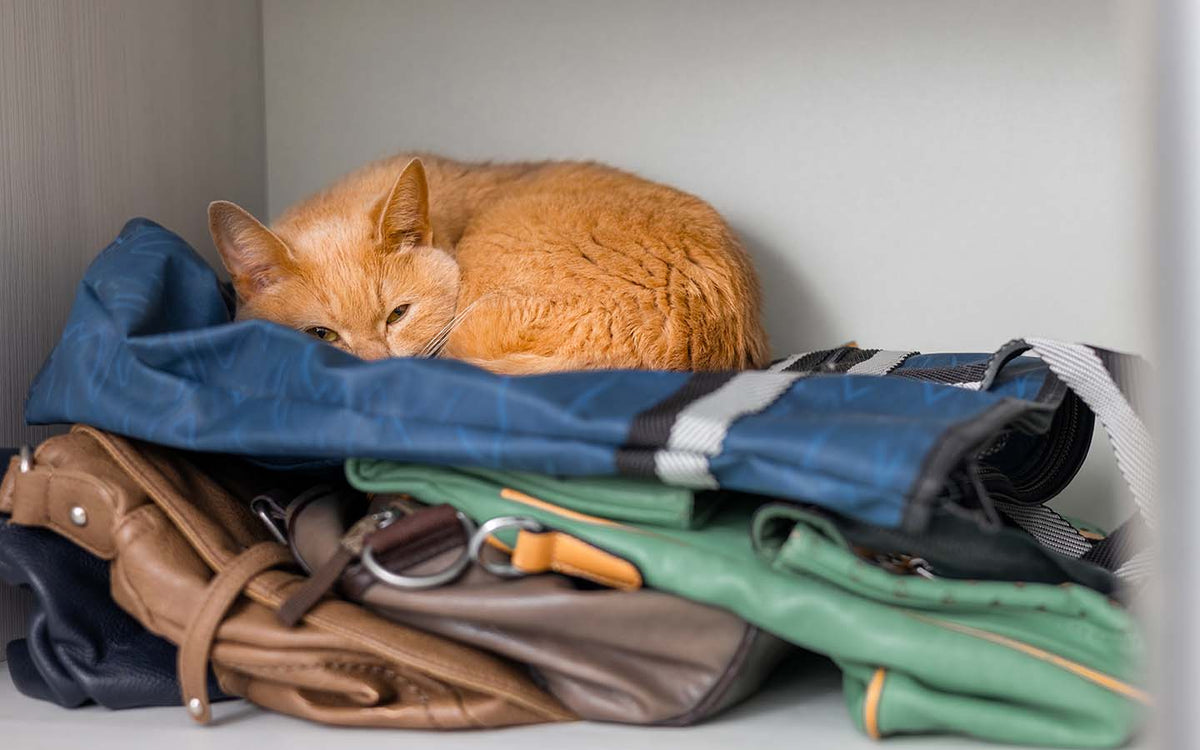
Cats need places to retreat where they feel undisturbed and safe. For example, many cats prefer secluded or hidden spots to sleep, observe from a safe distance, groom themselves, rest briefly, or acclimate – or, in multi-cat households, to have a place that belongs only to them.
More telling than the duration or frequency of rest phases are the situations in which the four-legged friends withdraw – typically, for example:
- for sleeping and observing
- for grooming
- after playing or being outside
- after eating
- when strange animals are nearby
Withdrawal as a warning sign: When cats suddenly withdraw
If your cat suddenly withdraws or if the withdrawal behavior seems atypical to you, there is likely more behind it than just the usual need for rest.
Pay attention to these signs and recommended actions:
|
Cause |
Typical signs |
Action required |
|
Normal need for rest |
|
No action required |
|
Pain/illness |
|
See a vet (within 24 hours at the latest) |
|
Stress/anxiety |
|
Reduce stress triggers, provide a place to retreat. |
|
Age/grief |
Observe, create an age-appropriate environment |
Withdrawal due to pain or illness
Cats suffer in silence. When they are in pain or not feeling well, they initially try not to show it. To hide their vulnerability, they withdraw and avoid contact with humans. In doing so, these "velvet paws" indirectly communicate that something is wrong.
Common accompanying symptoms of illness-related withdrawal
Pain- or illness-related withdrawal is often accompanied by other anomalies. This can primarily lead to changes in personality, altered eating behavior, or abnormalities in personal hygiene. Therefore, be sure to look out for accompanying symptoms such as:
- Tiredness and lethargy: The cat sleeps noticeably more, is less active and playful, seems disinterested, or gets exhausted more quickly.
- Loss of appetite: Your cat shows hardly any interest in its food, does not go to the food bowl on its own, and eats less or nothing at all.
- Apathy and weakness: The cat seems apathetic, barely reacts to its surroundings and interaction, or appears unusually powerless.
- Sensitive reactions: The cat reacts unusually sensitively to touch or attempts to approach – for example, by being skittish, rejecting, or even aggressive. This can also manifest in dealings with other cats in a multi-cat household.
- Altered drinking behavior: The cat refuses to drink or has noticeably increased thirst.
- Altered grooming behavior: Your cat neglects its personal hygiene or grooms itself noticeably often and intensely.
- Vomiting or altered bowel movements: The animal vomits, has diarrhea, or shows other abnormalities in the litter box – whether constipation, blood, discoloration, or uncontrollable urination.
- Weight loss and other illness symptoms: Your cat is becoming thinner or shows other illness symptoms such as fever or abnormal breathing.
As soon as your cat withdraws for a noticeably long time – for example over several days – seeks out unusual hiding spots, or shows other abnormalities such as apathy, loss of appetite, or changes in grooming or bowel movements, you should see a veterinarian.
Possible causes for withdrawal due to illness
Which triggers might be responsible depends heavily on which specific illness symptoms the cat displays during its withdrawal:
- Injuries, wounds, or infections can cause cats to withdraw. These house cats sleep a lot, appear weakened, may show less appetite, and react sensitively to touch and attempts to approach.
- Dental problems and inflammations in the mouth manifest themselves in cats increasingly through withdrawal and loss of appetite. Affected animals often whimper when trying to eat, lose weight over time, are sensitive to touch, and have an unpleasant mouth odor.
- Gastrointestinal complaints or food intolerances often go hand in hand with withdrawal and lethargy, as well as vomiting, diarrhea, and refusal to eat.
- Parasite infestation – especially by ectoparasites like fleas or ticks – can lead to various complaints in cats. In addition to pronounced itching, warning signs include sluggishness and withdrawal, altered grooming behavior, and loss of appetite.
- Signs of poisoning – for example, from plants or food – often drive cats into withdrawal. Depending on the severity of the poisoning, other abnormalities such as vomiting, diarrhea, apathetic and lethargic traits, extreme thirst, breathing difficulties, cramps, tremors, and more may occur.
Important: If your cat withdraws, reacts sensitively or aggressively to touch, seems apathetic or weakened, or does not consume any food for longer than 24 hours, you should urgently contact a veterinarian.
The veterinarian can correctly classify the symptoms. A thorough examination will provide information about the cause and lay the foundation for rapid and needs-based treatment of the illness.
Withdrawal due to stress or anxiety
Cats are creatures of habit with a strong need for security. If they feel stressed or threatened, many "velvet paws" first withdraw from the situation.
Therefore, first check whether external influences could be responsible for the withdrawal.
New environment, people, or animals
Moving to a new home: Many cats need time to warm up in an unfamiliar environment. New places, impressions, and smells mean stress for these sensitive animals. In the first few days and weeks, hidden retreat spots can provide them with security.
New caregivers: Cats often react with caution to new people in their immediate environment. While some house cats quickly gain trust, others initially keep their distance and get used to the voice, smell, and movements from afar.
Loss of a caregiver: Cats often build a close bond with their humans. The loss of a caregiver triggers grief and insecurity in them – whether permanently due to a separation, the death of the cat owner, or a move to a new family, or temporarily due to a vacation or similar. Many cats express their pain by temporarily withdrawing.
Other animals: What applies to humans can also be transferred to the relationship with other animals – often even more strongly. The arrival of a second cat or a dog can prompt cats to withdraw for the time being. The loss of an animal companion also represents a profound change for cats, to which they sometimes react emotionally.
Extreme stimuli, impressions, and events
- Noise, hectic, and hustle and bustle: Many cats react with stress to loud noises, hectic activities, or strangers in their home. If too many stimuli affect them, they withdraw to a quiet place. As a rule, the animals dare to come out again as soon as peace has returned. Especially for cats with traumatic past experiences, noise and chaos can represent an enormous burden. To avoid stress, you can set up a secure retreat spot in advance, complete with a feeding area, litter box, and toys, which is inaccessible to visitors during parties and the like.
- Extreme heat: On hot summer days, cats often look for secluded, dark places where they can hide and escape the heat. As a precaution, check whether your cat can handle the temperatures on its own. Provide sufficient water and offer your cat a cool place to lie down by, for example, laying out damp towels. You can find more tips in our cat guide for hot days.
- Veterinarian and other events: For some cats, vet visits, car trips, and other events mean pure stress. Whether due to negative experiences in the past or simply because of a sensitive character: treat your cat to the peace it demands on eventful days. This also applies, for example, when your cat is currently getting used to going outside and returns home after its first excursions.
Other reasons why cats withdraw
In addition to pain, illnesses, stress, and anxiety, other special challenges can be the reason why cats withdraw. These primarily include exceptional health and hormonal situations:
- Recovery after anesthesia, surgery, or illness: To recover from anesthesia, a surgical procedure, or a longer phase of illness, cats often need extra rest. While some animals specifically demand closeness and affection, others withdraw in order to recover.
- Hormonal changes: During heat, a cat's hormonal balance changes. This can lead to it being particularly affectionate – or, conversely, particularly distant. Even after being spayed/neutered, cats go through a hormonal change that can alter their need for rest and closeness – either in the short term or permanently.
- Pregnancy and motherhood: Especially in the later stages of pregnancy, pregnant cats need a place to retreat where they can find peace, prepare for birth, and later bring their young into the world. In the first few days and weeks after birth, the life of the cat mother and her kittens also plays out primarily in this place.
- Advancing age: In old age, cats usually become calmer and more comfortable. The urge to play and hunt as well as curiosity decrease, and the need for rest and recovery increases. In old age, many cats prefer retreat spots at the edge of or even far away from everyday activities. But: permanent withdrawal can also indicate health problems in old cats and should, in case of doubt, be observed and clarified by a veterinarian.
Conclusion and tips: What to do when your cat withdraws?
When cats withdraw, it is not immediately a cause for concern. On the contrary: loving retreat spots are an integral part of a cat-friendly home.
However, if your cat's withdrawal appears noticeable or atypical to you, you should carefully observe its behavior and, in case of doubt, seek veterinary advice. In order not to stress your cat further, rest, acceptance, and routines are also important.
Here is how to react correctly when your cat withdraws:
- Keep calm and provide security: Do not crowd your cat. Accept its need for distance and leave the cat its self-chosen retreat spot as a safe space.
- Maintain routines and avoid stress: Keep to feeding times as usual. Offer stimulation without being pushy. Avoid additional stress from visitors, loud music, or constant company.
- Observe behavior attentively: Pay attention to whether your cat is drinking, eating, grooming, and using the litter box normally. Test whether the animal reacts normally and observe how it moves.
- Take warning signs seriously and consult a veterinarian: If other abnormalities occur or if your cat hardly or never leaves its hiding spot for several days, you should have the cause clarified by a vet.
In the case of an illness, the veterinarian will advise you on the correct treatment after the diagnosis and show you how you can best support your cat. Depending on the cause, a change of diet can also help your cat regain its strength.
A balanced, highly digestible, and needs-oriented diet provides sick and weakened cats with optimal energy and important nutrients. If your beloved four-legged friend has lost weight due to withdrawal and illness, for example, a special diet food like the KATTOVIT recovery diet can support the recovery. Important: Always give diet food only after consulting with your veterinarian.